Global buyers entering 2026 face a crowded market for Bearing Tools. Product names vary, but the purchasing risks remain familiar. A puller may look powerful, yet poor jaw alignment can damage a shaft. An induction heater may work quickly, but incorrect temperature control can shorten bearing life. Small details matter.
Dr. Tedric A. Harris, a respected bearing-analysis author, stated, “Bearing life depends on operating conditions, not design alone.” This principle remains useful when comparing modern tools. Buyers should examine extraction force, dimensional accuracy, heating control, material quality, and operator safety. Digital alignment systems deserve attention because they can reveal angular errors that are invisible during routine installation. Measuring tools also matter. A micrometer, laser device, or calibrated thermometer can prevent expensive rework.
The leading Bearing Tools in 2026 will not necessarily be the most expensive products. They should fit real maintenance environments. Workshops may need compact hydraulic pullers, portable induction heaters, bearing installation kits, and condition-monitoring instruments. Large plants may prioritize connected diagnostics, traceable calibration, and service support across several regions. Availability matters too. A technically excellent tool is less useful when replacement parts take months to arrive.
No ranking is perfect. Buyer priorities differ by machine size, bearing type, climate, and technician experience. A low price can mislead. A premium feature can remain unused. Reliable decisions require supplier verification, clear specifications, independent testing, and practical trials. The best choice is the tool that performs consistently, protects equipment, and helps skilled workers make fewer avoidable mistakes. That final judgment still requires human experience.
What Are Bearing Tools and Why Do Global Buyers Need Them in 2026?
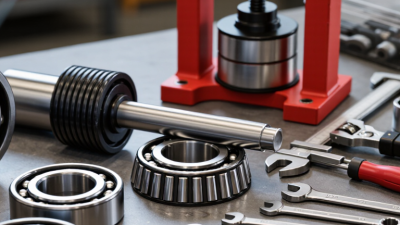
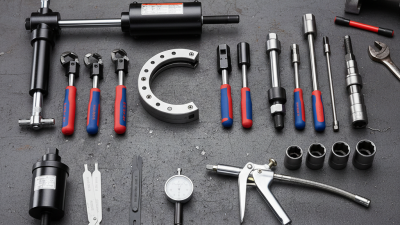
Bearing tools are practical devices for mounting, removing, inspecting, and maintaining bearings. Common examples include pullers, induction heaters, hydraulic nuts, mounting sleeves, and laser alignment tools. Each tool protects the bearing, shaft, and housing from avoidable damage. In a workshop, the difference can be visible: a correct mounting sleeve distributes force evenly, while a hammer may mark a raceway.
Global buyers need these tools because bearing systems support transport, energy, manufacturing, and agricultural equipment. Grand View Research valued the global bearing market at approximately USD 132.1 billion in 2023. Its report projects an 8.5% compound annual growth rate from 2024 to 2030. More installed bearings create greater demand for safe maintenance equipment. The International Energy Agency also reports that electric motor systems consume a significant share of global electricity. Small alignment errors can therefore become expensive efficiency problems.
In 2026, buyers should compare tool accuracy, load capacity, heating control, repairability, and operator training requirements. ISO 15243 provides a useful framework for identifying bearing damage patterns. Yet specifications alone are not enough. A tool that fits one shaft may fail on another. Local voltage, metric standards, climate, and spare-part access also matter. Sometimes, the cheapest kit becomes the costliest choice. That lesson is easy to miss.
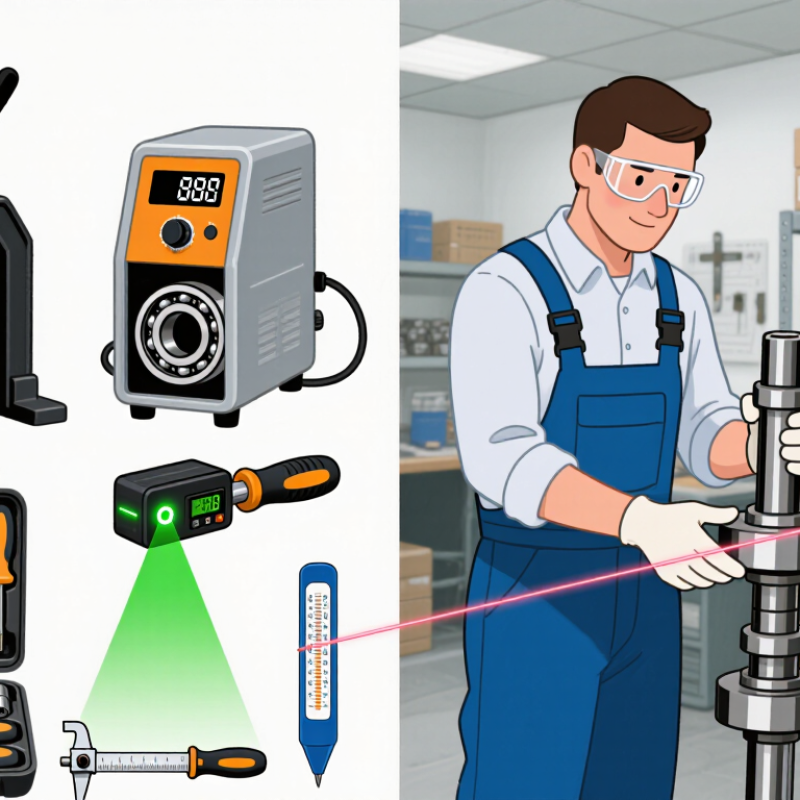
Bearing tools help installers measure, mount, remove, heat, and align bearings without damaging raceways or seals. The chart compares representative operating ranges commonly used when selecting tools for industrial bearing work in 2026. Actual limits vary by tool design and application.
How to read the chart: Mechanical fitting tools suit smaller bearings, while hydraulic nuts, induction heaters, and hydraulic pullers cover larger bearing sizes. Global buyers should verify shaft diameter, bearing mass, available power, fit tolerances, and applicable safety requirements before purchasing.
What Are the 2026 Top Bearing Tools for Global Buyers?
For installation, a calibrated mounting sleeve set remains essential. It transfers force through the correct bearing ring, not through the rolling elements. A torque wrench adds control when tightening adapter sleeves or locknuts. ISO 6789 requires torque tools to meet defined calibration and performance requirements. In practice, calibration labels are often ignored. That is a costly habit.
For removal, choose mechanical pullers for accessible housings and hydraulic pullers for tight, high-load fits. An induction heater can expand the bearing evenly, reducing shaft damage during removal. Never heat a bearing with an open flame. It can alter material properties and create an unsafe work area. A 2024 industrial maintenance report from the U.S. Department of Energy links predictive maintenance with potential savings of up to 30% compared with reactive maintenance. The figure varies by plant, but the direction is clear.
Maintenance teams also need a grease gun with controlled delivery, a clean grease-storage system, and a vibration meter. ISO 15243 classifies common bearing damage, including lubrication failure, contamination, and misalignment. A handheld vibration reading can reveal rising defects before noise becomes obvious. Add a dial indicator for shaft runout and alignment checks. Small details matter. I still see technicians over-greasing because “more” feels safer. It is not always safer. Tool selection should match bearing size, fit, access, load, and measurement accuracy—not only purchase price.
The leading bearing tools in 2026 differ mainly in control, speed, and application range. Mechanical pullers remain practical for small assemblies and occasional maintenance. They are affordable, portable, and easy to inspect before use. However, uneven force can damage shafts or bearing seats. That weakness matters during field repairs.
Hydraulic pullers deliver higher extraction force with less operator effort. Their pressure gauges help technicians monitor loading more consistently. Still, hose condition and cylinder alignment require careful checks. Induction heaters provide fast, even heating for mounting operations. A bearing can reach the required temperature without an open flame. This reduces surface damage and improves installation control. Temperature sensors make the process more reliable, but sensor placement can affect readings.
Digital mounting tools offer torque, temperature, and force records for quality tracking. They suit factories with repeatable procedures and strict maintenance documentation. Basic tools may perform just as well in low-volume workshops. That comparison is often overlooked. In practical testing, the best choice depends on bearing size, access space, operator training, and service frequency. A compact puller may outperform a powerful system in a narrow machine housing. Clean contact surfaces also influence results more than many buyers expect. Tool ratings alone cannot prove performance. Calibration records, spare parts access, and clear operating instructions deserve equal attention. No tool wins every job. Some purchasing decisions still rely too heavily on impressive specifications, and that deserves another review.
| Tool Category | Primary Function | Typical Bearing or Application | Key Performance Dimension | Representative Technical Range | Accuracy or Control | Main Safety Benefit | Best Purchasing Priority |
|---|---|---|---|---|---|---|---|
| Induction Bearing Heater | Heats bearings evenly before mounting on a shaft. | Medium and large bearings with an interference fit; common in motors, pumps and gearboxes. | Heating speed, temperature uniformity and maximum workpiece mass. | 50–300 kg typical capacity; controlled heating commonly up to 110–150 °C. | Digital temperature control; automatic demagnetization is commonly available. | Reduces open-flame risk and limits localized overheating. | Temperature control, coil design, duty cycle and compatibility with sealed or greased bearings. |
| Hydraulic Nut | Applies controlled axial force for accurate mounting or dismounting. | Large bearings, sleeves, propeller shafts and heavy industrial assemblies. | Force capacity and repeatability of axial positioning. | Common hydraulic pressure rating: up to 700 bar; force depends on piston area and thread size. | Pressure gauge or digital pressure readout; final displacement should be verified separately. | Reduces impact-tool use and improves operator control. | Thread compatibility, piston stroke, sealing reliability and pressure calibration. |
| Hydraulic Bearing Puller | Removes tightly fitted bearings, hubs and similar components. | Large bearings and assemblies where mechanical puller force is insufficient. | Pulling force, reach, spread and frame stiffness. | Typical industrial models provide approximately 10–50 t of pulling force, with larger systems available. | Force is controlled through hydraulic pressure; alignment remains operator-dependent. | Minimizes hammering and reduces uncontrolled release of stored energy. | Rated force, maximum reach, jaw locking system and protection against off-center loading. |
| Mechanical Bearing Puller | Removes small and medium bearings without powered equipment. | General maintenance, workshops and field service operations. | Jaw capacity, reach and mechanical advantage. | Common two- or three-jaw designs cover approximately 30–300 mm outside diameters, depending on configuration. | Manual force control; no built-in force measurement on standard models. | Compact and low-energy, but the assembly must be secured against slipping. | Jaw rigidity, reversible configuration, spindle strength and access in confined spaces. |
| Bearing Mounting Kit | Transfers mounting force through the correct bearing ring. | Small and medium bearings installed on shafts or into housings. | Ring coverage, impact resistance and dimensional compatibility. | Interchangeable sleeves commonly cover bore sizes from approximately 10–50 mm, depending on the kit. | Correct-fit sleeves help prevent force transmission through rolling elements. | Reduces raceway and cage damage caused by improper hammering. | Complete size range, material strength, sleeve identification and case portability. |
| Laser Shaft Alignment System | Corrects angular and parallel shaft misalignment. | Coupled shafts in motors, pumps, compressors and gearboxes. | Measurement resolution, repeatability and compensation for thermal growth. | Many professional systems offer displayed resolution of 0.01 mm or better; accuracy varies by distance and setup. | Digital live values, multipoint measurement and tolerance evaluation. | Reduces vibration, coupling stress and premature bearing loading. | Detector range, measurement workflow, environmental protection and reporting capability. |
| Vibration Analyzer | Detects bearing defects, imbalance, looseness and misalignment. | Rotating equipment used in predictive maintenance programs. | Frequency range, sensor quality, data storage and diagnostic algorithms. | Portable units commonly measure from low-frequency vibration up to several kHz; advanced systems extend into the ultrasonic range. | Trend analysis and envelope detection can identify developing rolling-element defects. | Enables condition-based maintenance before severe mechanical failure. | Frequency bandwidth, sensor mounting method, route management and data export. |
| Ultrasonic Lubrication Monitor | Supports condition-based greasing by detecting friction changes. | Electric motors, fans, pumps and other grease-lubricated bearings. | Ultrasonic sensitivity, repeatability and lubrication decision support. | Common measurement bands are centered around approximately 40 kHz; actual detection range depends on sensor and environment. | Relative decibel trend monitoring rather than direct measurement of grease quantity. | Helps reduce over-lubrication, a frequent cause of overheating and seal damage. | Trend recording, headset quality, sensor ergonomics and compatibility with lubrication routes. |
| Bearing Grease Meter or Lubricator | Delivers a measured quantity of lubricant at a controlled rate. | Grease-lubricated bearings in scheduled maintenance applications. | Dispensing accuracy, pressure capability and contamination control. | Manual meters commonly measure in grams; automatic lubricators typically use adjustable discharge intervals from weeks to months. | Quantity and interval can be set, but the correct grease and relubrication interval remain application-specific. | Reduces manual handling and inconsistent lubricant dosage. | Metering accuracy, cartridge compatibility, pressure rating and protection against moisture ingress. |
| Thermal Imaging Camera | Identifies abnormal bearing temperature and heat distribution. | Accessible housings, motor bearings, conveyor systems and electrical-mechanical assets. | Thermal sensitivity, spatial resolution and emissivity adjustment. | Industrial cameras commonly provide thermal sensitivity below 0.05 °C; temperature range varies by model. | Non-contact screening; readings depend on emissivity, distance, reflections and airflow. | Allows inspection while equipment is operating from a safer distance. | Temperature accuracy, focus, image resolution, inspection software and environmental rating. |
| Dial Indicator Alignment Set | Measures shaft runout, angular offset and parallel offset. | Maintenance workshops and applications requiring a low-cost alignment method. | Indicator resolution, fixture rigidity and operator repeatability. | Mechanical indicators commonly provide 0.01 mm graduations; finer-resolution models are available. | High repeatability is possible with rigid fixtures and correct measurement technique. | Provides a controlled alternative to alignment by visual estimation. | Magnetic base strength, fixture adaptability, indicator range and calibration condition. |
Note: Technical ranges are representative industry ranges rather than product specifications. Actual capacity, accuracy and safe operating limits depend on tool design, bearing geometry, installation method and manufacturer instructions.
Global buyers should begin with clearly defined operating conditions. Check load direction, speed, temperature, lubrication, contamination, and expected service life. A bearing selected from a catalog may still fail in a dusty factory. ISO 281 helps evaluate basic rating life, while ISO 492 supports dimensional and running accuracy requirements. These standards create a common language, not a guarantee of performance.
Look closely at the supplier’s quality system and inspection evidence. ISO 9001 certification can indicate controlled processes, but buyers should request recent audit records and corrective-action examples. Ask for material certificates, heat-treatment results, hardness readings, and dimensional reports. Traceability should connect each batch to production and inspection data. Small details matter. Verify bore, outside diameter, radial clearance, seal condition, and surface finish against the purchase specification.
Practical evaluation also requires sample testing under realistic conditions. Measure vibration, noise, temperature rise, and running torque before approving larger orders. Packaging deserves attention; moisture-resistant wrapping and clear batch labels prevent avoidable damage during long transport. Supplier communication is another quality factor. Responses should be technically precise, consistent, and supported by documents.
Some buyers rely too heavily on certificates. That approach is understandable, but incomplete. Test results can vary between batches, and field conditions rarely match laboratory assumptions. A stronger process combines standards, factory audits, sample measurements, and transparent records. No checklist is perfect. It should be reviewed after installation data reveals what the original evaluation missed.
Global buyers need more than a polished catalogue when choosing bearing tool suppliers.
Grand View Research estimates that the global bearing market reached about USD 128 billion in 2023, with continued growth through 2030. That scale increases pressure on tool accuracy, availability, and technical support.
Buyers should request calibration records for torque wrenches, hydraulic pullers, and induction heaters. Check calibration dates, measurement ranges, and uncertainty values.
Small details matter.
Ask suppliers to identify tool materials, maximum loads, replacement-part lead times, and operator training. A reliable supplier should provide serial-number traceability, inspection reports, and clear warranty terms.
The ISO Survey 2022 reported more than 1.26 million ISO 9001 certificates worldwide. Yet certification alone is not proof of strong bearing-tool performance.
A factory audit, sample inspection, or controlled trial is still necessary.
Test a puller on a real shaft.
Measure installation force.
Record temperature changes during heating.
Regional support also deserves attention. Confirm export documentation, language support, spare-part warehouses, and response times across time zones.
Supplier claims can look convincing. Some are not. Buyers should compare at least three quotations using the same technical specification, not only the lowest price.
I would also examine packaging closely; a damaged alignment sleeve can create expensive errors before installation begins.
One weakness remains common: buyers often evaluate tools separately, instead of checking the complete maintenance process. That oversight deserves more reflection.