Best Industrial Turntable Bearing Solutions for Your Needs?
Industrial Turntable Bearings are crucial in various applications, especially in heavy machinery and construction. Recent market analysis estimates the global industrial turntable bearing market will grow significantly over the next decade. This growth is driven by advancements in design and technology, which enhance performance and longevity.
Dr. Thomas W. Kline, a leading expert in bearing technology, remarked, “Selecting the right bearing can make or break operational efficiency.” His insights highlight the need for companies to evaluate their specific needs. Different projects demand tailored solutions, emphasizing the diversity of industrial turntable bearings available today.
However, choosing the right product is not always straightforward. Buyers often face challenges like compatibility and material durability. Detailed research and expert consultation can reduce risks. With proper guidance, industries can achieve optimal performance. Understanding these bearings will help in making informed decisions that align with operational goals.
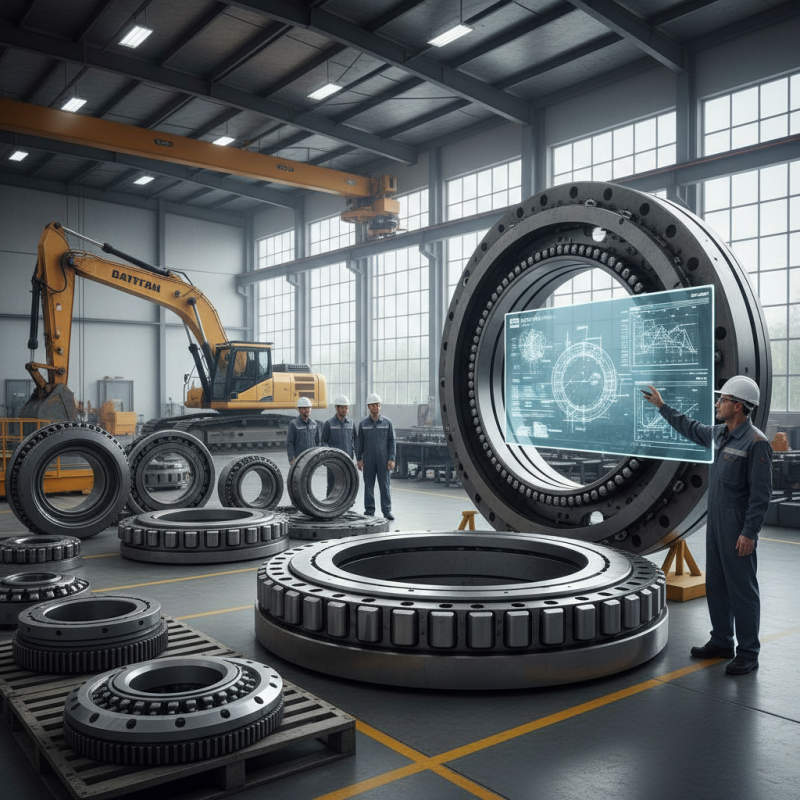
Understanding Industrial Turntable Bearings: An Overview
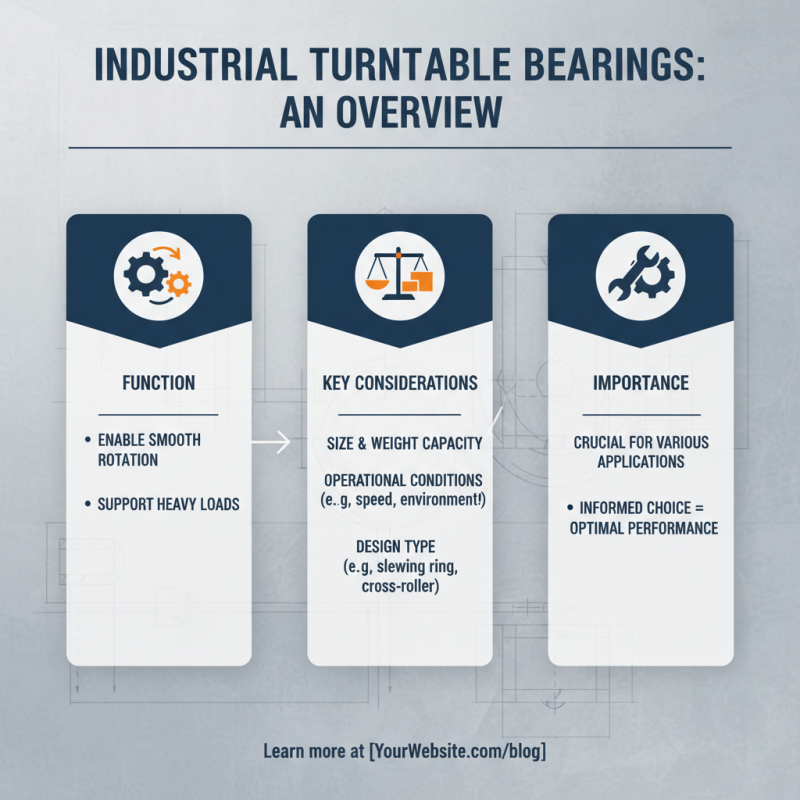
Industrial turntable bearings play a crucial role in various applications. These components enable smooth rotation and support heavy loads. Their design varies based on specific needs such as size, weight, and operational conditions. Understanding the fundamentals of these bearings helps in making informed choices.
There are different types of turntable bearings. Some are designed for high-speed operations, while others excel in load capacities. The choice depends on the application—whether it’s for machinery, transportation, or other industrial uses. Knowing the requirements can prevent common mistakes. For instance, selecting a bearing with inadequate load ratings can lead to failures.
Maintenance is often overlooked but is essential for longevity. Regular inspections help identify wear and tear. Sometimes, users may not realize the importance of lubrication or timely replacements. Reflecting on these aspects can improve overall performance. Planning for regular maintenance checks can save costs and downtime in the long run.
Types of Industrial Turntable Bearings and Their Applications
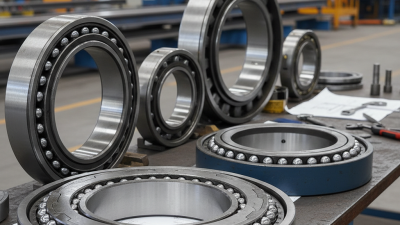
Industrial turntable bearings are crucial in various applications. They provide the essential support for rotating components, ensuring smooth operation. There are several types of turntable bearings, each designed for specific needs.
One common type is the single-row bearing. This design is straightforward and cost-effective. It is often used in manufacturing processes where precision is key. Another popular type is the four-point contact bearing. This option is ideal for heavy loads and allows for greater stability. It is commonly employed in heavy machinery and construction equipment.
However, selecting the right bearing can be challenging. Each application has unique requirements. Consider factors like load capacity and environmental conditions. Using the wrong bearing can lead to equipment failure. Regular maintenance is also essential for optimal performance. A little reflection on these factors can save time and resources in the long run.
Types of Industrial Turntable Bearings and Their Applications
Key Considerations When Selecting Turntable Bearings
When selecting turntable bearings for industrial applications, several key considerations arise. The load capacity, rotational speed, and environmental factors significantly influence the performance. According to a recent industry report, improper bearing selection can lead to a 30% decrease in equipment lifespan. Therefore, understanding the specifics of your operation is paramount.
Tip: Evaluate your load and speed requirements thoroughly. Many turntable bearings are designed for specific capacities. If the wrong type is used, this can cause premature failure.
Additionally, consider the environmental conditions. High temperatures or corrosive environments can affect bearing performance. A study noted that about 25% of bearing failures are linked to environmental factors. Using the right materials and seals can enhance durability.
Tip: Regular maintenance is crucial. Inspect bearings routinely to catch wear early. Adjustments can often extend the lifespan of these components significantly.
Top Manufacturers of Industrial Turntable Bearings
When selecting industrial turntable bearings, choosing reliable manufacturers is essential. The market offers various solutions tailored to specific needs. Quality and efficiency should be your primary concerns. Materials used in bearing construction directly impact performance. Thus, understanding these aspects is crucial for making informed decisions.
Many manufacturers focus on precision engineering. They utilize advanced technology to enhance durability and load capacity. This often results in improved operational efficiency. However, not all brands maintain the same standards. Some may cut corners to reduce costs. It’s vital to do thorough research and compare options.
Additionally, seeking manufacturers with a proven track record can provide peace of mind. Reviews and case studies help assess reliability. Engaging with experts in the field can shed light on the best choices. Some manufacturers are more innovative, offering custom solutions. This adaptability can significantly benefit specific applications. Always weigh the pros and cons before proceeding. Keep in mind that a well-informed choice can lead to better operational outcomes.
Maintenance Tips for Prolonging the Life of Turntable Bearings
Proper maintenance of turntable bearings is essential to ensure their longevity and performance. Regular inspections can reveal issues before they escalate.
Checking for signs of wear or unusual noises should be part of routine maintenance. Dust and debris can cause friction.
Keep the bearings clean and free from contaminants. Simple cleaning with a soft cloth can make a big difference.
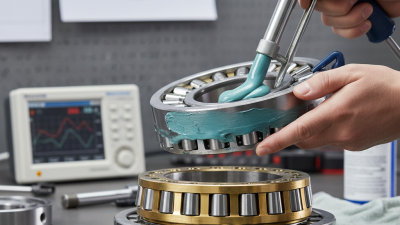
Lubrication is another key component for maintaining turntable bearings. Using the right lubricant can enhance performance.
A well-lubricated bearing reduces friction and prevents overheating. Follow the manufacturer's guidelines for lubrication frequency.
It’s crucial to avoid over-lubricating, which can attract dirt. Create a maintenance schedule to help you stay on track.
Finally, think about the operating environment. High temperatures can degrade materials over time.
Ensure that turntable bearings are used within recommended temperature ranges. Implementing climate controls can further protect them.
Regular training for operators on proper handling may reduce mistakes and enhance bearing life.
Inconsistent practices can lead to premature failure, so everyone must be aligned on proper procedures.