How to Choose the Best Radial Ball Bearings for Your Needs?
Choosing the right radial ball bearings is crucial for various applications, from industrial machinery to consumer products. According to industry expert John Smith, "The right choice in radial ball bearings significantly impacts performance and longevity." His statement highlights the importance of this selection process.
Radial ball bearings are essential in reducing friction and supporting loads in rotating applications. When selecting these bearings, consider factors such as load capacity, speed, and material. Materials can range from steel to ceramic, each providing unique properties. This decision will not only affect durability but also efficiency. There is always room for reflection, as many buyers overlook these specifics, leading to premature failure.
The process of choosing radial ball bearings can be complex. While manufacturers provide guidelines, not all applications are straightforward. Each choice entails balancing performance with cost-effectiveness. A thorough understanding of your specific needs is necessary. It helps ensure you avoid costly mistakes in the long run.
Understanding Radial Ball Bearings and Their Applications
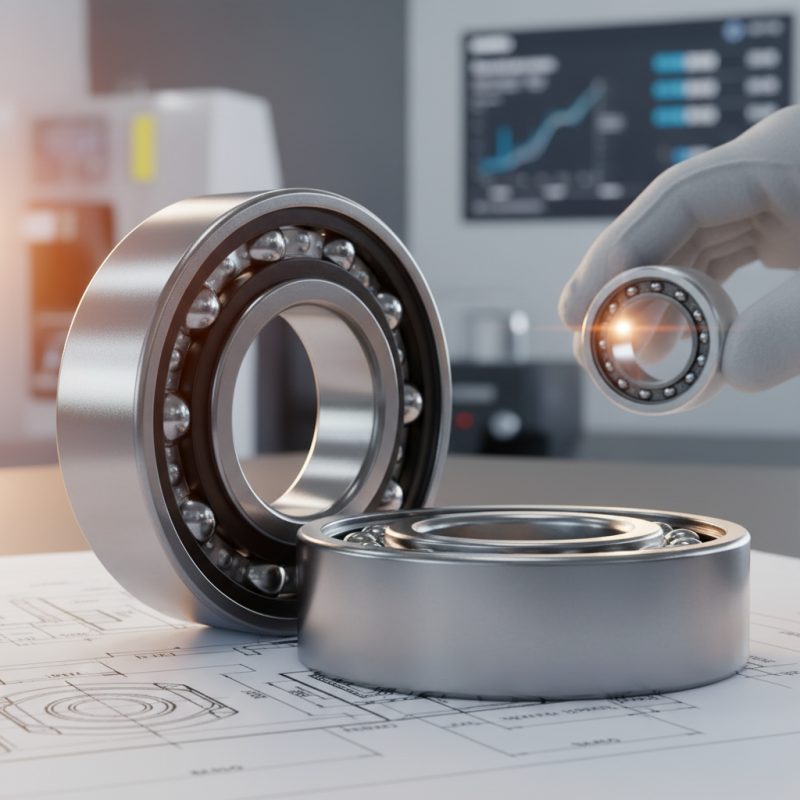
Radial ball bearings play a crucial role in various applications, from electric motors to automotive systems. Understanding their specifications and suitability is essential. These bearings reduce friction between moving parts, ensuring smooth operations. According to industry reports, the global ball bearing market is projected to grow at a CAGR of 3.4% from 2021 to 2026. This interest reflects their significance in modern machinery.
When selecting radial ball bearings, consider load capacity and speed ratings. Different applications require different specifications. For high-speed applications, look for bearings with lower friction coefficients. Remember, not all bearings are created equal. Some may not suit extreme temperatures. Researching material compatibility is crucial.
Tip: Always check the bearing's installation requirements. Improper installation can lead to equipment failure, costing time and money.
Regular maintenance can prolong the life of the bearings. Keep an eye on lubrication levels; insufficient grease can result in overheating. Industry studies indicate that a well-maintained bearing can support operations for thousands of hours longer than one that is neglected. Be proactive in your selection and maintenance. It can yield significant benefits in efficiency and durability, but it requires diligence.
Comparison of Different Radial Ball Bearings
Key Factors to Consider When Selecting Radial Ball Bearings
When selecting radial ball bearings, several key factors significantly influence performance. Load capacity is one crucial aspect. It determines how much weight the bearing can safely support. Inadequate load capacity can lead to premature failure. Assessing the typical and maximum load requirements of your application helps ensure optimal performance.
Next, consider the bearing's material and finish. Different materials offer varying levels of corrosion resistance and durability. For instance, stainless steel bearings can withstand harsh conditions better than standard steel. Surface finishes also play a role; smoother surfaces reduce friction and wear, enhancing lifespan. Choosing the right combination depends on the specific environment in which the bearing will operate.
In addition, pay attention to the bearing's size and dimensions. The inner and outer diameters must match your application perfectly. Oversized or undersized bearings can lead to misalignment and operational issues. Sometimes, it is necessary to recalibrate your design to accommodate optimal bearing choices. Testing multiple configurations may help you find the ideal fit. Evaluating these factors thoroughly will lead to better performance and reliability in your projects.
How to Choose the Best Radial Ball Bearings for Your Needs? - Key Factors to Consider When Selecting Radial Ball Bearings
| Dimension |
Inner Diameter (mm) |
Outer Diameter (mm) |
Width (mm) |
Load Rating (kN) |
Speed Rating (RPM) |
| 6000 Series |
10 |
26 |
8 |
4.0 |
27000 |
| 6200 Series |
15 |
32 |
10 |
5.5 |
23000 |
| 6300 Series |
20 |
42 |
12 |
7.5 |
21000 |
| 6400 Series |
25 |
52 |
15 |
10.0 |
19000 |
Types of Radial Ball Bearings: An Overview
Radial ball bearings are essential components in various machines and equipment. They support radial loads and enable rotating parts to move smoothly. Understanding types of radial ball bearings can help you make informed decisions when selecting one for your needs.
There are several types of radial ball bearings available. Deep groove ball bearings are the most common type. They can handle both radial and axial loads. These bearings typically offer low friction and maintain high speed. Angular contact ball bearings feature a design that accommodates axial loads. They’re often used in high-speed applications, but require careful alignment.
Another option is self-aligning ball bearings. These bearings can handle misalignment, making them suitable for applications with shaft deflection. It’s essential to note that selecting the wrong bearing can lead to increased wear. Be mindful of the operating conditions, as temperature and load impacts performance. Always assess the requirements thoroughly to avoid potential issues.
Materials and Design Features Impacting Performance
When selecting radial ball bearings, the materials and design features greatly influence performance. Bearings made from high-quality steel or ceramic offer durability and resistance to wear. Steel provides strength, while ceramics can reduce friction and increase speed. Each material has unique benefits. Consider your application’s requirements carefully.
The design features, such as ball size, raceway geometry, and lubrication methods, also play a crucial role. Smaller balls can allow for higher speeds but may reduce load capacity. Different raceway designs can enhance axial load handling. Certain lubrication types improve efficiency but require maintenance. Evaluate the specific needs of your machinery for optimal results.
Understanding these factors is essential. Many users overlook the importance of using the right materials. Some may choose cost over quality, leading to performance issues. Reflection on previous choices can help in making better decisions for future applications. Keep in mind that the right bearing can significantly impact overall machinery efficiency.
Establishing the Optimal Size and Load Rating for Your Needs
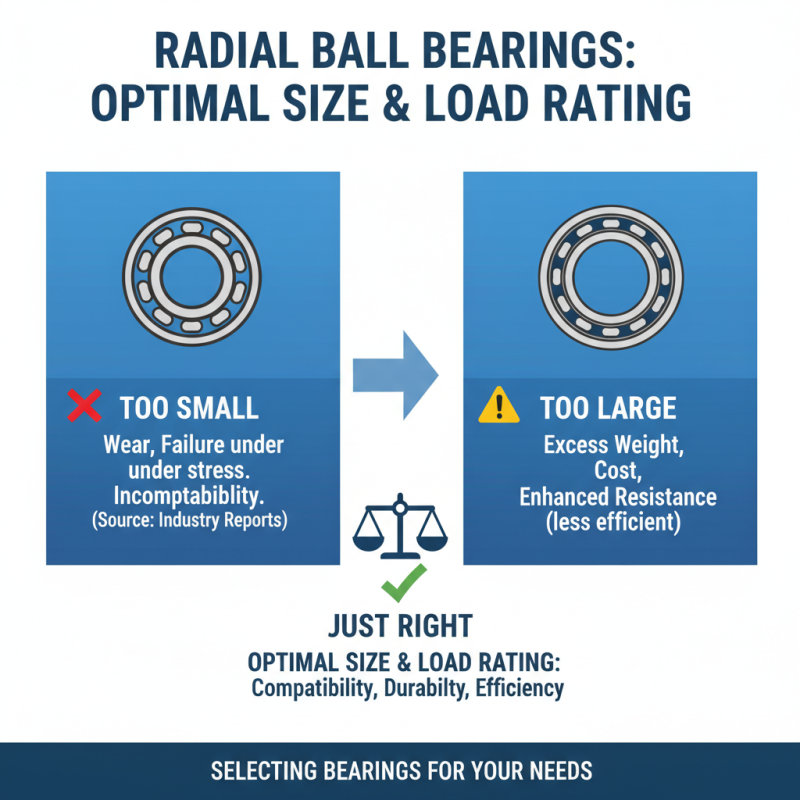
When selecting the right radial ball bearings, size and load rating are critical factors. The size affects compatibility with existing machinery. A mismatch can lead to wear or failure. According to industry reports, bearings that are too small for their application can fail under stress. In contrast, oversized bearings may enhance resistance but can create excess weight and cost.
Load rating is another key consideration. Bearings must support the expected loads during operation without excessive wear. The dynamic load rating indicates how much load a bearing can endure while in motion. The static load rating provides insights into load limits when stationary. Research from engineering bodies suggests that choosing a bearing with a higher load rating than necessary can improve durability, but it also increases costs and may not be efficient.
Balancing size and load rating requires careful reflection on the specific application. Each choice comes with trade-offs. For instance, a smaller bearing may underperform under heavy loads, while a larger one might lead to unnecessary adjustments in design. Each decision should reflect the operational environment, expected lifespan, and maintenance capabilities to optimize performance and reliability.