How to Choose the Best Bearing Lock Supplier in China?
Choosing a Bearing Lock supplier in China is not just a price comparison. A locking nut or sleeve may look simple, yet poor thread accuracy, inconsistent heat treatment, or rough finishing can cause delays during assembly. Small parts matter. Buyers should examine material traceability, dimensional inspection records, production capacity, and the supplier’s experience with the required bearing arrangement.
The market context is substantial. Grand View Research’s Bearing Market Size, Share & Trends Analysis Report estimated the global bearing market at USD 121.6 billion in 2023 and projected an 8.3% compound annual growth rate from 2024 to 2030. This figure covers bearings broadly, not Bearing Lock products alone. Still, it signals a large and evolving supply chain, where buyers need clear specifications and dependable quality controls. A market forecast cannot verify an individual factory.
For that reason, compare suppliers using evidence, not polished catalog pages. Request drawings, inspection methods, sample parts, and documented material details. Check whether production tolerances match your shaft, housing, and installation process. Ask how the factory handles nonconforming parts and repeat orders. A video call can help, but it does not replace an audit or independent testing when the application is critical. No checklist removes every risk. Even experienced buyers can miss small inconsistencies between samples and mass production. The best supplier is not always the cheapest, or the largest; it is the one that can explain its process clearly and support the specification consistently.
Understanding Bearing Locks and Their Industrial Applications
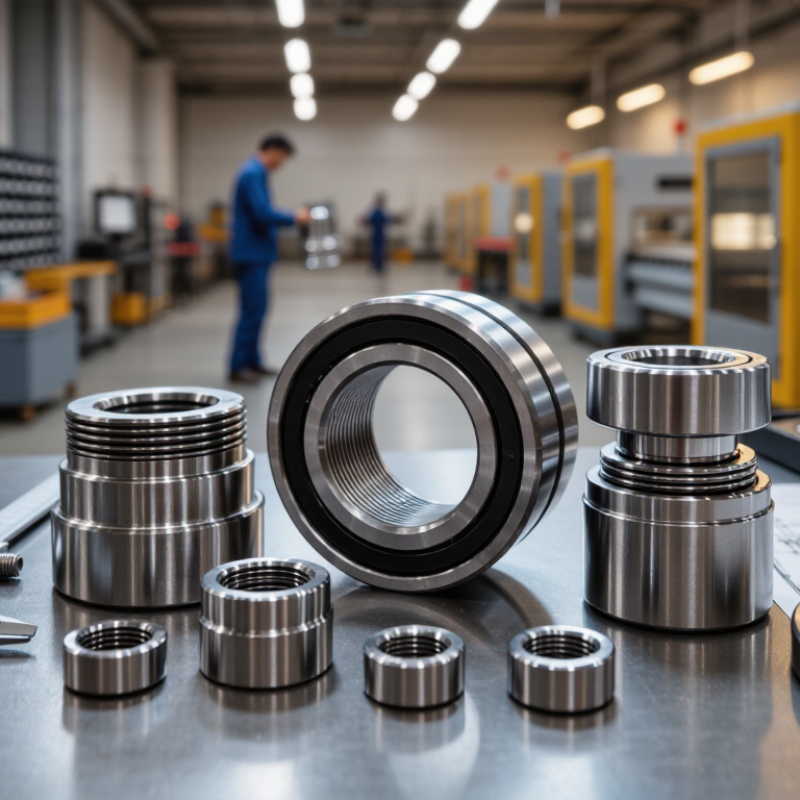
A bearing lock secures a bearing’s inner ring to a shaft, helping limit creep under rotation, vibration, and changing loads. Common options include locknuts, adapter sleeves, eccentric collars, and set-screw collars. Each suits different shaft sizes and operating conditions. The right choice depends on fit, speed, axial load, access for maintenance, and how often technicians must remove the bearing. Small details matter. A lock that is difficult to inspect may slow maintenance, even when its dimensions look correct on paper.
Conveyors, fans, pumps, and agricultural machinery all rely on secure bearing mounting. Dust, washdown, and frequent starts can change what works in the field. The U.S. Department of Energy’s 2006 sourcebook, Improving Pumping System Performance, estimates that pumping systems use nearly 20% of global electricity.
It reports 25–50% of energy use in some industrial plants. This figure describes pumping systems, not bearing-lock savings, but it shows why dependable rotating equipment matters.
When assessing a supplier in China, request dimensional tolerances, material details, inspection records, and installation guidance. Compare samples against the actual shaft and bearing arrangement. I would also ask how the supplier handles out-of-tolerance parts; that practical answer can reveal more than a polished catalog.
Identifying Your Bearing Lock Requirements
Identifying Your Bearing Lock Requirements
Before comparing suppliers, define where and how the bearing lock will work. Measure the shaft diameter, available mounting space, and required locking length. Record the expected load, operating speed, temperature range, and exposure to dust or moisture. Small details matter. A lock used in a vibrating conveyor may need different holding performance from one fitted to a quiet packaging machine. Note the shaft material and surface condition, too; a rough or coated surface can affect fit.
Decide whether installation must be possible with standard tools, and identify any limits on adjustment or removal time. Share a clear drawing with dimensions and tolerances, plus photos of the installation area when helpful. Ask suppliers how they verify fit, clamping force, and consistency between production batches. Request material and inspection information that matches your actual service conditions. It is easy to over-specify, too. Extra features can add cost without improving performance, so separate essential requirements from preferences. If a dimension is uncertain, flag it rather than presenting an estimate as a confirmed value. That small admission can prevent a poor match.
How to Choose the Best Bearing Lock Supplier in China?
Identifying Your Bearing Lock Requirements
The scores are an illustrative buyer-priority guide on a 1–5 scale, not survey results. Start by confirming the required shaft size, locking method, material, load conditions, and operating environment. Then verify dimensional drawings, material and inspection documentation, production capacity, and lead-time commitments with each supplier.
Evaluating Supplier Experience, Production Capacity, and Quality Control
Choosing a bearing lock supplier in China starts with evidence, not a polished catalog.
Ask about years making the exact part, typical order sizes, and experience with your shaft dimensions. A supplier’s total factory output can be misleading. Check whether its machines, operators, and inspection staff can handle your order without rushing other batches. Request a recent production schedule and a sample made on the intended line. Small details matter: thread fit, locking-face finish, and whether the part stays secure after repeated installation. A clean sample is useful, but it cannot tell the whole story.
Quality control should be visible in records.
Ask for material certificates, inspection plans, gauge calibration dates, and traceability linking each batch to its checks. ISO 281:2007 defines basic rating life for rolling bearings at 90% reliability; this is a bearing-life benchmark, not a certification for lock components. For a lock, require dimensional checks against your drawing and a documented fit test with the mating shaft. Visit the production floor, or arrange an independent audit if travel is difficult. A tidy audit score can still miss variation between shifts. That deserves a second look. Compare rejected-part records and corrective actions, not just pass rates. The best supplier is willing to explain a defect plainly and show what changed afterward.
Comparing Quotations, Delivery Terms, and After-Sales Support
How to Choose the Best Bearing Lock Supplier in China?
Comparing Quotations, Delivery Terms, and After-Sales Support
A useful quotation should make the bearing lock specification easy to verify. Compare material, dimensions, tolerances, surface finish, inspection records, minimum order quantity, and packaging. Ask whether the price includes sample testing and export packaging. A low quote can look convincing while covering a different specification. Even a careful comparison table can miss a detail.
Delivery terms deserve the same scrutiny. Confirm the named delivery location, who arranges freight, and when the production lead time begins. Request a realistic schedule with sample approval, production, inspection, and dispatch dates. The World Bank’s 2023 Logistics Performance Index reports that about 85% of shipments reach destinations on schedule in top-performing countries, versus fewer than 50% in low-performing ones. It is a broad logistics benchmark, not a supplier guarantee. Still, it shows why promised dates need evidence.
After-sales support is easier to judge when procedures are written down. Ask how quickly technical questions receive a response, what documents support a defect claim, and whether replacement parts are available. A clear contact route matters when a lock assembly does not fit during installation. Compare response commitments, not just friendly promises. Some details will remain uncertain until a sample is tested. Admit that, and record the risk before placing a larger order.