How to Choose the Right Rotating Bearing for Your Application?
Choosing the right rotating bearing is crucial for equipment efficiency. A recent study revealed that 30% of machine failures are linked to improper bearing selection. This statistic highlights the importance of making informed choices.
Rotating bearings come in various types, each with unique features. The specific application often dictates which bearings are suitable. For instance, loads, speeds, and environmental conditions play significant roles. A mismatch can lead to decreased performance or premature failure.
Many industries rely on rotating bearings. From aerospace to automotive, the right choice can impact productivity. Yet, there is a noticeable lack of understanding among users. This gap in knowledge can lead to costly mistakes. Reflecting on past choices can guide future decisions. Selecting bearings is not just about specifications; it involves a deeper understanding of your application.
Understanding Different Types of Rotating Bearings and Their Functions
Choosing the right rotating bearing is crucial for machine performance. Rotating bearings come in various types, each designed for specific functions. Understanding these types helps identify the best fit for your application.
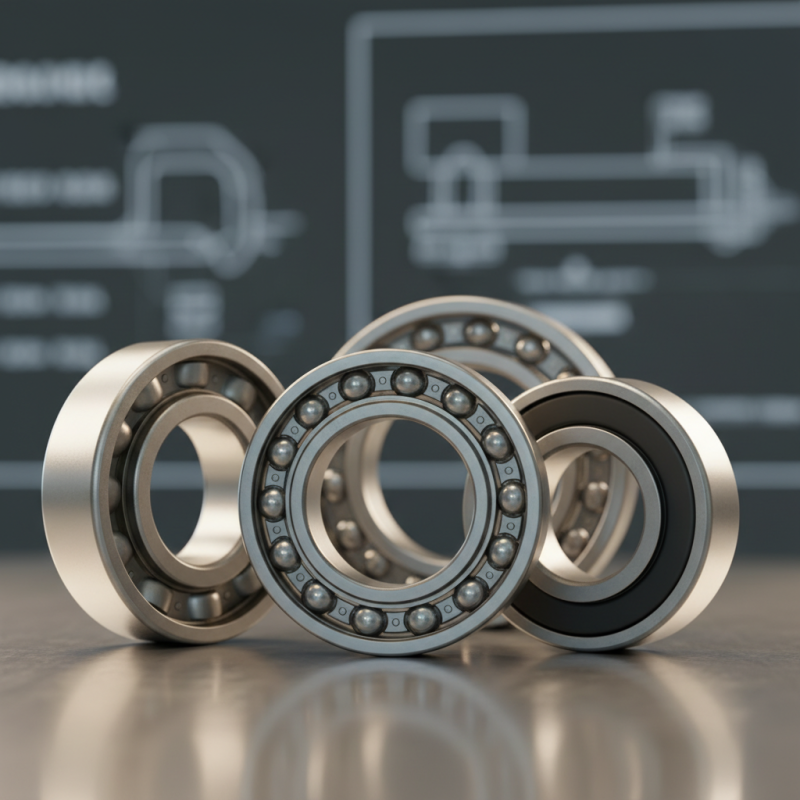
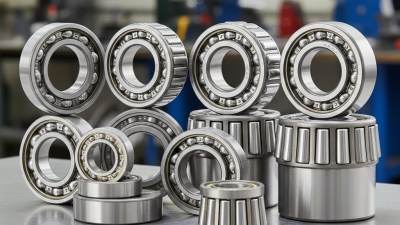
Ball bearings are popular for low-friction environments. They support radial and axial loads effectively. According to industry reports, around 35% of all rotating machinery uses ball bearings due to their versatility. However, they may not handle extreme loads well. This limitation requires careful consideration in heavy-duty applications.
Roller bearings, on the other hand, excel under high load conditions. They distribute weight across a larger surface area. This design reduces stress on individual elements, thus enhancing reliability. Some studies indicate they can increase load capacity by up to 30% compared to ball bearings. Yet, they can generate more friction, impacting speed. It's vital to weigh these factors against your functional requirements.
Types of Rotating Bearings and Their Applications
This chart displays the various types of rotating bearings along with their application areas. Understanding these can aid in choosing the right bearing for specific engineering needs.
Evaluating Load Capacity and Speed Requirements for Your Application
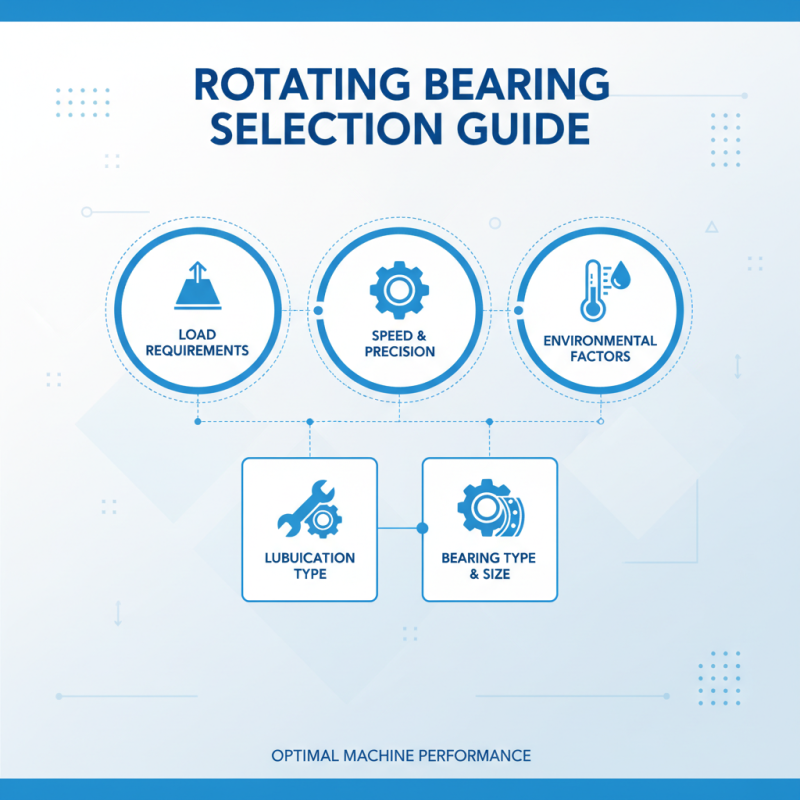
When selecting a rotating bearing, evaluating load capacity and speed is critical. Every application has unique demands. Understanding these needs helps avoid costly mistakes later. Heavy machinery often requires bearings that can support significant weight while spinning at high speeds. These dual requirements can complicate your choice.
Load capacity often depends on the bearing's size and material. A larger bearing can support more weight, but it may also add unnecessary bulk. It's essential to find a balance. High-speed applications might benefit from lightweight materials, yet compromising on strength can lead to failure. It's important to know the typical operating conditions the bearing will face.
Analyzing the speed requirements is equally vital. Some applications require consistent speed, while others experience fluctuations. These variations affect the bearing's lifespan and performance. Engineers need to consider these factors. A bearing that operates smoothly at one speed might struggle at another.
Reflecting on past choices can highlight what works and what doesn't. Test the boundaries before finalizing your decision. A thoughtful evaluation leads to better outcomes.
Material Selection for Rotating Bearings: Options and Benefits
Material selection is crucial for rotating bearings. The type of material directly impacts performance and longevity. Common materials include steel, ceramic, and composite. Steel bearings are robust but can corrode. Ceramic bearings resist wear and offer low friction. Composite materials combine lightweight properties with strength. According to a recent report by the American Bearings Manufacturers Association, about 30% of failures are due to material issues. Choosing the right material can significantly enhance bearing life.
Consider operating conditions when selecting materials. High temperatures can weaken metals. In corrosive environments, stainless steel or special coatings work better. A comparison study revealed that ceramic bearings last over three times longer than steel in harsh conditions. However, they come with a higher price tag. The balance between cost, performance, and environment often leads to difficult choices. Not every application justifies a high-end material.
The decision process is not straightforward. Some engineers prioritize durability over cost, while others focus on savings. It's important to reflect on your specific requirements. Overlooking subtle factors may have long-lasting repercussions. Investigate all options and weigh the pros and cons. This way, you’ll make a more informed choice that fits your application’s needs.
Maintenance and Lifespan Considerations for Rotating Bearings
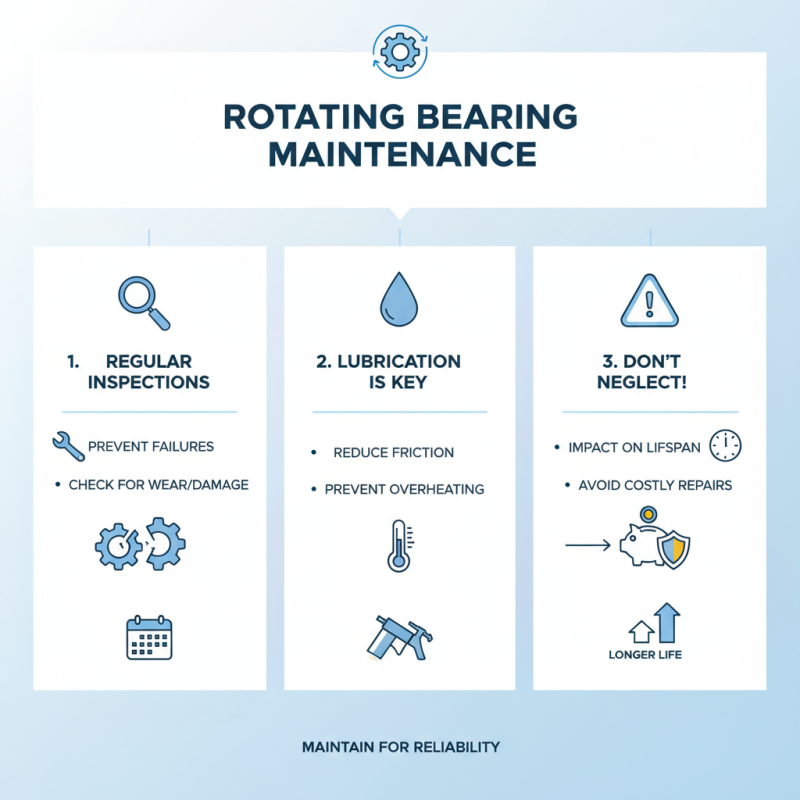
When considering rotating bearings, maintenance is crucial. Regular inspections can prevent unexpected failures. Check for any signs of wear or damage during these inspections. Lubrication is key. Adequate lubrication reduces friction and prevents overheating. Many users neglect this aspect. It may seem minor, but it can significantly impact lifespan.
Temperature monitoring is also vital. High temperatures can cause premature wear. It's essential to use equipment to track temperature levels. If overheating occurs, immediate action should be taken. Some bearings have temperature thresholds, yet many do not account for this. Proper alignment is another factor. Misalignment leads to uneven wear and shortens lifespan, yet it often goes unnoticed.
Even with all precautions, sometimes things go wrong. It's important to reflect on maintenance routines. Are they adequate? Regularly updating maintenance schedules can provide better insights. Learning from past failures can improve future performance. Each application is unique; what works for one may not suit another. Adjusting strategies based on specific needs can extend bearing life significantly.