Top Tips for Effective Bearing Design Techniques?
In the realm of engineering, "Bearing Design" stands as a cornerstone of machinery efficiency. Renowned expert Dr. John Smith once stated, "Good design is not just about function; it's about the experience." This philosophy underpins effective bearing design techniques.
Many engineers overlook nuances in material selection or alignment. These details can determine a bearing's lifespan. Choosing the right materials impacts the bearing’s performance, especially under load. For instance, ball bearings made from high-grade steel often outperform those made from standard materials. However, premium materials come at a cost.
Moreover, proper installation is vital. Misalignment can lead to premature failure, causing costly downtime. Despite knowing this, some engineers still rush through the setup process. Emphasizing the importance of precise placement and torque specifications can lead to significant improvements. The path to optimal "Bearing Design" is not always clear, but reflection on these key areas can enhance overall effectiveness.

Understanding the Basics of Bearing Design and Their Applications
Bearing design is crucial in various engineering applications. It affects performance, durability, and overall efficiency. Understanding the fundamental concepts of bearing design can significantly impact industrial operations. For instance, according to a study by the National Institute of Standards and Technology, proper bearing design can improve efficiency by up to 8%, which translates into substantial cost savings over time.
When selecting bearing types, factors like load capacity and speed are vital. Different applications require different bearings. For example, high-speed applications often prefer ball bearings, while heavy-load scenarios might need roller bearings. A recent report from an industry analysis revealed that improper bearing selection accounts for nearly 25% of machinery failures. This statistic underscores the importance of meticulous design efforts.
Material choice is another critical aspect that warrants reflection. Common materials include steel, ceramic, and polymer. Each has unique strengths and weaknesses. Some materials may not perform well under extreme conditions, leading to premature failure. Regular reassessment of design elements ensures that bearings remain effective. Remember, even minor design adjustments can create significant performance enhancements in the long run.
Key Materials and Their Properties in Bearing Construction
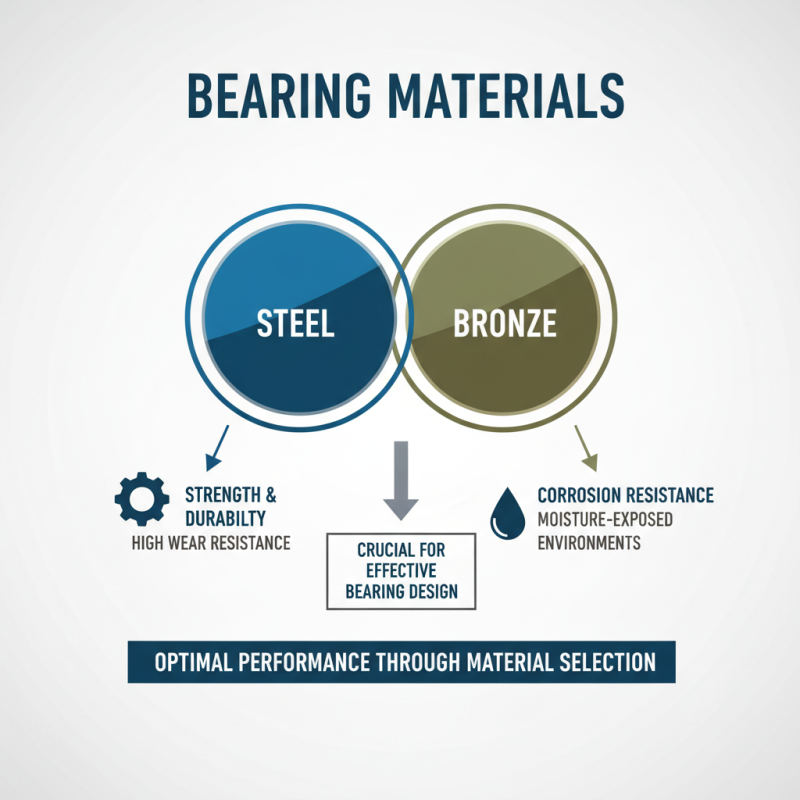
When designing effective bearings, the choice of materials plays a crucial role. Metals such as steel and bronze are often preferred for their strength and durability. Steel offers high resistance to wear and deformation. Bronze, on the other hand, provides excellent corrosion resistance. It can be particularly useful in environments exposed to moisture.
While these materials have advantages, they also present challenges. Steel can become brittle under certain conditions, leading to potential failures. Bronze, while resistant to corrosion, may not endure high loads as effectively as steel. Therefore, selecting the right balance of materials is essential.
Additionally, advanced composites are emerging as viable options in bearing design. These materials can be lighter and may offer unique properties. However, they often require careful analysis to ensure proper performance under various conditions. It's important to constantly evaluate how these materials behave over time. Ultimately, understanding the properties and limitations of each material is essential for effective bearing design.
Essential Design Parameters for Optimal Bearing Performance
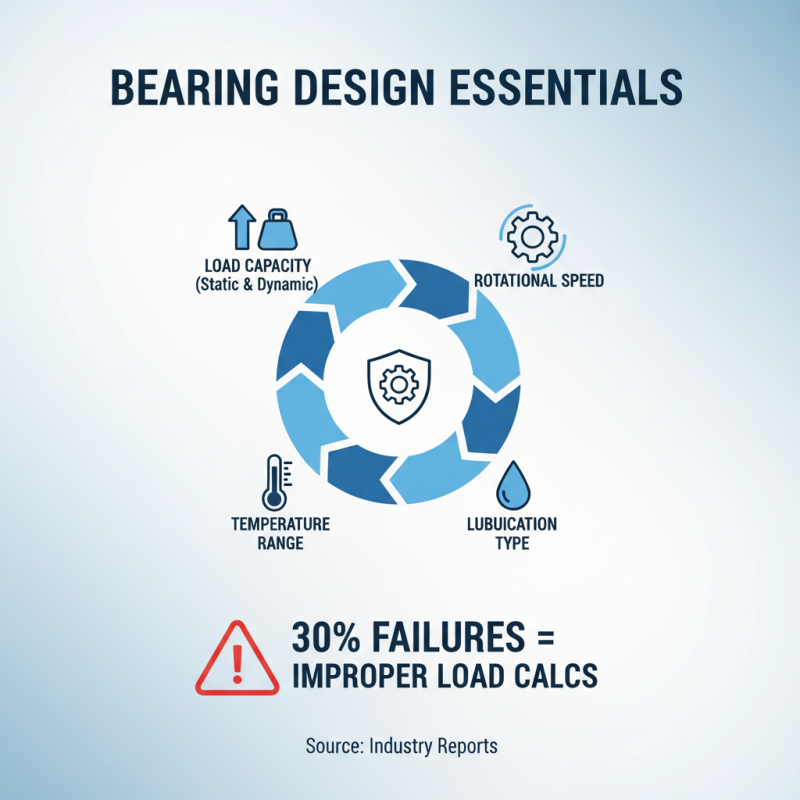
Effective bearing design requires attention to several key parameters. These include load capacity, rotational speed, lubrication type, and temperature range. According to industry reports, nearly 30% of bearing failures are attributed to improper load calculations. Designers must ensure that the bearing can adequately support both dynamic and static loads.
Lubrication is another critical factor. Proper lubrication reduces friction and wear, which directly affects bearing lifespan. A study by the Bearing Research Council indicates that about 40% of bearings operate under inadequate lubrication conditions. Regular maintenance and selecting the right lubricant can improve performance. However, many engineers overlook this aspect in the initial design phase.
Temperature variations also play a significant role. Bearings in high-heat applications can experience accelerated wear. Reports suggest that every 10°C increase in temperature can halve bearing life. Thus, designers must account for thermal expansion to prevent failures. Failing to do so may result in costly downtime or unplanned maintenance. These challenges highlight the need for continuous improvement in design practices.
Analysis Techniques for Bearing Load and Lifespan Estimation
When designing bearings, accurate analysis techniques for load and lifespan estimation are critical. According to a report by the American Bearing Manufacturers Association, over 70% of bearing failures are linked to improper loading conditions. Understanding the load on bearings is vital for reliable performance. Engineers should use tools like finite element analysis (FEA) to simulate load conditions. This technique helps predict potential failure points.
Another essential factor is fatigue life estimation. The Lund Institute emphasizes that miscalculated stress levels can severely shorten a bearing's lifespan. Utilizing methodologies like L10 life calculations offers a statistical approach to lifespan estimates. However, these calculations can sometimes oversimplify real-world conditions. For instance, manufacturing defects or installation errors often get overlooked. This can lead to discrepancies between estimated and actual performance.
In practice, assumptions made during the design phase must be regularly revisited. Regular inspections and adjustments to load parameters can enhance lifespan accuracy. Bearings may also face unique challenges based on their operating environment. External factors, like temperature and contamination, also play a significant role in performance. Thus, designers should continuously update their analysis techniques based on real-world feedback to ensure better predictions.
Top Tips for Effective Bearing Design Techniques
This chart illustrates the estimated load capacity and lifespan of different bearing types based on various design techniques. The data reflects common capacities and lifespans for standard bearings under typical operating conditions.
Common Pitfalls in Bearing Design and How to Avoid Them
In bearing design, common pitfalls can lead to costly failures. One frequent issue is inadequate load calculations. Designers often underestimate the forces acting on a bearing. This can cause premature wear and ultimately failure. It’s crucial to evaluate all load conditions carefully. Skipping this step can be detrimental.
Another common mistake is material selection. Choosing the wrong materials can compromise performance. Some designers prioritize cost over durability. This decision can result in significant long-term expenses. Always consider environmental factors as well. Corrosion resistance may matter more than immediate costs.
Lastly, attention to detail is essential. Overlooking tolerances can lead to misalignment. Misalignment can cause vibration and noise. These issues can escalate into major problems. Regular reviews during the design process can help catch these mistakes early. Incorporating feedback from production can also provide valuable insights. Each step requires careful thought and precision. Ignoring these elements sets the stage for potential failure.
Top Tips for Effective Bearing Design Techniques
| Tip |
Description |
Common Pitfall |
Avoidance Strategy |
| Material Selection |
Choose materials based on load and environmental conditions. |
Using unsuitable materials leading to premature wear. |
Conduct comprehensive material testing and analysis. |
| Design for Load Capacity |
Ensure design can handle the maximum expected loads. |
Underestimating load requirements causing failure. |
Utilize accurate load analysis and factor in safety margins. |
| Proper Lubrication |
Select appropriate grease or oil for better performance. |
Incorrect lubrication leading to overheating and failure. |
Follow manufacturer guidelines for lubrication. |
| Clearances and Fits |
Design correct clearances for smooth operation. |
Improper fits causing excessive vibration and noise. |
Use precision measurements and tolerances during assembly. |
| Regular Maintenance |
Schedule routine inspections and maintenance. |
Neglecting maintenance leading to unexpected breakdowns. |
Implement a preventive maintenance program. |