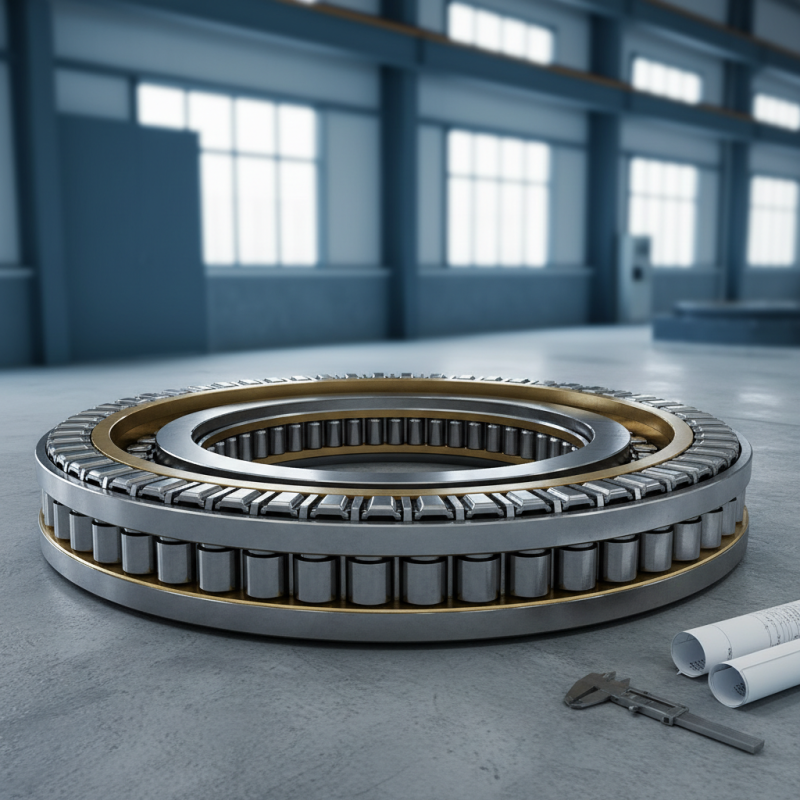
Choosing the right Industrial Turntable Bearing is crucial for operational efficiency. These bearings handle heavy loads and provide stability in various industrial applications. According to a report by Research and Markets, the global industrial bearing market is projected to reach over $78 billion by 2025. Efficient bearings directly influence productivity and reduce downtime.
Expert insights suggest that selecting the appropriate bearing can significantly enhance performance. Dr. Emily Stanton, a renowned mechanical engineer, emphasizes, "The right Industrial Turntable Bearing ensures seamless movement and longevity in equipment." Her experience underscores the importance of understanding load capacities and environmental conditions.
As you examine choices, consider material quality and design specifications. Many engineers overlook these details. A small miscalculation can lead to increased maintenance costs and operational failures. Reflecting on these factors can lead to better decision-making and improved industrial processes.
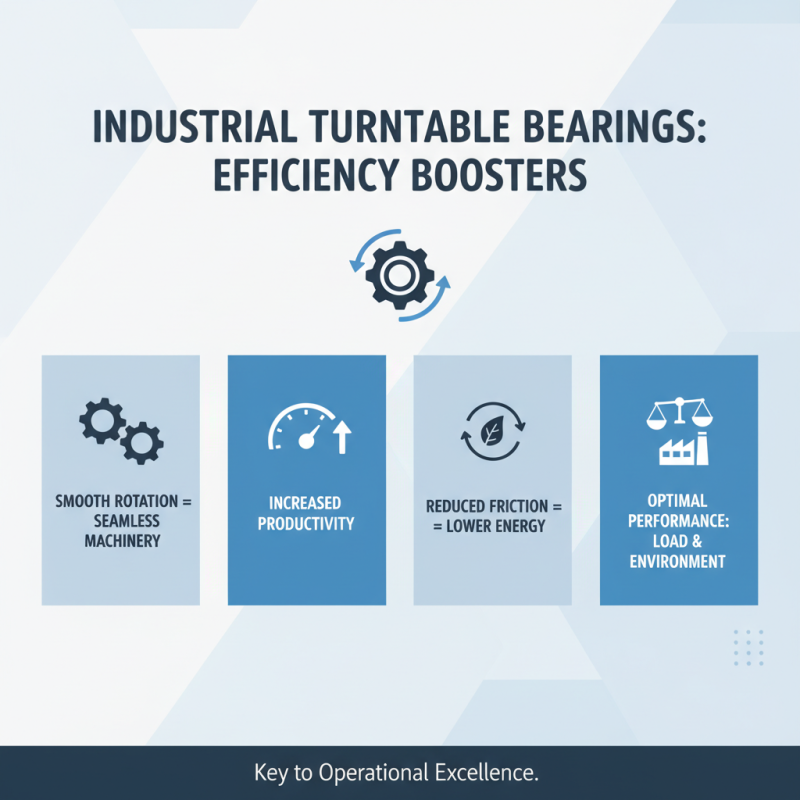
Industrial turntable bearings play a crucial role in enhancing operational efficiency. They facilitate smooth rotation, enabling various machinery to function seamlessly. The choice of these bearings directly impacts performance and productivity. Using high-quality bearings can reduce friction, leading to lower energy consumption. Special attention must be paid to the load capacity and application environment to ensure optimal performance.
Selecting the right bearings is a complex task. Factors such as temperature, humidity, and exposure to contaminants can affect performance. Many engineers overlook these details, which can lead to premature failure. Regular maintenance and inspections are essential for maintaining efficiency. Understanding each application’s specific needs will help in making informed choices.
Efficiency is not solely about speed but also about reliability. Even the best bearings can fail without proper installation. Therefore, training and experience are vital for staff involved in installation and maintenance. Investing time in education can yield significant returns in operational efficiency. Balancing cost with quality is another challenge. Sometimes, cheaper alternatives may result in frequent replacements, ultimately raising costs.
When selecting industrial turntable bearings, understanding key factors is crucial for operational efficiency. Load capacity is paramount. According to industry studies, bearings should support a specific load, measured in tons. A miscalculation can lead to mechanical failures. Choosing a bearing that exceeds the necessary load can ensure longevity, but it may increase costs unnecessarily.
Material type greatly influences performance. Steel bearings are durable but heavier. Composite materials can offer lighter options with a better resistance to corrosion. A recent report indicated that 25% of premature bearing failures result from using inappropriate materials. The environment in which the bearings operate should also be considered. Factors like temperature and exposure to chemicals can degrade materials quickly.
Maintenance requirements are often overlooked. Some bearings need regular lubrication, while others feature self-lubricating designs. The latter can reduce downtime, a critical aspect for manufacturing processes. Research has shown that implementing preventative maintenance can cut replacement costs by up to 30%. Therefore, evaluating long-term maintenance strategies alongside initial costs presents a broader perspective on efficiency.
This chart illustrates key factors to consider when selecting industrial turntable bearings for efficiency, with their respective importance levels represented in percentage form.
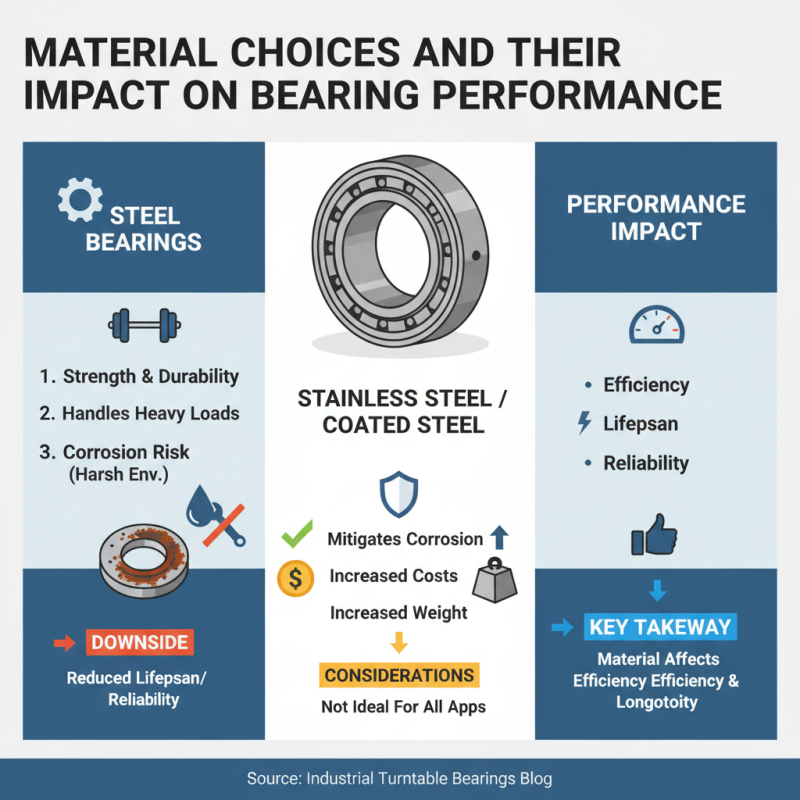
When selecting industrial turntable bearings, material choice greatly affects performance and efficiency. Steel bearings are common due to their strength and durability. They handle heavy loads well but may suffer from corrosion in harsh environments. This can reduce bearing lifespan and reliability. Using stainless steel or coated steel can mitigate this issue but might increase costs and weight, which isn’t ideal for every application.
Ceramic materials offer excellent corrosion resistance and operate well at high speeds with minimal lubrication. However, ceramic bearings are more brittle and can crack under shock loads or misalignment. Their higher price sometimes deters use despite potential long-term savings from reduced maintenance. In some cases, the theoretical benefits of ceramics don’t fully materialize if the installation or operating conditions aren’t optimal.
Polymer bearings offer lightweight and corrosion-free advantages, but their load capacity is often lower than metal or ceramic options. They may deform under continuous heavy load, affecting overall system efficiency. Choosing the right material requires evaluating operating conditions, expected load, speed, and environmental factors. This balancing act isn’t easy and occasionally results in compromises between cost, performance, and durability.
Industrial turntable bearings are critical for efficiency in various applications. Regular maintenance practices can significantly extend their lifespan. According to industry reports, proper lubrication can reduce friction by up to 70%. This not only enhances performance but can also lead to lower energy consumption.
Monitoring temperature is equally important. Bearings may operate effectively at high speeds, but excessive heat can degrade materials. Keeping operating temperatures below recommended levels can prevent premature failures. Inadequate maintenance often leads to costly downtimes. It is worth noting that over 30% of bearing failures result from improper maintenance.
Inspection routines should not be overlooked. Regular checks for wear and damage can identify issues early. Develop a schedule for inspections. Using tools like vibration analysis can help detect underlying problems. Awareness of signs like unusual sounds or changes in operation is crucial. Remember, neglecting small issues can escalate to major failures.
Innovative designs and technologies are reshaping the field of industrial bearings. Advances in materials science enhance durability. New lubrication techniques increase efficiency. These innovations ensure that turntable bearings perform optimally, especially in demanding environments.
When selecting industrial turntable bearings, consider key factors. Assess the environment where they will be used. Temperature fluctuations and exposure to contaminants can affect performance. Additionally, look for bearings that incorporate advanced design features. These features can significantly reduce friction and wear.
Efficiency in operation often hinges on the right choice of bearings. Choose models with a proven track record. They should be able to handle heavy loads without compromising speed. Always take into account the manufacturer's specifications. They reflect the reliability of the bearing under various conditions. It’s essential to focus on performance indicators. They will guide you in making the best decision for your needs.
| Bearing Type | Load Capacity (kg) | Speed Rating (rpm) | Material | Lubrication Type | Temperature Range (°C) |
|---|---|---|---|---|---|
| Ball Bearing | 5000 | 1500 | Steel | Grease | -20 to 80 |
| Roller Bearing | 8000 | 1200 | Stainless Steel | Oil | -30 to 100 |
| Pillow Block Bearing | 10000 | 800 | Cast Iron | Grease | -20 to 70 |
| Thrust Bearing | 3000 | 2000 | Bronze | Oil | -10 to 90 |