Leave Your Message

What Are the Main Types of Agricultural Bearings?

Agricultural Bearings support machines that work through dust, vibration, moisture, and changing loads. They appear in combines, tractors, planters, balers, conveyors, and irrigation equipment. A bearing may look small, yet its failure can stop an entire harvesting operation. That practical risk makes correct selection more important than choosing the cheapest replacement.

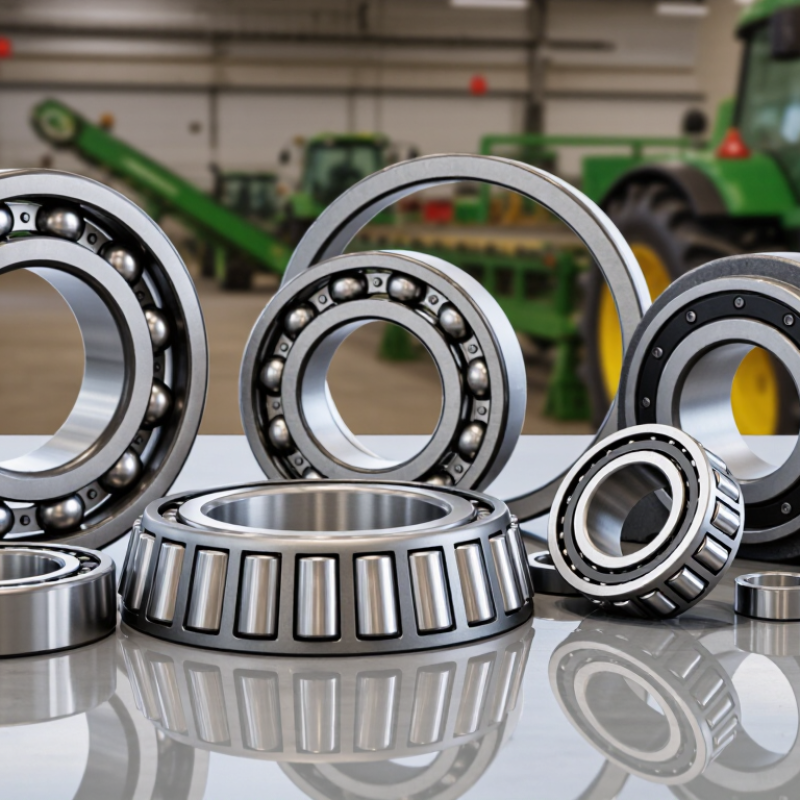
This guide examines the main types of Agricultural Bearings and their typical applications. Deep-groove ball bearings handle steady radial loads and moderate speeds. Roller bearings suit heavier loads, especially in demanding drivetrain areas. Tapered roller bearings manage combined radial and axial forces. Spherical bearings tolerate misalignment when shafts or housings flex during fieldwork. Mounted bearings, including pillow block and flange designs, simplify installation and replacement. Sealed bearings can limit contamination from mud and crop residue, while relubricable models support longer service in harsh conditions.

The categories are not always perfectly separate. A mounted unit may contain a ball or spherical bearing inside. That detail is easy to miss. Experienced technicians also inspect shaft wear, housing condition, lubrication, operating temperature, and load direction before ordering parts. Manufacturer specifications remain essential because dimensions alone cannot confirm suitability. In real field conditions, maintenance records often reveal more than a catalog description. Even careful recommendations need review when equipment age, soil conditions, or working hours change. This article provides a practical starting point, not a substitute for the machine manufacturer’s instructions or a qualified inspection.

What Are the Main Types of Agricultural Bearings?

Agricultural Bearings: Their Role in Farm Machinery

What Are the Main Types of Agricultural Bearings?

Agricultural Bearings: Their Role in Farm Machinery

Agricultural bearings keep shafts turning under dust, vibration, moisture, and uneven loads. Their role is practical: reducing friction while protecting critical moving parts. Tractors, seeders, combines, balers, and irrigation equipment all depend on them.

Common types include deep-groove ball bearings, tapered roller bearings, spherical roller bearings, and mounted insert bearings.

Ball bearings suit moderate radial loads and steady rotation. Tapered rollers handle combined radial and axial forces near wheels or gear drives.

Spherical rollers tolerate shaft misalignment, which is common on flexible farm frames. Mounted units simplify replacement and often include protective seals.

Sealing matters greatly.

A 2022 U.S. Department of Agriculture Census report counted about 1.9 million American farms. That scale shows why dependable machinery maintenance affects many operating schedules.

The FAO’s 2023 Statistical Yearbook also reports agriculture accounts for roughly 70% of global freshwater withdrawals. Wet fields and washdown exposure can therefore accelerate corrosion when seals fail.

Field technicians usually inspect noise, heat, looseness, and grease condition. A bearing that feels rough may already be damaged.

However, replacing every noisy bearing immediately can hide alignment or belt-tension problems. That assumption is convenient, but incomplete.

Bearing life calculations under ISO 281 provide useful estimates, yet real farms remain harsher than laboratory conditions. Mud, overloading, and neglected lubrication still change the result.

Deep-Groove Ball Bearings for General Agricultural Applications

Agricultural machinery uses several bearing types, including deep-groove ball, tapered roller, spherical roller, and needle bearings. Each design handles different loads, speeds, and alignment conditions. Deep-groove ball bearings remain a practical choice for general agricultural applications. They support radial loads and moderate axial loads in compact spaces.

In field equipment, these bearings often operate near soil, dust, moisture, and changing temperatures. A sealed design helps retain grease and reduce contamination during planting, harvesting, and material handling. Proper internal clearance also matters. Excessive clearance can increase vibration, while insufficient clearance may create heat during long operating cycles.

Small details affect service life. The shaft and housing should be clean, correctly sized, and free from burrs. Installation force must pass through the fitted ring, not through the rolling elements. I have seen early failures caused by a hammer, not the workload. That mistake is easy to repeat.

Lubrication should match the operating speed and temperature. Over-greasing can raise heat, especially in continuously rotating components. During inspections, listen for rough rotation and check for unusual play, rust stains, or damaged seals. A bearing may still turn smoothly while its internal raceway is already wearing. That is where routine inspection becomes useful, although it cannot predict every failure.

Tapered Roller Bearings for Heavy Radial and Axial Loads

Agricultural machinery uses several bearing types, including ball, spherical roller, cylindrical roller, and tapered roller bearings. Tapered roller bearings deserve special attention where loads change quickly. Their conical rollers manage radial force and axial force at the same time. This combination matters in wheel hubs, transmissions, augers, and heavy tillage equipment. In field service, soil dust, water, shock loads, and uneven operation can challenge even a correctly selected bearing.

A tapered roller bearing uses an inner cone, outer cup, and rollers guided by a rib. Its geometry creates a contact angle that controls load capacity and running behavior. Higher angles generally support greater axial loads, but they may increase friction and heat. Preload needs care. Too little clearance can cause vibration and uneven roller contact. Too much clearance can create looseness, impact, and premature raceway wear. Small errors matter. The correct setting depends on shaft dimensions, housing fit, operating temperature, and the equipment service manual.

Before installation, inspect shaft seats and housings for scoring, burrs, or distortion. Use clean tools and the specified lubricant quantity. Contamination often enters through damaged seals, not the bearing itself. Operators should monitor temperature, noise, vibration, and end play during operation. A warm housing is not automatically a failure. Ambient temperature, load, and grease condition can mislead diagnosis. Field measurements are often incomplete. Diagnosis is difficult. When wear appears on one side of the raceway, check alignment and mounting force before replacing the bearing.

What Are the Main Types of Agricultural Bearings? - Tapered Roller Bearings for Heavy Radial and Axial Loads

Bearing Type Primary Load Capacity Alignment Capability Typical Agricultural Applications Main Advantages Common Limitations Typical Sealing or Protection
Deep-Groove Ball Bearing Moderate radial loads and limited axial loads in both directions Low; requires reasonably accurate shaft and housing alignment Electric motors, fans, small pumps, seed-metering mechanisms, and auxiliary drives Low friction, compact design, widely available standard sizes, and good high-speed capability Less suitable for severe shock loads, heavy contamination, or high combined loads Shielded or rubber-sealed versions are commonly used to reduce entry of dust and moisture
Angular-Contact Ball Bearing Combined radial and axial loads, with axial capacity dependent on contact angle Low to moderate; mounting arrangement is important High-speed shafts, gearboxes, pump assemblies, and precision rotating mechanisms Supports axial load in a defined direction and provides good rotational accuracy Often requires paired installation or controlled preload; sensitive to incorrect mounting Sealed or shielded configurations are selected when relubrication is difficult
Cylindrical Roller Bearing High radial loads; some designs can accommodate limited axial displacement or axial load Low; normally requires accurate alignment Gearboxes, transmissions, heavy shafts, and high-load drive systems High radial stiffness, high load capacity, and good performance under heavy rotating loads Generally cannot accommodate substantial misalignment; axial capacity varies by design Usually protected by housing seals or separate external sealing arrangements
Spherical Roller Bearing Very high radial loads and moderate axial loads in both directions High; self-aligning design compensates for shaft or housing misalignment Conveyors, threshers, elevators, heavy rollers, and machinery exposed to shock or vibration Handles heavy loads, shaft deflection, vibration, and moderate misalignment Higher friction and larger envelope than many ball-bearing designs; requires suitable lubrication Open bearings are common in heavy-duty housings with grease seals and relubrication points
Tapered Roller Bearing High radial loads and high axial loads in one direction; commonly used in opposed pairs for axial loads in both directions Low to moderate; correct adjustment is required, although paired arrangements can manage shaft deflection Wheel hubs, axle assemblies, gear reducers, heavy-duty transmissions, and implement drive systems Excellent combined-load capacity, high stiffness, good shock-load resistance, and adjustable internal clearance Higher friction than many ball bearings; requires accurate mounting, preload, or endplay adjustment Often installed in grease-filled housings with contact seals, labyrinth seals, or integrated hub sealing
Needle Roller Bearing High radial load capacity for its small cross-sectional height; limited axial capacity Low; shaft and raceway geometry must be accurately controlled Compact gearboxes, universal joints, rocker arms, and space-limited transmission components Compact radial design, low section height, and good load-to-size ratio Sensitive to misalignment, contamination, and inadequate lubrication; axial guidance may be needed Drawn-cup or sealed versions may be used where space and contamination protection are important
Thrust Ball Bearing Axial loads; radial loads should be minimal Low; not intended to compensate for shaft misalignment Vertical shafts, steering mechanisms, light-duty actuators, and low-load axial positioning systems Simple axial-load solution with low starting friction in suitable operating conditions Poor choice for combined radial and axial loads, shock loads, or high misalignment Usually installed inside a protected housing; external sealing is needed in dusty environments
Plain Spherical Bearing Oscillating radial loads and, depending on the design, combined radial and axial loads Very high; accommodates angular movement and misalignment Three-point hitch linkages, steering joints, suspension points, and reciprocating mechanisms Suitable for oscillation, slow movement, misalignment, and heavy intermittent loads Higher friction than rolling bearings and generally unsuitable for sustained high-speed rotation Maintenance-free lined types or greasable designs with protective seals are commonly used

Selection should consider load direction and magnitude, shock and vibration, speed, operating temperature, contamination, lubrication, allowable misalignment, mounting arrangement, and required service life.

Spherical Roller Bearings for Misalignment and Harsh Conditions

Agricultural bearings face dust, vibration, shock loads, and changing weather.

Spherical roller bearings are designed for these demanding conditions. Their spherical outer raceway allows the bearing to handle shaft misalignment. This is useful when housings are not perfectly aligned.

Misalignment is common.

Frames can flex under heavy loads, while shafts may shift during operation. A spherical roller bearing helps maintain contact between the rollers and raceways.

It also carries high radial loads and moderate axial loads. In field machinery, this support can improve reliability around conveyors, harvesters, and processing equipment.

Sealing still matters.

Crop debris and moisture can quickly damage rolling surfaces. Suitable seals, clean grease, and correct housing protection reduce contamination. Installation requires careful attention to shaft fit, internal clearance, and tightening force. Too much pressure may create heat. Too little control may allow movement.

Inspection should include unusual noise, rising temperature, grease leakage, and visible wear.

A rough bearing is not always the original failure. Poor alignment, overload, or contamination may be the deeper cause.

Selection is not always obvious. Load data and operating speed should guide the decision, not appearance alone.

One practical weakness is that even a strong bearing cannot compensate for neglected maintenance. Regular checks remain necessary, especially after dusty or wet operating periods.

Flange, Insert, and Specialized Bearings for Agricultural Equipment

What Are the Main Types of Agricultural Bearings?

Flange, Insert, and Specialized Bearings for Agricultural Equipment

Agricultural bearings support shafts in dusty, wet, and highly vibrating environments. Their design affects service life, alignment, and maintenance time. Flange bearings attach directly to a machine frame. Their mounting holes simplify installation beside conveyors, augers, and processing units. Two-bolt and four-bolt housings suit different load directions. A rigid flange can also help maintain shaft alignment during repeated impacts.

Insert bearings fit inside separate housings. They commonly use locking collars or set screws to secure the shaft. This arrangement allows practical replacement without changing the entire housing. During field maintenance, I check shaft wear before installing a new insert. A damaged shaft can loosen the bearing quickly. It is an easy detail to miss. Seals also deserve attention, especially where soil and chaff collect around the housing.

Specialized bearings serve equipment with unusual loads or movement. Disc harrows, balers, planters, and harvesters may need stronger seals, wider inner rings, or clearance for thermal expansion. Some applications require bearings that tolerate oscillation rather than continuous rotation. Grease selection and relubrication intervals should follow the equipment conditions, not guesswork. I have seen over-greasing create heat and attract contamination. That mistake feels harmless, but it can shorten bearing life. Correct fit, protected seals, and regular inspection remain more important than choosing the largest bearing available.

Main Types of Agricultural Bearings

This chart compares representative nominal dimensions for 25 mm bore bearing examples. Flanged and insert bearings commonly use a mounted insert, while specialized tapered roller bearings are designed to handle combined radial and axial loads. Dimensions may vary by sealing, housing, and manufacturer specification.