Leave Your Message

Top 10 Radial Ball Bearing Manufacturers in the World

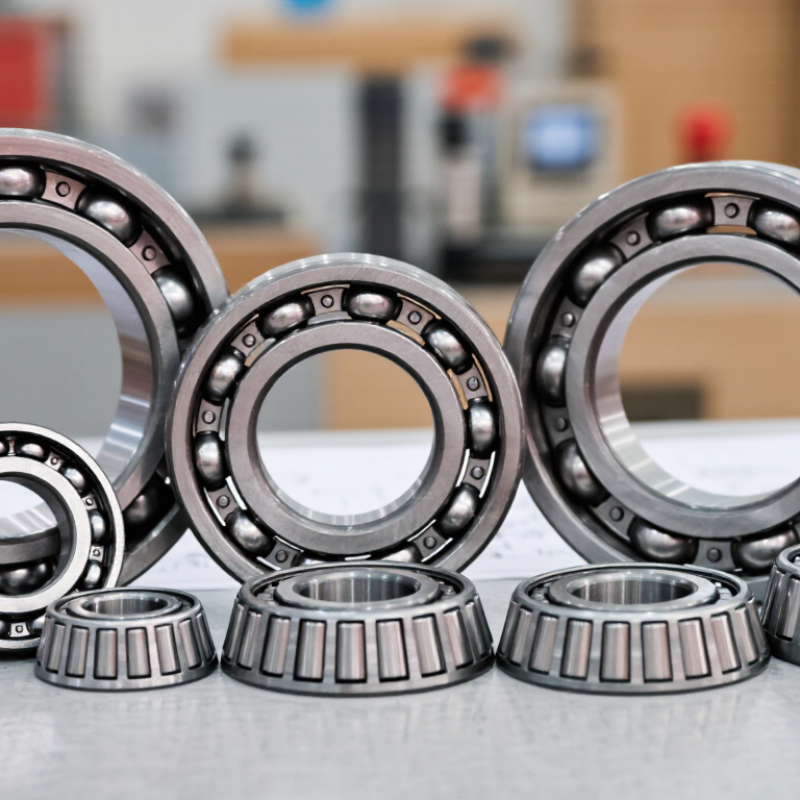
Radial Ball Bearings sit inside electric motors, pumps, conveyors, and countless everyday machines. Their compact design supports radial loads while helping shafts turn smoothly. Yet a bearing is not a simple, interchangeable part. A few microns of clearance, a rough housing seat, or unsuitable grease can change noise, heat, and service life. Small details matter.

Bearing analyst Tedric A. Harris’s work emphasizes a useful principle: bearing performance depends on the complete operating system, not geometry alone. That perspective helps frame this guide to the Top 10 Radial Ball Bearing Manufacturers in the World. The comparison considers product breadth, manufacturing expertise, quality practices, technical support, and international availability. These factors can help buyers shortlist suppliers for specific applications, from a compact fan motor to a heavily used industrial pump. Still, no list can replace application-specific engineering. Rankings also involve judgment, and a supplier’s strengths may not suit every buyer.

Look beyond a familiar brand name. Check load ratings, speed limits, sealing options, lubrication requirements, and documented quality controls. Ask how readily the manufacturer can provide drawings and application guidance. Then compare total operating needs, not just the quoted unit price. A low-cost bearing may prove expensive if replacement requires a shutdown. That trade-off is easy to miss. This overview offers a starting point, not a final specification; confirm critical selections with current manufacturer data and qualified engineering advice.

Top 10 Radial Ball Bearing Manufacturers in the World

Understanding Radial Ball Bearings and Their Industrial Applications

Radial ball bearings support loads acting perpendicular to a shaft while allowing it to rotate. Their rolling elements reduce sliding friction between the shaft and housing. These bearings appear in electric motors, pumps, fans, conveyors, and vehicle accessories. In a motor, a faint growl or rising temperature may signal contamination, poor lubrication, or misalignment. The U.S. Department of Energy’s 2014 Industrial Electric Motor Systems Market Opportunities Assessment estimates that motor-driven systems consume about 68% of U.S. manufacturing electricity. This is not a bearing-specific figure, but it highlights why mechanical losses deserve attention.

The International Energy Agency’s 2011 report on electric motor-driven systems estimates they use about 46% of global electricity. Bearing selection influences equipment reliability, but cannot compensate for an inefficient motor or poor system design. Engineers consider shaft size, radial load, speed, temperature, seals, and lubricant. A dusty conveyor may need different protection from a clean, enclosed pump. Details matter. Published bearing-life estimates rely on assumed loads and operating conditions; actual service can differ when alignment or lubrication is neglected. That gap is easy to underestimate.

Criteria for Comparing Global Radial Ball Bearing Manufacturers

Comparing global radial ball bearing manufacturers means checking performance under comparable conditions, not simply ranking catalogue load ratings. ISO 281:2007 defines dynamic load ratings and basic rating life; its L10 value represents a 90% reliability benchmark under stated assumptions. Ask whether quoted figures match your load, speed, lubrication, and operating temperature. A bearing tested in clean, steady conditions may behave differently beside a dusty conveyor or a hot pump. Numbers need context.

Quality evidence matters too. Check dimensional tolerances, vibration results, material traceability, and documented inspection procedures. ISO 492:2023 specifies boundary dimensions and tolerance classes, while ISO 15243:2017 classifies rolling-bearing damage and failure modes. These standards help buyers compare technical claims and investigate early wear more consistently. Request test methods, sample details, and acceptance limits; a single certificate rarely tells the whole story. Field service history can reveal useful patterns, but it is not always comparable across applications. I would treat unusually broad performance claims cautiously, especially when test conditions are missing. A careful supplier should explain both the rating and its limits.

Profiles of Ten Leading Radial Ball Bearing Manufacturers

A profile of ten leading radial ball bearing manufacturers should begin with their engineering focus, not just production scale. One serves high-volume machinery, where consistent dimensions and reliable delivery matter. Another concentrates on precision spindles, supplying bearings that must run smoothly at high speeds. A third designs for vehicle applications, where vibration, heat, and long service intervals shape specifications. A fourth supports heavy industrial equipment with options for greater load capacity. Details matter.

Other profiles reveal narrower strengths. A miniature-bearing maker may support compact instruments, where a small change in clearance can affect performance. A corrosion-resistant specialist addresses damp or washdown environments, but material choice alone cannot prevent every failure. A custom-production supplier adapts dimensions or seals for unusual assemblies. A regional manufacturer may offer closer technical support and shorter shipping routes. Neither advantage guarantees a better fit.

The remaining manufacturers may focus on energy equipment, general-purpose components, or integrated supply for large equipment builders. Their catalogs can look similar, yet tolerances, lubrication choices, inspection methods, and traceability differ. Buyers should compare drawings, operating temperatures, speed limits, and expected loads before choosing. A bearing that works well on a clean test bench may behave differently beside dust, misalignment, or repeated starts. Manufacturer profiles are useful, though published specifications rarely tell the whole story. Feedback from maintenance teams can expose gaps that a catalog misses.

Top 10 Radial Ball Bearing Manufacturers in the World - Profiles of Ten Leading Radial Ball Bearing Manufacturers

Profile Country of Origin Heritage Year Radial Ball Bearing Portfolio Common Application Areas Global Market Focus
Profile 1 Sweden 1907 Deep-groove, angular-contact, and self-aligning ball bearings Industrial machinery, energy, transport, and automotive systems Broad international manufacturing and distribution presence
Profile 2 Japan 1916 Precision and standard deep-groove and angular-contact ball bearings Machine tools, automotive equipment, electronics, and industrial drives Established supplier to customers across major industrial regions
Profile 3 Japan 1918 Deep-groove, angular-contact, and miniature ball bearings Automotive, rail, agricultural machinery, and general industry Serves both original-equipment and replacement markets internationally
Profile 4 Japan 1921 Deep-groove and angular-contact ball bearings, including automotive applications Automotive systems, industrial machinery, and drivetrain components Strong automotive orientation with a wider industrial customer base
Profile 5 Germany 1883* Deep-groove, angular-contact, and high-precision ball bearings Automotive, aerospace, machine tools, and industrial equipment Long-established engineering heritage and broad international reach
Profile 6 Germany 1946 Precision, deep-groove, and angular-contact ball bearings Automotive powertrains, industrial automation, and machinery Supplies global automotive and industrial customers
Profile 7 Japan 1951 Miniature and small-diameter ball bearings, alongside standard sizes Electronics, home appliances, automotive components, and precision equipment Particularly relevant to compact, high-volume component markets
Profile 8 United States 1899 Ball bearings within a wider portfolio of industrial bearing products Transportation, heavy industry, energy, and off-highway equipment International industrial supplier with a strong North American heritage
Profile 9 United States 1919 Standard and specialty ball bearings, including engineered configurations Aerospace, defense, medical equipment, and industrial machinery Focuses on engineered bearing solutions and specialized applications
Profile 10 China 1984 Deep-groove and other standard ball bearings in a broad range of sizes Automotive, electric motors, appliances, and general machinery Large-scale production serving domestic and overseas markets

*For Profile 5, the year refers to the historical founding of a bearing business lineage, not necessarily the incorporation date of its current corporate entity. Profiles are presented without company or brand names and are not ranked by market share.

Product Range, Engineering Capabilities, and Areas of Specialization

Radial ball-bearing manufacturers differ less by catalog size than by how well their ranges match real operating conditions. A useful comparison covers miniature, deep-groove, sealed, and high-speed designs, plus available clearances and cage materials. Fit matters more. A bearing running beside a warm motor may need different grease and sealing than one exposed to washdown or fine dust. Grand View Research estimated the global bearing market at USD 132.4 billion in 2023, with an 8.3% compound annual growth rate projected for 2024–2030. That figure covers bearings broadly, not radial ball bearings alone, so it should not be treated as a segment ranking.

Engineering capability shows in the details: load and speed guidance, tolerance control, noise testing, lubrication options, and application support. ISO 281 provides a recognized method for calculating rating life, but real service life also depends on installation, contamination, and lubrication. Ask whether technical data explains those limits, rather than presenting one life figure as universal. Some suppliers specialize in quiet, low-vibration bearings for small motors; others focus on high-speed precision, corrosion resistance, or customized assemblies. Catalog breadth can look impressive, yet it does not prove consistent quality across every size. That distinction is easy to miss. Compare documented test methods, traceability, and engineering response times alongside price and product range.

FAQS

What should buyers compare when evaluating radial ball bearings?

Compare load, speed, lubrication, and operating temperature under similar conditions. A clean test bench is not a dusty conveyor.

What does an L10 rating mean?

It represents a 90% reliability benchmark under stated assumptions. It is not a promise that every bearing will reach that life.

Which quality records are useful?

Ask for dimensional tolerances, vibration results, material traceability, and inspection procedures. Details matter.

Is one certificate enough to assess quality?

Usually not. Request test methods, sample details, and acceptance limits; one certificate may leave important questions open.

How should operating conditions affect selection?

Check actual heat, dust, misalignment, and repeated starts. These can change performance, even when catalogue ratings look suitable.

Do manufacturers often specialize in different applications?

Yes. Some focus on high-volume machinery, precision spindles, compact instruments, or heavy equipment. A narrow specialty may help, but it does not guarantee fit.

Does closer regional support mean a better bearing choice?

Not necessarily. Shorter shipping routes and nearby technical support can help, but compare drawings, temperature limits, and expected loads too.

How useful is maintenance-team feedback?

It can reveal early wear or gaps in catalogue details. Field histories may not compare fairly across applications, though. I might still miss a pattern.