Top 5 Agricultural Bearings You Need to Know About?
Agricultural Bearings are essential components for the farming industry. They ensure smooth operation in various machinery, from tractors to harvesters. With the rise of modern technology, these bearings have become increasingly specialized. Understanding the top types can lead to better maintenance and efficiency.
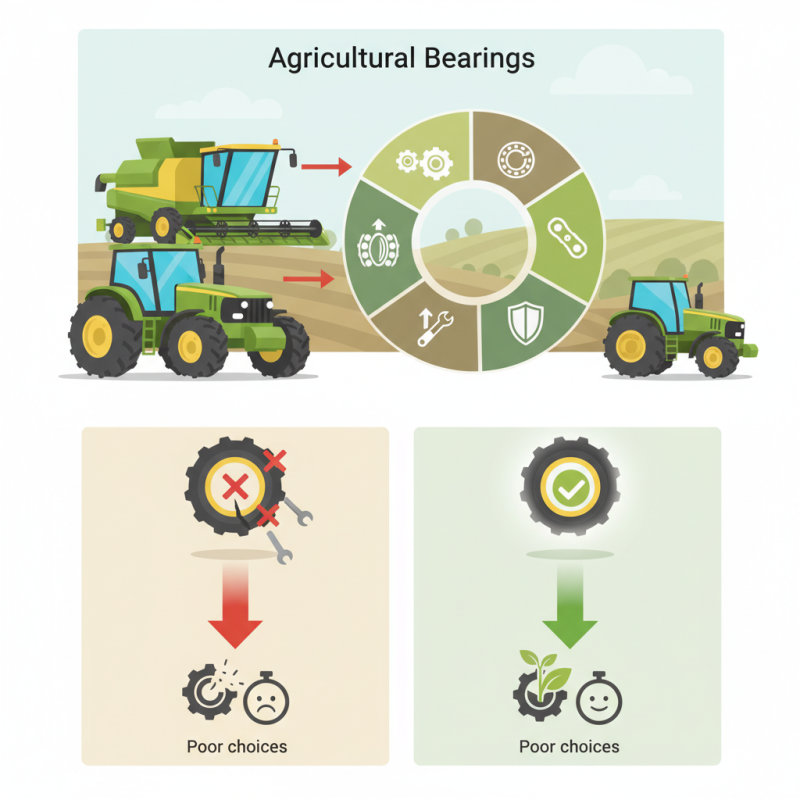
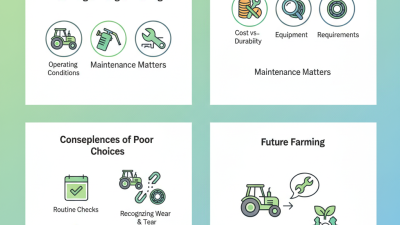
Many farmers overlook the importance of quality bearings. Poor choices can lead to costly breakdowns and delays. Choosing the right Agricultural Bearings can maximize productivity and reduce downtime. Each type performs distinct functions, tailored for specific agricultural needs.
Investing in the right bearings is a decision worth considering. The differences may seem small, but they have significant effects. Taking time to understand these components can improve yield and extend equipment life. This knowledge is essential for today's successful farming practices.
Essential Types of Agricultural Bearings for Modern Farming
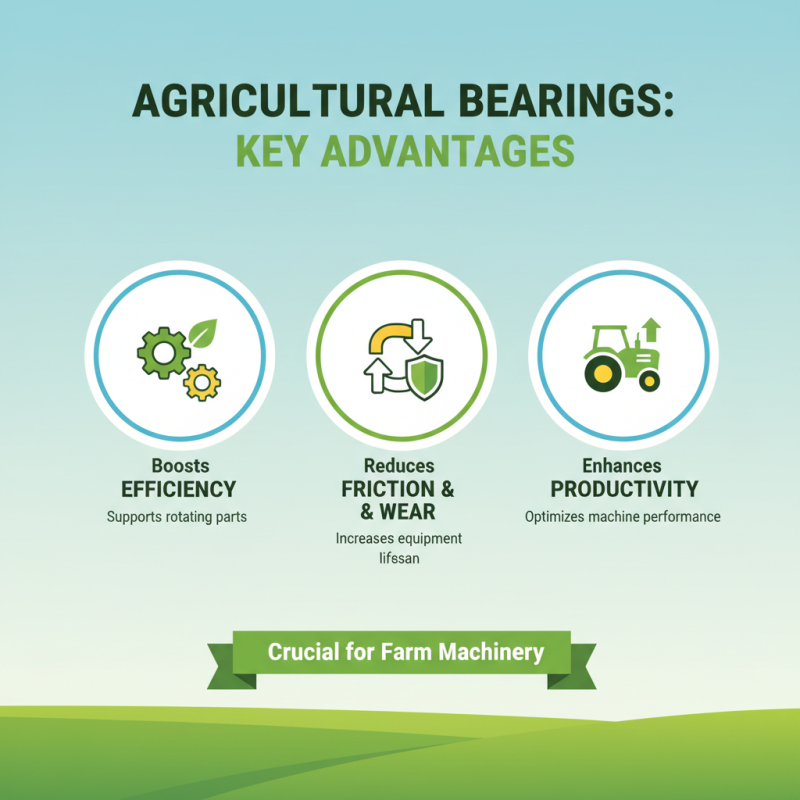
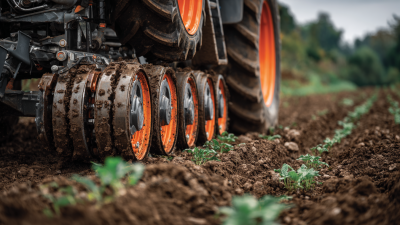
Agricultural bearings play a vital role in modern farming. These components ensure that machinery operates smoothly and efficiently. They are crucial for various equipment, from tractors to harvesters. Without them, farming would be more challenging and less productive.
Among the essential types are deep groove ball bearings. They handle radial and axial loads effectively. Farmers value their versatility and reliability. Another important type is tapered roller bearings. These can support heavier loads, making them ideal for agricultural machinery. They help maintain stability during operations.
Farmers also use spherical roller bearings. These are designed to accommodate misalignment. This is useful in rugged farming environments. However, the complexity of bearing selection can be daunting. Misunderstandings can lead to equipment failures. Proper bearing maintenance is essential but often overlooked. Regular inspections can prevent issues, ensuring that machinery remains operational.
Top Manufacturers of Agricultural Bearings in the Industry
When it comes to agricultural bearings, quality manufacturers play a crucial role. These manufacturers specialize in creating components that withstand harsh conditions. They focus on durability and performance. Equipment operates in tough environments, so high-quality bearings prevent failures. A well-made bearing can save significant downtime and repair costs.
These leading manufacturers prioritize innovation in their designs. They understand the unique needs of the agricultural sector. From corrosion resistance to high load capacities, they cater to various applications. While some products may excel in specific areas, not all suit every application. This can make choosing the right option challenging.
Sometimes, manufacturers overlook the importance of comprehensive testing. A bearing may appear robust but could falter under real-world use. User feedback often reveals hidden issues. Continuous improvement is vital for these companies to stay relevant. Reflecting on failures can lead to better designs in the future. Quality agricultural bearings are essential, and their dynamics require attention.
Maintenance Tips for Maximizing Bearing Lifespan
When it comes to agricultural machinery, bearings play a crucial role. Proper maintenance can extend their lifespan significantly. According to industry reports, poor maintenance can lead to a decrease in bearing lifespan by up to 50%. Regular checks are essential.
Tips for Maintenance:
1. **Lubricate Regularly:** Use appropriate grease at recommended intervals. Under-lubrication can cause premature wear. Over-lubrication might result in increased heat. Both can shorten service life.
2. **Inspect for Contaminants:** Dirt and debris can seriously damage bearings. Regularly check seals and shields to ensure they are intact. Damages here can lead to unexpected failures.
3. **Monitor Temperature:** Keep an eye on operating temperatures. A rise of just 10 degrees Celsius can halve the lifespan of a bearing. Detecting heat issues early can prevent larger problems.
Even with the best practices, mistakes happen. A missed lubrication schedule can lead to failures. Understanding and correcting these oversights is key. Keeping a maintenance log can help track activities and identify problems. By reflecting on past practices, improvements can be made.
Top 5 Agricultural Bearings You Need to Know About
| Bearing Type |
Key Features |
Common Applications |
Maintenance Tips |
Lifespan Expectation |
| Ball Bearings |
High speed, low friction, versatile |
Agricultural machinery, tractors |
Regular lubrication, keep clean |
5-10 years |
| Roller Bearings |
High load capacity, durable |
Combines, cultivators |
Inspect seals, check alignment |
3-7 years |
| Needle Bearings |
Compact, light-weight |
Pumps, gearboxes |
Avoid overloading, check lubrication |
4-8 years |
| Spherical Bearings |
Self-aligning, absorbs misalignment |
Heavy-duty equipment |
Keep environment clean, periodic checks |
5-10 years |
| Thrust Bearings |
Handles axial loads, robust |
Farmland machinery |
Regular inspection, avoid excess pressure |
3-6 years |
Emerging Trends in Agricultural Bearing Technology
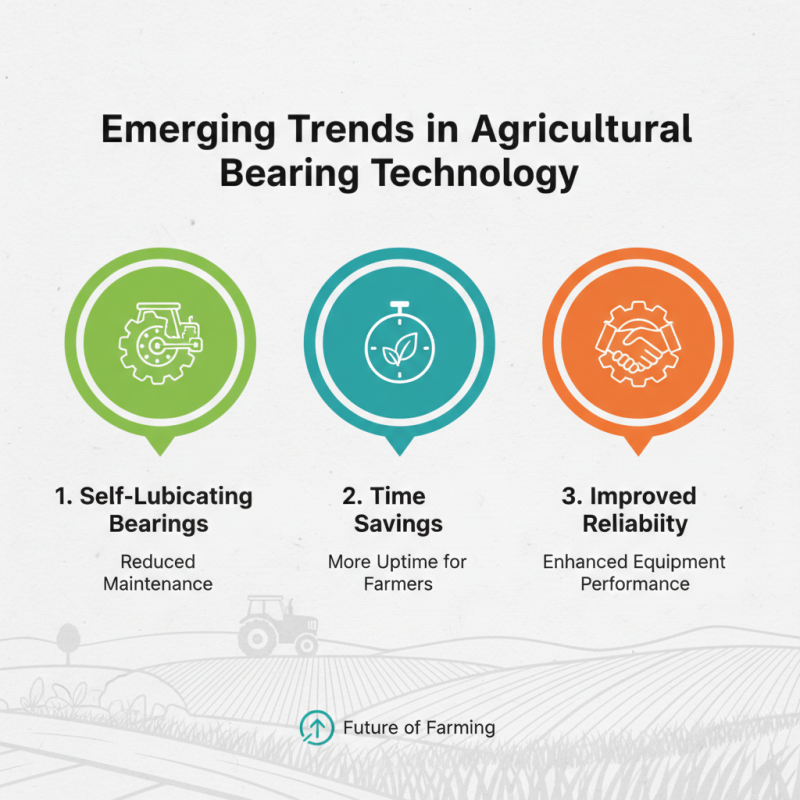
The agricultural sector is evolving rapidly with innovative bearing technology. Emerging trends are significantly enhancing performance and efficiency in farming equipment. For example, self-lubricating bearings are gaining attention. These reduce maintenance needs, saving valuable time for farmers. Farmers who have adopted this technology often report improved machinery reliability.
Tips: Regular inspections of bearings are crucial. You want to catch issues before they escalate. Simple checks can prevent costly repairs later. Don’t overlook small noises; they can signal potential problems.
Another exciting trend is the development of smart bearings. These bearings can monitor performance in real-time. They often come with sensors that track temperature and pressure, aiding proactive maintenance. However, not every farmer is prepared for the initial investment in digital technology. Balancing cost and innovation is a common dilemma in the industry.
Tips: Always consider your specific needs before upgrading. High-tech solutions might not be for everyone. Sometimes, sticking with simpler options is the best strategy. Evaluate the long-term value of new technologies against your current setup.