Why choose a Rotating Bearing for industrial applications? The answer begins with energy, reliability, and control. The U.S. Department of Energy reports that motor-driven equipment consumes about 69% of electricity in U.S. manufacturing. Small friction losses can therefore become large operating costs. A correctly selected bearing supports shafts, limits friction, and helps motors, pumps, conveyors, and gearboxes run steadily. Every turn matters.
Industry forecasts from Grand View Research and Fortune Business Insights indicate continued growth in the global bearing market. This growth reflects rising demand for automation, wind power, electric vehicles, and high-speed production equipment. ISO 281 provides the framework for calculating rolling-bearing rating life. SKF’s Bearing Maintenance Handbook also stresses lubrication, contamination control, alignment, and condition monitoring. These details decide whether a bearing lasts months or several years.
Tedric A. Harris, a respected bearing researcher and author of Rolling Bearing Analysis, wrote, “The bearing is the heart of a machine.” The phrase is simple. It is also practical. A hot bearing beside a conveyor pulley can signal poor lubrication, overload, misalignment, or contamination. Choosing only by load capacity is not enough. Engineers must consider speed, temperature, sealing, installation method, noise, and maintenance access.
No Rotating Bearing is perfect for every duty. That is the uncomfortable part. A cheaper unit may increase downtime, while an oversized unit can waste space and money. Good selection combines published data with field experience, verified calculations, and regular inspection. This approach improves reliability without pretending that failure can be eliminated completely.
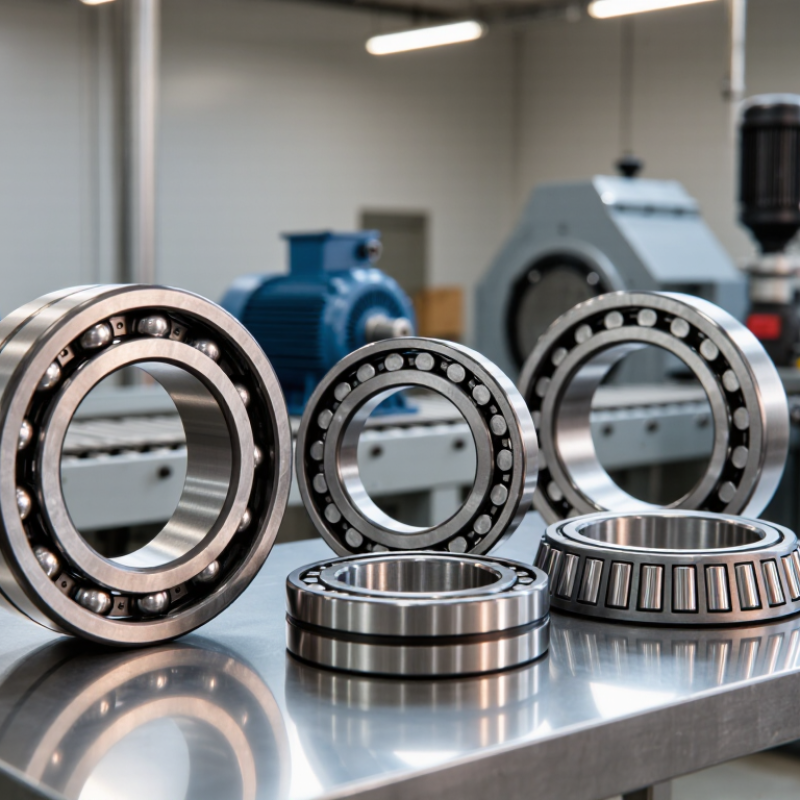
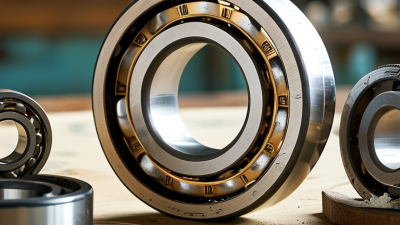
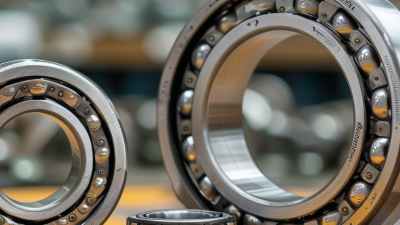
Rotating bearings support shafts while allowing smooth, controlled movement. They use inner and outer rings, rolling elements, and a cage. Balls or rollers carry radial and axial loads between moving surfaces. This design reduces sliding contact, heat, and energy loss. In a motor, the shaft turns inside the bearing while lubricant forms a thin protective film. The U.S. Department of Energy reports that motor-driven systems consume more than half of industrial electricity in the United States. Small friction reductions can therefore matter.
The choice depends on speed, load, temperature, contamination, and alignment. Deep-groove bearings suit many high-speed shafts, while tapered rollers manage combined loads. Poor lubrication remains a common failure trigger. ISO 15243 classifies damage patterns, including fatigue, wear, corrosion, and electrical erosion. That standard helps maintenance teams connect surface marks with operating problems. Still, diagnosis is not always clean. Vibration readings can mislead when looseness or imbalance exists nearby. A bearing may be blamed too quickly.
Tips: Check temperature, vibration, and lubricant condition together. Keep seals clean. Follow the specified clearance and installation force. Never hammer the rings. Record operating changes before failure. The U.S. Department of Energy’s maintenance guidance also emphasizes alignment and lubrication as practical efficiency controls. These details sound ordinary, but missed records often create repeat failures.
| Dimension | What It Means | Typical Engineering Information | Industrial Value |
|---|---|---|---|
| Definition | A rotating bearing is a machine element designed to support a shaft or moving component while allowing controlled relative rotation. | Most designs use rolling elements, such as balls or rollers, between inner and outer raceways. Plain bearings use sliding surfaces instead. | It reduces sliding contact between moving parts and helps maintain accurate, repeatable shaft movement. |
| Operating Principle | Load is transferred through rolling or sliding contact while friction, heat generation, and wear are controlled. | Rolling-element bearings replace much of the sliding motion with rolling motion. The cage, where present, separates and guides the rolling elements. | Lower friction can improve mechanical efficiency, operating stability, and energy performance. |
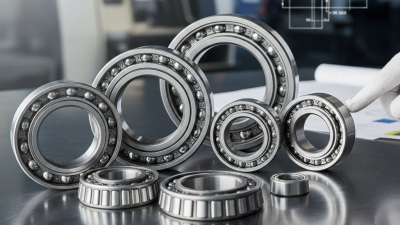
| Main Bearing Types | Different bearing geometries are selected according to load direction, speed, alignment, and available space. | Common types include deep-groove ball, angular-contact ball, cylindrical-roller, spherical-roller, tapered-roller, thrust, and plain bearings. | Matching the bearing type to the duty can improve service life and reduce the risk of premature failure. |
| Radial Load Capacity | The ability to support forces acting perpendicular to the shaft axis. | Deep-groove ball and cylindrical-roller bearings are commonly used for radial loading. Roller bearings generally provide higher radial load capacity than ball bearings of similar size. | Suitable radial capacity helps support conveyor rollers, electric motors, pumps, gearboxes, and rotating shafts. |
| Axial Load Capacity | The ability to support forces acting parallel to the shaft axis. | Thrust bearings are designed mainly for axial loads. Angular-contact and tapered-roller bearings can support combined radial and axial loads. | Correct axial-load capability helps prevent excessive wear, shaft displacement, and overheating. |
| Speed Capability | The maximum practical rotational speed depends on bearing design, size, load, lubrication, clearance, and heat removal. | Ball bearings are often preferred for higher-speed operation, while some roller bearings are better suited to heavier loads at moderate speeds. Speed ratings are application-specific. | Choosing an appropriate speed capability helps minimize vibration, temperature rise, and lubrication breakdown. |
| Friction and Efficiency | Friction is the resistance that occurs when the bearing operates under load. | Rolling-element bearings typically have low starting and running friction compared with many sliding arrangements. Seals, lubricant viscosity, preload, and misalignment also affect friction. | Lower friction can reduce power loss and operating temperature, especially in continuously running equipment. |
| Load and Speed Relationship | Bearings must operate within limits created by both mechanical load and rotational speed. | Higher loads increase contact stress, while higher speeds increase heat generation and lubrication demands. A bearing may not achieve its maximum load and speed ratings simultaneously. | Evaluating the combined duty cycle produces a more reliable selection than considering load or speed alone. |
| Lubrication | Lubricant separates contacting surfaces, limits wear, carries away heat, and protects against corrosion. | Grease is widely used for sealed or relubricated applications. Oil is often selected for higher speeds, higher temperatures, or systems requiring continuous heat removal. | Correct lubricant type, quantity, cleanliness, and relubrication interval are essential for bearing life. |
| Materials | Bearing materials must withstand repeated contact stress, wear, temperature, and environmental exposure. | Hardened bearing steels are widely used. Stainless steels support corrosion-resistant applications, while ceramic rolling elements may be used where electrical insulation or high-speed performance is important. | Material selection can improve corrosion resistance, electrical protection, temperature capability, or fatigue resistance. |
| Sealing and Shielding | Seals and shields help retain lubricant and prevent contaminants from entering the bearing. | Contact seals generally provide stronger contamination protection but may add friction. Non-contact shields usually produce less friction but offer less sealing protection. | Appropriate protection is valuable in dusty, wet, dirty, or washdown environments. |
| Alignment and Rigidity | Bearing performance depends on shaft alignment, housing accuracy, mounting quality, and structural stiffness. | Spherical bearings can accommodate limited misalignment. Excessive misalignment, incorrect fits, or housing distortion can create uneven load distribution. | Proper alignment reduces edge loading, vibration, heat, and localized raceway damage. |
| Temperature Range | Operating temperature is influenced by speed, load, lubricant, seals, ambient conditions, and heat dissipation. | Standard bearing applications are often designed around moderate industrial temperatures, but specialized clearances, materials, lubricants, and seals may be required for extreme heat or cold. | Thermal evaluation helps prevent lubricant degradation, loss of clearance, seal damage, and dimensional instability. |
| Service Life | Rolling-bearing life is commonly evaluated using rating life, which is related to load, speed, material fatigue, lubrication, and contamination. | For rolling bearings, basic rating life is often expressed as L10: the calculated life that 90% of a sufficiently large group of identical bearings is expected to reach or exceed under stated conditions. | Life calculations support maintenance planning, spare-parts management, and equipment reliability decisions. |
| Maintenance Requirements | Maintenance includes inspection, lubrication management, alignment checks, cleanliness control, and condition monitoring. | Common monitoring methods include temperature measurement, vibration analysis, acoustic inspection, lubricant analysis, and visual checks for corrosion or leakage. | Condition-based maintenance can identify lubrication problems, imbalance, misalignment, and early bearing damage before a major breakdown. |
| Typical Applications | Rotating bearings are used wherever a shaft or rotating assembly must move smoothly under a defined load. | Typical equipment includes motors, pumps, fans, compressors, conveyors, gearboxes, machine tools, turbines, material-handling systems, and process machinery. | The broad range of available designs makes bearings adaptable to compact, high-speed, heavy-load, precision, and harsh-environment applications. |
| Key Selection Criteria | The bearing should be selected from the complete operating profile rather than from shaft diameter alone. | Important factors include radial and axial loads, speed, duty cycle, temperature, contamination, lubrication, stiffness, misalignment, mounting method, noise, and required life. | A complete selection process improves reliability, reduces unplanned downtime, and helps control total operating cost. |
Note: Actual bearing performance depends on the specific design, dimensions, operating conditions, installation quality, lubrication, and environmental factors. Manufacturer-neutral engineering calculations should be completed for final selection.
Rotating bearings support shafts while allowing controlled motion with minimal friction. In industrial equipment, this reduces heat, vibration, and energy loss at critical contact points. The U.S. Department of Energy reports that motor-driven systems consume about 70% of electricity used in manufacturing. Bearings cannot eliminate this demand, but correct selection can reduce mechanical resistance within those systems.
Their value extends beyond efficiency. A properly loaded bearing keeps a shaft aligned inside pumps, conveyors, compressors, and gearboxes. ISO 281 defines basic rating life as the point at which 90% of identical bearings are expected to survive under stated conditions. This provides engineers with a measurable planning basis. Field inspections still matter. Dust, poor lubrication, misalignment, and excessive loads can shorten real service life dramatically.
Maintenance teams can monitor temperature, noise, vibration, and lubricant condition during routine inspections. A small temperature rise near a bearing housing may signal rising friction before production stops. The choice is not always obvious. Higher capacity may increase size, cost, or starting resistance. Engineers should match bearing type, load direction, speed, sealing, and maintenance access to the actual duty cycle. That practical fit often matters more than a catalogue rating.
Why Choose Rotating Bearings for Industrial Applications?
Rotating bearings reduce friction between moving parts, helping motors, pumps, and conveyors operate with less wasted energy. In field maintenance, I have seen a worn bearing raise motor temperature within a single shift. Lower friction also supports smoother rotation, reduced vibration, and more stable production speeds. These gains can reduce electricity use, but the result depends on correct sizing and installation.
Reliability improves when bearings carry loads within their rated limits. Proper alignment prevents uneven pressure across the rolling elements and raceways. Clean lubrication creates a protective film that limits metal-to-metal contact. However, lubrication is not always better. Excess grease can generate heat, while too little lubrication accelerates wear. Seals also matter, especially near dust, moisture, or fine process particles. Small contamination can become expensive damage.
Tips: Check vibration, temperature, and noise during routine inspections. Record readings before failure appears. Replace damaged seals promptly. Follow the bearing maker’s installation tolerances and lubricant guidance. A practical mistake is treating every abnormal sound as a bearing fault; misalignment, loose housings, and shaft damage can sound similar. Careful diagnosis saves time. Good maintenance is sometimes slower at the start, but rushed replacement often creates repeat failures.
Why Choose Rotating Bearings for Industrial Applications?
Rotating bearings support shafts while reducing friction, heat, and energy loss. Choosing the correct type depends on load, speed, alignment, and operating conditions. Ball bearings handle moderate radial and axial loads at high speeds. They often suit electric motors, pumps, fans, and conveyor rollers. Roller bearings carry heavier radial loads. They work well in gearboxes, crushers, and large material-handling equipment. Needle roller bearings fit tight spaces. Small parts.
Thrust bearings manage axial loads along a shaft. They are common in vertical pumps, screw systems, and rotating tables. Spherical roller bearings tolerate heavier loads and limited shaft misalignment. This makes them useful in mining screens and industrial drives. Plain bearings use sliding contact instead of rolling elements. They can perform reliably in slow, heavily loaded equipment, especially when space or contamination limits other choices.
In field inspections, bearing selection often looks simple, but small errors become expensive. A high-speed bearing may fail quickly under excessive load. A sealed design may reduce maintenance, yet heat can shorten its service life. Engineers should check shaft fit, lubrication, temperature, vibration, and expected duty cycles. A bearing can look clean and still be damaged inside. We have also seen alignment problems mistaken for lubrication failure. That mistake delays the real repair. Regular vibration checks and controlled installation practices provide more dependable results. Conditions change, so the original choice deserves review.
Why Choose Rotating Bearings for Industrial Applications?
Choosing rotating bearings requires more than matching a shaft diameter. The bearing must carry radial, axial, or combined loads without excessive friction. Start with the real operating load, not an ideal laboratory value. Speed also matters, because heat rises quickly when rotation exceeds the intended limit. In a factory, a conveyor bearing may face dust, vibration, and frequent starts. A pump bearing may experience moisture, hydraulic forces, and continuous operation. These conditions demand different designs and sealing arrangements. Temperature is another critical factor. Heat can thin the lubricant, damage seals, and shorten service life.
Lubrication deserves careful attention. Grease may suit moderate speeds, while oil can manage higher heat and continuous rotation. Contamination control is equally important. A well-sealed bearing can protect internal surfaces in dusty or wet areas. Shaft alignment, housing accuracy, and installation tools also affect performance. Even a high-quality bearing can fail after improper mounting. Check clearance, load ratings, expected life, and maintenance access against recognized engineering guidance. Field inspections often reveal looseness, unusual noise, or rising temperature before failure occurs. Listen closely. A calculation is useful, but it is never perfect. It may ignore shock loads, poor alignment, or changing production cycles. Leave room for those uncertainties when selecting the bearing and planning inspections.