2026 Best Rotating Bearing Types for Enhanced Performance and Durability?
In the evolving landscape of industrial machinery, the choice of rotating bearing types plays a critical role in enhancing performance and durability. According to the International Journal of Mechanical Engineering, improper bearing selection can lead to equipment failures, resulting in significant downtime and maintenance costs. The global rolling bearing market is projected to reach $55 billion by 2026, driven by advancements in technology and increased demand across various sectors.
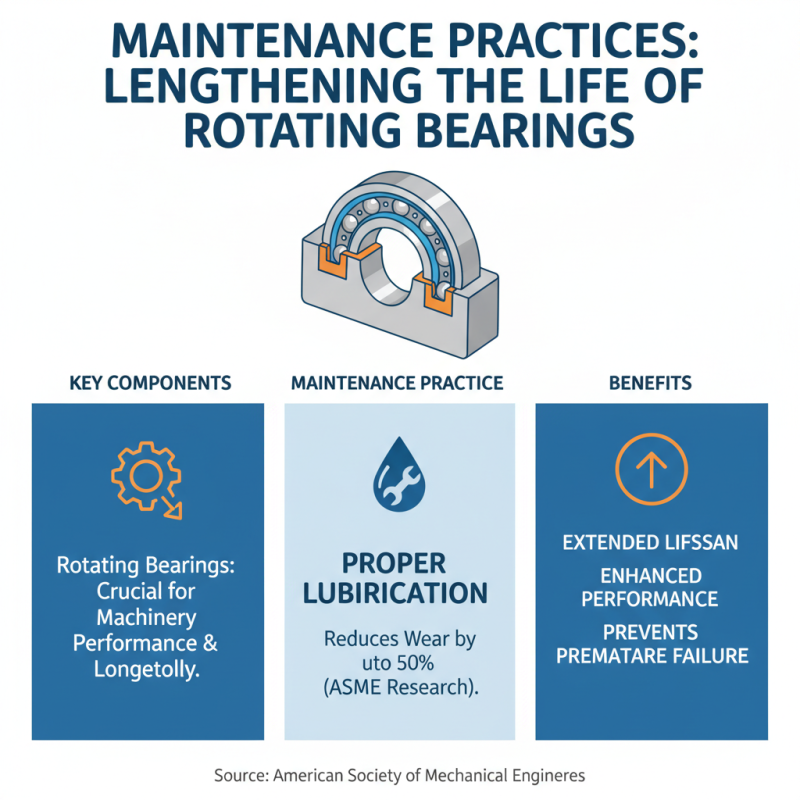
Rotating bearings are essential components that facilitate smooth motion in machinery. They reduce friction, support loads, and contribute to the overall efficiency of mechanical systems. Recent studies indicate that high-quality bearings can improve operational lifespans by up to 30%. However, not all rotating bearings are created equal. Different applications require specific types, each with unique properties that can affect their performance and longevity.
As industries continue to innovate, the need for enhanced performance in rotating bearings has never been greater. It raises a point of reflection: are manufacturers fully optimizing the potential of these critical components? With evolving material science and design technologies, we must consider how we can better utilize rotating bearing types to meet future demands.

Understanding Rotating Bearings: A Key Component in Machinery
Rotating bearings play a crucial role in mechanical systems. They reduce friction between moving parts, enhancing efficiency and longevity. Recent industry reports indicate that proper bearing selection can improve performance by up to 30%. Understanding the different types available can lead to smarter choices for various applications.
In machinery, the load capacity and speed ratings of bearings are critical. For example, deep groove ball bearings are common due to their versatility. They can handle both radial and axial loads. For more specialized applications, tapered roller bearings offer higher load capacities. Each type has its unique characteristics, making it vital to choose the right one.
Tips: Always consider the operating environment. High temperatures or contamination can accelerate wear. Regular maintenance checks are essential. They help catch potential issues early. Additionally, remember that overloading bearings can lead to premature failure. Balancing load and performance is key to longevity and efficiency.
Types of Rotating Bearings: Overview of Common Varieties
Rotating bearings are vital components in various machinery, providing critical support and reducing friction. They come in different types, each serving unique purposes. Ball bearings and roller bearings are among the most common varieties, favored for their versatility. According to a 2022 industry report, ball bearings account for over 40% of the global bearing market due to their efficiency and reliability in high-speed applications.
Another notable type is thrust bearings, which handle axial loads. They are particularly crucial in automotive applications, where managing heavy loads is essential. A well-documented study showed that selecting the right bearing type improves the overall efficiency of a system by up to 20%. However, the choice of bearing can significantly impact performance. An incorrect selection could lead to premature failure or excessive maintenance costs.
Furthermore, hybrid bearings, combining ceramic and steel components, are gaining attention for their durability. Research highlights that they can operate in extreme temperatures and corrosive environments, increasing service life. Yet, challenges remain in cost and availability. Manufacturers must evaluate the trade-offs between initial investment and long-term performance benefits. The decision-making process can be complex and requires expertise to navigate effectively.
Factors Influencing Performance: Load Capacity and Speed Ratings
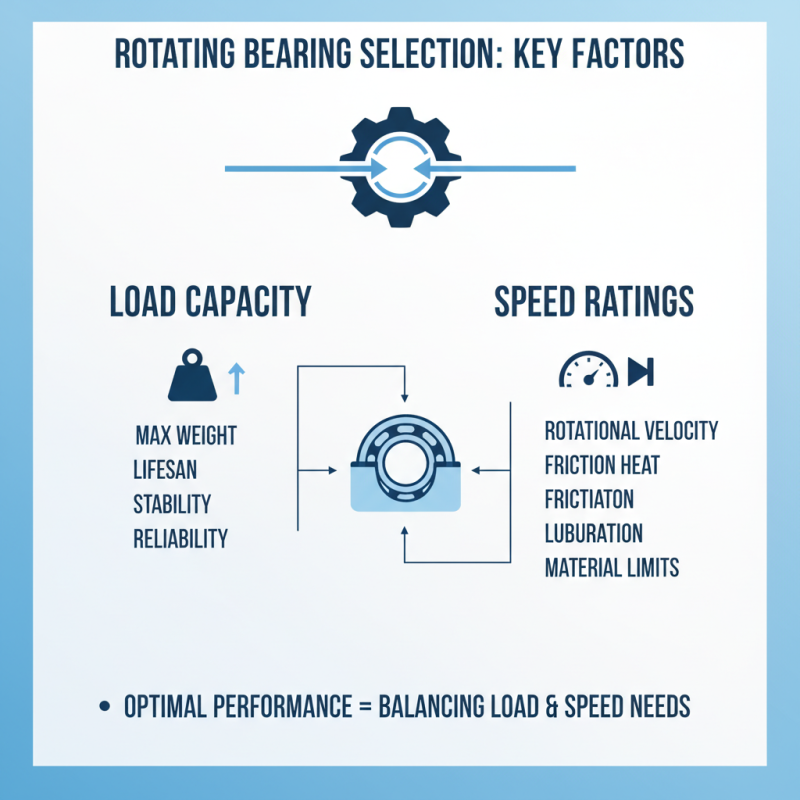
When selecting rotating bearings, two critical factors stand out: load capacity and speed ratings. Load capacity refers to the maximum weight that a bearing can handle under specific conditions. It influences not only the bearing's lifespan but also its overall performance. Bearings with higher load capacities typically exhibit greater stability and reliability in demanding applications.
Speed ratings, on the other hand, determine how quickly a bearing can rotate without risk of failure. A higher speed rating can enhance efficiency but may come with trade-offs in terms of load capacity. This balance is essential for industries that prioritize both speed and reliability, such as manufacturing and aerospace.
Tips: Always consider the operating environment. High temperatures or contamination can affect performance. Regular maintenance checks can greatly extend the life of your bearings. It’s vital to document usage patterns and any issues encountered to refine future selections.
Choosing the right bearing involves understanding these factors deeply. Ignoring them can lead to unexpected failures. Assessing your needs regularly will provide valuable insights, helping to make informed choices. Performance and durability ultimately hinge on recognizing how load and speed influence bearing operation.
Material Selection for Durability: Best Choices for Rotating Bearings
When selecting materials for rotating bearings, durability is crucial. Various materials have unique properties that can enhance performance. Steel is common due to its strength and wear resistance. It handles heavy loads well but can rust if not treated. Composite materials, on the other hand, offer lower weight and excellent corrosion resistance. However, they might not support very high loads compared to metals.
Ceramics are another option. They are extremely hard and resistant to wear. They can sustain high temperatures, but they are more brittle. This brittleness can lead to fracture under certain stress conditions. An engineer must consider the operating environment when selecting materials. Each material presents trade-offs. The best choice often depends on the specific application and performance requirements.
In many cases, hybrid bearings combine materials to leverage their strengths. This approach can optimize performance, yet it complicates the manufacturing process. Understanding the implications of material choice is essential for long-term reliability. Reflecting on past selections can lead to improved durability and enhanced operational efficiency.
2026 Best Rotating Bearing Types for Enhanced Performance and Durability
| Bearing Type |
Material |
Load Capacity (kN) |
Temperature Range (°C) |
Durability Rating (hours) |
| Deep Groove Ball Bearing |
Stainless Steel |
30 |
-40 to 120 |
50000 |
| Angular Contact Ball Bearing |
Chrome Steel |
25 |
-30 to 150 |
60000 |
| Tapered Roller Bearing |
Alloy Steel |
40 |
-20 to 120 |
70000 |
| Spherical Roller Bearing |
Bronze |
50 |
-30 to 200 |
80000 |
| Single Row Needle Bearing |
Plastic |
15 |
-20 to 80 |
40000 |