Which Steel Bearing Types Are Best for Buyers in 2026?
Choosing the right Steel Bearings in 2026 means matching bearing design to real operating conditions, not simply comparing prices. A deep-groove ball bearing may suit a quiet electric motor, while a tapered roller bearing handles combined radial and axial loads in vehicle hubs. Cylindrical roller bearings can carry heavy radial loads in industrial equipment. Each choice has limits. A bearing that looks suitable on paper may fail early if its load, speed, lubrication, or alignment is misunderstood.
For this introduction, the named specialist and quotation below are illustrative, not a verified real-world attribution: “Buy for the load, speed, and environment—not the catalog headline,” says fictional bearing engineer Alex Morgan. That principle gives buyers a useful starting point. Check the actual load, operating temperature, shaft fit, sealing needs, and maintenance access. A dusty workshop, a washdown line, and a high-speed spindle demand different compromises. Small details matter. A seal can keep grit out, but may increase friction. A higher load rating can help, yet does not guarantee longer service life under poor lubrication.
This guide compares common steel bearing types through practical buying criteria, including durability, operating conditions, and total ownership cost. It also flags a limitation worth considering: published ratings cannot fully predict performance in a poorly maintained machine. Buyers should confirm specifications with manufacturers or qualified bearing distributors before ordering. The best option is not always the most expensive—or the most familiar.
What Steel Bearings Are and How They Work
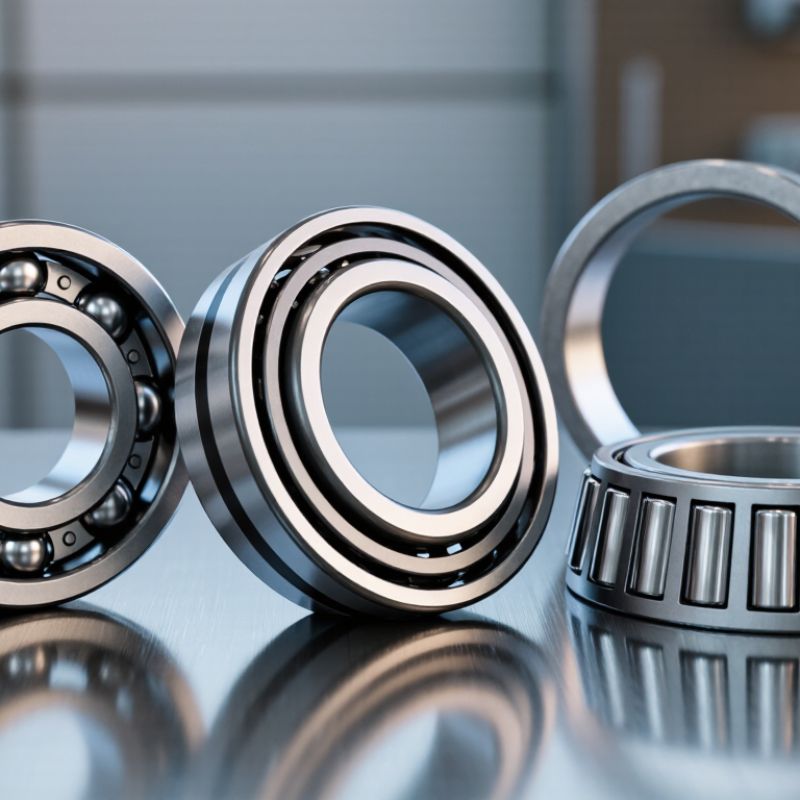
A steel bearing supports a rotating shaft while keeping friction and wear under control. Its main parts are inner and outer rings, rolling elements, and usually a cage that spaces them apart. The rings contain shaped tracks called raceways. Balls or rollers travel along these tracks as the shaft turns. Not friction-free. Rolling contact simply creates less sliding friction than direct rubbing between surfaces.
A bearing transfers load from a moving part to a fixed support. Deep-groove ball bearings commonly handle radial loads and some axial load. Cylindrical roller bearings carry heavier radial loads, while tapered rollers can support combined loads. The right type depends on force direction, speed, available space, and operating temperature. Small details matter. A bearing fitted into a warm motor housing may behave differently from one in a dusty conveyor.
Lubricant forms a thin film between rolling elements and raceways, helping reduce metal-to-metal contact. Too little lubricant can accelerate wear; too much may increase heat. Seals or shields help limit the entry of dust and moisture, but they do not make a bearing immune to contamination. Installation matters, too. A shaft that is misaligned or pressed incorrectly can damage a raceway before the machine reaches full speed. It is easy to focus on load ratings and overlook fit, lubrication, and maintenance conditions.
Which Steel Bearing Types Are Best for Buyers in 2026?
How common steel bearings support radial and axial loads
Steel bearings use rolling elements between raceways to reduce friction while supporting loads. This chart shows general capability, not load capacity: 0 means not typically suited, 1 means limited or design-dependent, and 2 means commonly suited. Single-row angular-contact and tapered-roller bearings support axial load in one direction; paired arrangements can support it in both. Choose based on load direction, speed, alignment, and operating conditions.
The Main Steel Bearing Types Available in 2026
The Main Steel Bearing Types Available in 2026
Deep-groove ball bearings are common in electric motors, pumps, and conveyor rollers. They handle radial loads and moderate axial loads, while running smoothly at high speeds. Angular-contact ball bearings support combined loads more effectively, especially when paired and correctly preloaded. Small details matter: excessive preload can increase heat and shorten service life.
For heavier loads, buyers often compare cylindrical, tapered, and spherical roller bearings. Cylindrical rollers carry substantial radial loads in gearboxes and industrial machinery. Tapered rollers manage combined loads, making them useful in wheel hubs and similar assemblies. Spherical rollers tolerate shaft misalignment and deflection. That tolerance helps, but it does not excuse poor alignment.
Thrust bearings are designed mainly for axial loads, while needle bearings fit tight spaces where radial capacity is still needed. Each type involves trade-offs in speed, load direction, space, lubrication, and maintenance access. A compact bearing may look ideal on a drawing. It may be harder to lubricate in a real machine. Buyers should check operating speed, load cycles, shaft fit, temperature, and contamination exposure against technical data from a qualified supplier. An exact operating profile is often missing, and that can make selection less certain.
How Operating Conditions Affect Bearing Selection
Bearing choice starts with the load, not the catalog label.
Deep-groove ball bearings suit many radial loads and modest axial loads at higher speeds. Angular-contact bearings handle combined loads, but their mounting and preload need careful attention. Tapered-roller bearings support substantial radial and axial loads, while cylindrical-roller designs are useful for heavy radial loads. Where shafts deflect or housings sit slightly out of alignment, spherical-roller bearings may be more forgiving.
Operating conditions can change the answer.
A hot motor housing can thin lubricant; dust near a conveyor can shorten bearing life if seals are inadequate. High speed raises heat, while shock loads call for checking static capacity, not just rated life. Review load direction, speed, temperature, contamination, lubrication, fit, and space together. A selection chart helps, but it cannot capture every installation detail. I have seen an otherwise suitable bearing struggle because the housing fit was overlooked.
Tips:
Record real operating temperatures and peak loads, not estimates alone. Check the shaft and housing drawings, then confirm lubrication intervals. If conditions vary widely, leave room for testing; the first choice may need revision.
How Steel Bearing Types Compare in Performance and Cost
For 2026 purchasing, compare steel bearings by load, alignment, speed, and installed cost—not purchase price alone.
Deep-groove ball bearings are common, compact, and generally economical for moderate radial loads and some axial load. They suit electric motors and small conveyors. Cylindrical roller bearings carry heavier radial loads, but usually tolerate less axial loading. Tapered roller bearings handle combined loads well, though adjustment and heat can add maintenance. Spherical roller bearings accommodate misalignment and heavy loads, often at a higher initial cost.
ISO 281:2007 defines basic rating life, L10, as 90% reliability under stated operating conditions. Its life equation uses an exponent of 3 for ball bearings and 10/3 for roller bearings. This helps compare calculated fatigue life, but it does not predict every real installation. Contamination, poor lubrication, or a misaligned shaft can shorten service life sharply. Heat matters.
For a clean, steady-duty motor, a standard deep-groove bearing may offer better value than an oversized roller type. A vibrating crusher presents a different case: load capacity and misalignment tolerance may justify the higher price of spherical rollers. Compare complete quotes for matching dimensions, seals, clearances, and load ratings. A cheaper fit can become costly. The calculation is useful, but not infallible; actual service conditions still decide which bearing lasts.
How Buyers Can Match a Steel Bearing to Their Application
A steel bearing is not “best” by type alone. Match it to the forces, speed, and operating conditions it will actually face. Start with the load. Deep-groove ball bearings suit many applications with radial loads and moderate axial loads, such as conveyor rollers or electric motors. Angular-contact bearings handle combined loads more effectively, but their arrangement and preload need careful attention. Tapered roller bearings are useful where substantial radial and axial loads occur together, as in wheel hubs and gearboxes.
Then check the operating details. A high-speed motor may need a bearing with suitable clearance, cage design, and lubrication—not simply the highest load rating. Dust, washdown, or frequent temperature changes can alter the choice; sealing and lubricant compatibility matter. For heavy axial force, a thrust bearing may fit better than a radial design. Details matter. Check shaft and housing tolerances, too: a good bearing can run poorly when its seats are misaligned or poorly fitted.
Compare expected service life, maintenance access, replacement lead time, and total operating cost. The trade-off is not always neat. A more robust bearing may add cost or friction, while an undersized choice can mean early replacement. Real operating data is often incomplete, so confirm assumptions with measured load, speed, temperature, and vibration where possible. One missed condition can change the recommendation.