How to Choose the Best Steel Bearings for Your Needs?
Choosing the right steel bearings is crucial for various applications. The quality and type of steel bearings can significantly impact performance and durability. Understanding your specific needs is essential in making the best choice.
Steel bearings come in different grades and styles. Each type serves a unique purpose. Factors such as load requirements, speed, and the environment play a role in this decision. For instance, high-speed applications may require specially designed bearings. These choices often lead to better outcomes but can be overwhelming.
Reflecting on past experiences helps in selecting the right steel bearings. Mistakes can guide better decisions. Those who’ve faced issues with bearings know the importance of quality and compatibility. Ultimately, informed choices lead to greater efficiency and longer product life.
Understanding the Different Types of Steel Bearings Available on the Market
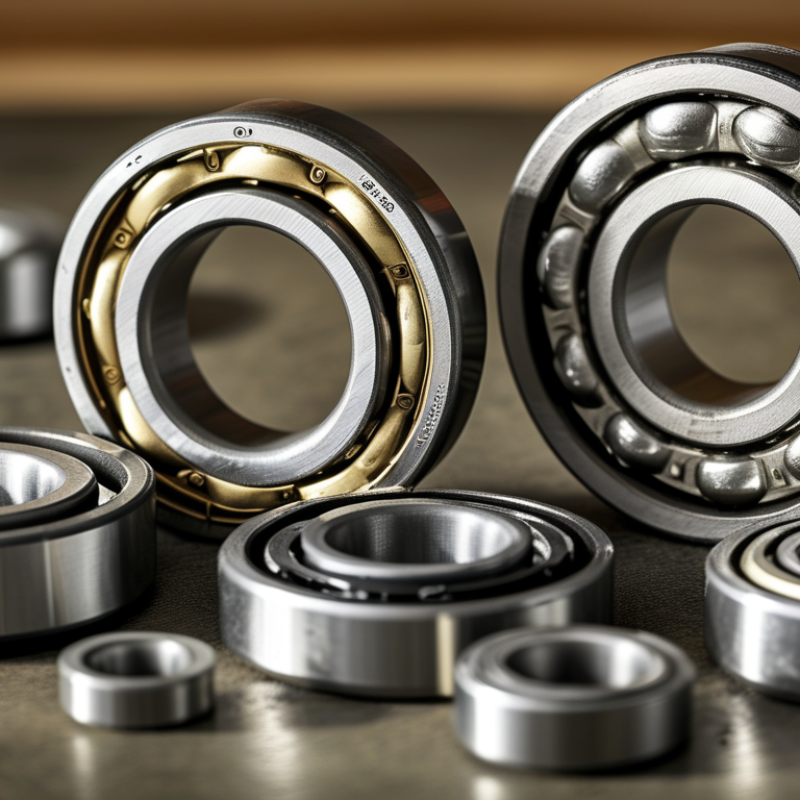
When selecting steel bearings, understanding the available types is crucial. Steel bearings come in various designs, each serving specific functions. The most common types are ball bearings, roller bearings, and needle bearings. Ball bearings offer low friction and are ideal for high-speed applications. Roller bearings, on the other hand, support heavier loads but have a larger footprint. Needle bearings are compact and perfect for applications with limited space.
Consider factors like load capacity, environment, and speed when choosing. For example, if operating in a dusty area, sealed bearings may be necessary. They prevent contaminants from entering, extending lifespan. It's essential to think about the material as well. Stainless steel bearings resist corrosion better than carbon steel. However, they may be more expensive.
Choosing the right bearing can be challenging. Different applications may require trial and error to find the best fit. Often, what works for one scenario may not for another. You'll need to reflect on the specific demands of your machinery. Balancing longevity and performance can lead to tough decisions. It's not just about picking any steel bearing; it's about finding the right one for your unique needs.
Key Considerations for Selecting Steel Bearings: Load Capacity and Speed Rating
When selecting steel bearings, load capacity and speed rating are crucial factors. Load capacity refers to the maximum load a bearing can handle without failure. Bearings with higher load capacities typically use better materials and design. According to a recent report by the International Journal of Engineering and Manufacturing, bearings designed for heavy-duty applications can support loads exceeding 50,000 N while maintaining performance. However, it is essential to match this capacity to your specific application needs.
Speed rating indicates how fast a bearing can rotate effectively. This rating is typically expressed in thousands of revolutions per minute (RPM). For instance, precision bearings used in electric motors might have speed ratings of above 20,000 RPM. In contrast, ball bearings designed for slower applications can have ratings below 1,000 RPM. Engineers often overlook the importance of matching the speed rating to the operational requirements, which can lead to premature failure or inefficiency.
Understanding these parameters is key but selecting the right bearing also depends on the operating environment. Factors like temperature, lubrication type, and potential contamination can impact the bearings' performance. While data on optimal conditions is available, real-world scenarios often present variables that complicate the selection process. Thus, it remains vital to consider both theoretical capacities and practical applications.
Load Capacity and Speed Rating of Steel Bearings
Material Composition: The Role of Alloying Elements in Bearing Performance
When selecting the best steel bearings, understanding material composition is crucial. Alloying elements significantly influence the performance and lifespan of bearings. For example, adding chromium enhances hardness and resistance to wear. This feature is beneficial in high-load applications. Manganese can improve toughness, which allows bearings to withstand sudden impacts. Each alloying element plays a unique role, impacting overall durability.
The choice of steel also affects the bearings' performance. Stainless steel is advantageous in corrosive environments. However, it may not always provide the best load-bearing capacity. It's essential to balance corrosion resistance with structural integrity. Additionally, the manufacturing process alters the material properties. Heat treatment can harden steel, yet it may lead to brittleness if not done correctly. Understanding these interactions is vital for achieving optimal results.
Every application has specific needs that influence bearing selection. A bearing that works well in one situation may fail in another. It's worth noting that custom solutions may arise from experimenting with different alloy combinations. Performing thorough testing can yield valuable insights. As steel technology evolves, newer alloys with improved properties are emerging. Staying informed is key to long-term success in bearing performance.
The Impact of Precision and Tolerance on Bearing Selection and Longevity
When selecting steel bearings, precision and tolerance are critical. These factors profoundly impact performance and longevity. A study by the American Bearing Manufacturers Association suggests that bearing precision can influence overall machine efficiency by up to 30%. Higher precision bearings tend to have tighter tolerances, which means they operate more smoothly and are less prone to wear over time.
Tips: Always check the manufacturer's specifications for precision levels. Ensure they meet your operational requirements.
Selecting the right tolerance is equally important. Tolerances dictate how much variation is allowed in bearing dimensions. According to industry standards, tighter tolerances lead to better load distribution and reduced friction. However, this can increase manufacturing costs. Balancing cost against performance needs can be tricky.
Tips: Evaluate the operating conditions of your machinery. Sometimes, a lower tolerance can suffice without sacrificing efficiency.
Moreover, consider the environment in which the bearings operate. Factors like temperature and exposure to contaminants can affect both precision and tolerance. In harsh conditions, even the most precise bearings might fail sooner than expected.
Tips: Plan for regular maintenance checks. Monitoring performance can help identify issues before they lead to failure.
How to Choose the Best Steel Bearings for Your Needs?
| Dimension |
Tolerance (mm) |
Precision Class |
Load Capacity (N) |
Longevity (Hours) |
| 10 x 19 x 5 |
0.005 |
P5 |
2000 |
30000 |
| 12 x 28 x 8 |
0.008 |
P6 |
3000 |
25000 |
| 15 x 32 x 9 |
0.01 |
P4 |
4500 |
20000 |
| 20 x 42 x 12 |
0.015 |
P4 |
6000 |
15000 |
| 25 x 52 x 15 |
0.02 |
P2 |
8000 |
12000 |
Cost vs. Quality: Evaluating the Best Value in Steel Bearings for Your Application
When selecting steel bearings, the balance between cost and quality is crucial. High-quality bearings offer durability, better performance, and reduced maintenance costs. However, they often come at a higher initial price. Cheaper options might save money upfront but may require frequent replacements. This trade-off can significantly impact your overall project budget.
Tips: Evaluate your application requirements carefully. Consider the load capacity, speed, and environment. A bearing that suits a high-load application should not be cheaply made, as it may fail under pressure. Conversely, in low-stress environments, a moderate-quality bearing might suffice. Always track performance to ensure reliability.
Your needs dictate your choice. Reflect on how each option impacts your project's long-term goals. Sometimes, choosing a less expensive bearing might lead to higher costs later on. Quality is essential, especially in critical applications where failure can lead to safety hazards. Consider consulting with professionals who have hands-on experience for tailored advice.