How to Choose the Right Bearing Tools for Your Projects?
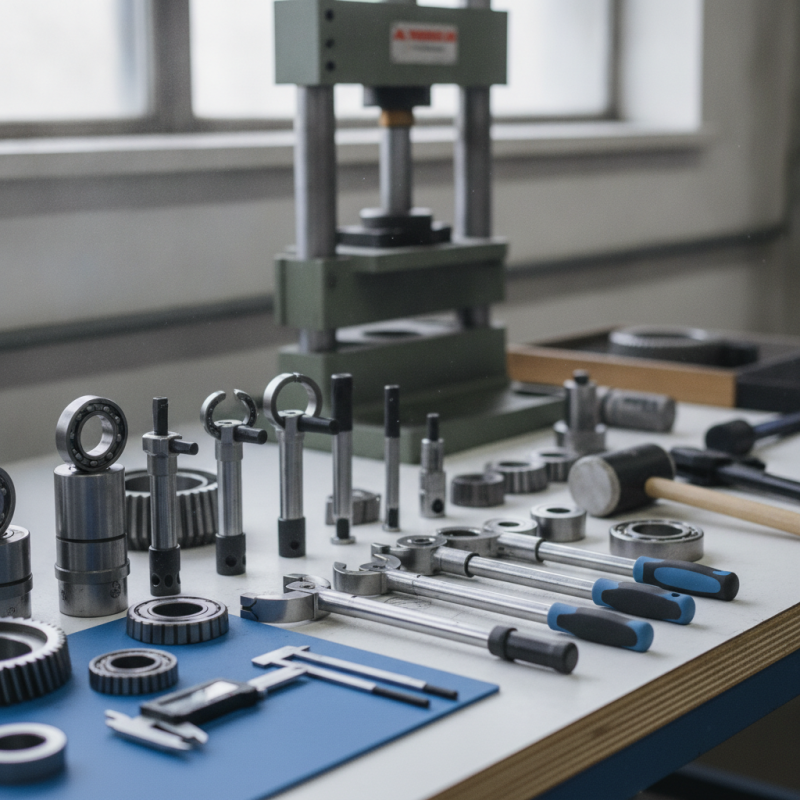
Choosing the right bearing tools can significantly impact the success of your projects. With numerous options available, it’s crucial to understand your specific needs. Not all bearing tools are created equal, and each has its unique applications.
For instance, precision is key when selecting tools for high-speed machinery. A poorly chosen tool could lead to malfunction or even damage. It’s essential to assess factors like load capacity and material.
In addition, consider your proficiency with various tools. Some may seem user-friendly but could present challenges for beginners. Balancing quality and affordability can be tricky. Reflect on past projects and how tool selection affected their outcomes. The right bearing tools can elevate the quality of your work and minimize reworks.
Understanding the Different Types of Bearings and Their Applications
Bearings play a crucial role in various machinery and equipment. Understanding their types is essential for selecting the right ones for specific applications. There are several types of bearings, each designed for a unique function. For instance, ball bearings are ideal for high-speed applications due to low friction. They are commonly used in electric motors and household appliances.
Roller bearings, on the other hand, can handle heavier loads. They are often used in construction equipment and industrial machinery. However, they may not perform well at very high speeds. Thrust bearings are designed to support axial loads in applications like automotive and aerospace settings. Each type has its strengths and weaknesses.
When selecting bearings, consider factors like load capacity, speed, and operating environment. A wrong choice can lead to early failure, increased maintenance, or safety hazards. Remember, not every bearing suits every project. It requires understanding to avoid costly mistakes. Make informed decisions and reflect on previous experiences to enhance your selection process.
Key Factors to Consider When Selecting Bearing Tools for Projects
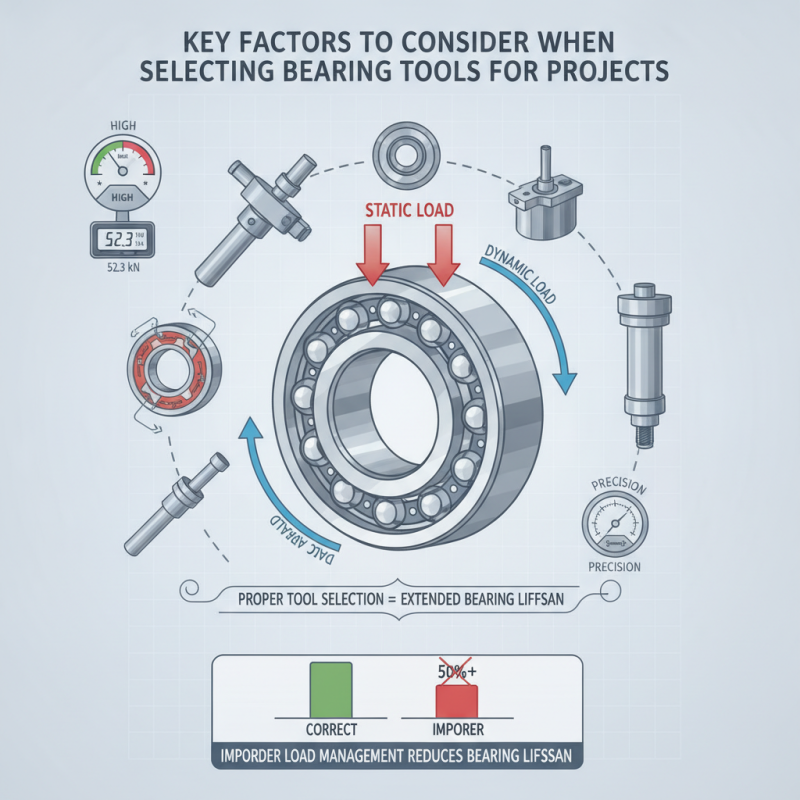
When selecting bearing tools for projects, it's essential to consider several key factors. Understanding load capacity is crucial. Bearings must handle not just the static load but also dynamic loads during operation. According to the International Journal of Engineering Research, improper load management can reduce bearing lifespan by over 50%. This emphasizes the importance of matching tools to project requirements.
Material selection plays a significant role in performance. Common materials include steel and ceramic, each offering unique benefits. Steel is strong but can be prone to corrosion. Ceramic, while lighter and more resistant, may be more brittle. A study by the Bearing Manufacturers Association indicates that about 30% of bearing failures are due to material incompatibility. Thus, knowing the operating environment is vital.
Furthermore, precision in bearing tools affects project outcomes. Even a minor misalignment can lead to wear and failure. Engineers suggest maintaining tolerances within 0.01 mm for optimal performance. Many professionals overlook this, leading to increased maintenance costs. Evaluating all these factors ensures a better fit for your project needs and enhances overall efficiency.
Evaluating Bearing Load Capacities: A Guide for Project Efficiency
When selecting bearing tools, the load capacity is a crucial factor. Understanding how different loads affect the performance of bearings can significantly enhance project efficiency. Studies indicate that a bearing's rated load capacity directly impacts its longevity. For instance, operating a bearing at 75% of its load capacity can improve its lifespan by up to 50%. This consideration is essential for project managers who want to maximize durability.
Tip: Always review the bearing's specifications before purchase. Be mindful of the operating conditions, such as temperature and speed. These factors also influence how much load a bearing can handle. Many tools come with a load rating chart. Familiarize yourself with it to make informed decisions.
Evaluating load capacities requires more than just looking at numbers. It’s vital to analyze the application context. For example, high-speed applications need bearings designed for those conditions. Researchers report that nearly 30% of bearing failures stem from overloading. Reflecting on this data can prevent costly mistakes. Always double-check the loads your project will impose on these tools. Adjustments to your choice may be necessary, and careful consideration is your best ally.
Evaluating Bearing Load Capacities for Project Efficiency
Material Selection for Bearing Tools: Impact on Durability and Performance
When selecting bearing tools, material choice is crucial. The right material impacts durability and performance significantly. For example, steel offers strength but can corrode easily. Alternatively, stainless steel resists rust but may not handle heavy loads as well. Understanding these nuances can prevent costly mistakes.
Ceramics are another option. They offer exceptional wear resistance and can endure high temperatures. Yet, they can be brittle, making them less than ideal for shock applications. Weighing these factors is essential for optimal project outcomes.
Beyond material properties, manufacturing processes also matter. A poorly produced bearing tool can compromise even the best materials. Choosing tools from reputable manufacturers ensures better reliability and performance. Reflecting on past experiences with different materials can guide future selections. Every project presents unique challenges; hence, a thoughtful approach to material selection is key.
How to Choose the Right Bearing Tools for Your Projects?
| Bearing Tool Type |
Material |
Durability Rating |
Performance Index |
Recommended Applications |
| Ball Bearing Tool |
Steel |
High |
Excellent |
Automotive, Robotics |
| Roller Bearing Tool |
Stainless Steel |
Medium |
Good |
Industrial Equipment |
| Thrust Bearing Tool |
Copper Alloy |
Very High |
Excellent |
Heavy Machinery, Marine |
| Plain Bearing Tool |
Bronze |
Medium |
Fair |
Conveyor Systems |
| Magnetic Bearing Tool |
Composite Materials |
High |
Superior |
Aerospace, High-Speed Applications |
Industry Standards and Specifications to Follow for Bearing Tool Selection
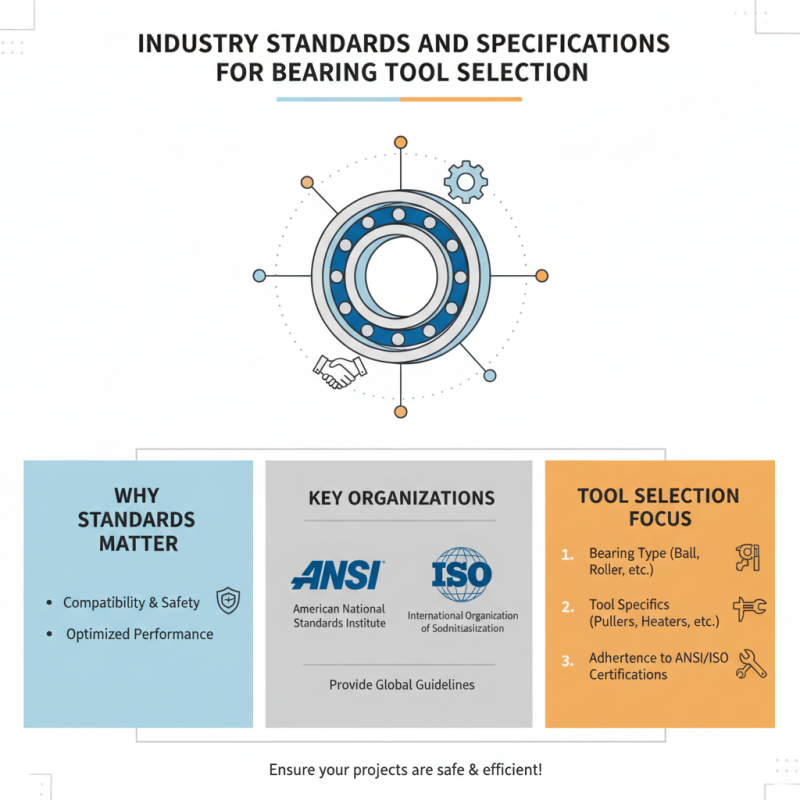
When selecting bearing tools for your projects, understanding industry standards is crucial. Different types of bearings come with specific requirements. The American National Standards Institute (ANSI) and International Organization for Standardization (ISO) provide guidelines that are widely recognized. Following these standards ensures that the tools you choose are compatible and safe for your application.
Specifications such as load capacity, temperature tolerance, and material composition must be considered. For example, a high-load application requires bearings designed to withstand significant force. Material selection can affect durability and performance. An industry standard often dictates which materials are suitable for various conditions. Failing to adhere to these specifications can lead to unexpected failures in your project.
It’s also important to think critically about your choices. Not all projects are created equal, and sometimes, standard recommendations won’t fit your specific needs. Experimenting with different tools can yield insights. Reflecting on past projects helps in making informed decisions moving forward. Understanding these elements helps ensure that your bearing tools meet the necessary specifications for success.