Leave Your Message

How to Choose the Right Bearing Tools in 2026

Choosing Bearing Tools in 2026 is less about buying the newest kit and more about matching each tool to the bearing, fit, and working conditions. A puller that grips squarely, a heater with controlled temperature, and a clean workbench can make a visible difference. So can patience. One rushed strike may damage a shaft or bearing seat, even when the tool looks right.

This guide uses an illustrative expert voice, not a verified real-world quotation: bearing specialist Alex Morgan’s rule is, “Choose the tool that controls the force, not merely the tool that fits.” That principle shapes the decisions ahead: identify the bearing type, check manufacturer guidance, compare tool capacity, and consider access, frequency of use, and operator training. For occasional work, a well-matched manual tool may be practical. Repeated mounting may call for controlled heating or hydraulic equipment. Small details matter. Jaw alignment. Temperature control. A clear inspection record.

The right choice is not always obvious from a product photo or price tag. Specifications can be confusing, and real workspaces rarely match ideal conditions. This guide will point out what to verify, where common assumptions can fail, and when to seek qualified technical advice. A perfect checklist cannot replace judgment. That deserves a second look.

How to Choose the Right Bearing Tools in 2026

What Bearing Tools Are and How They Support Installation and Removal

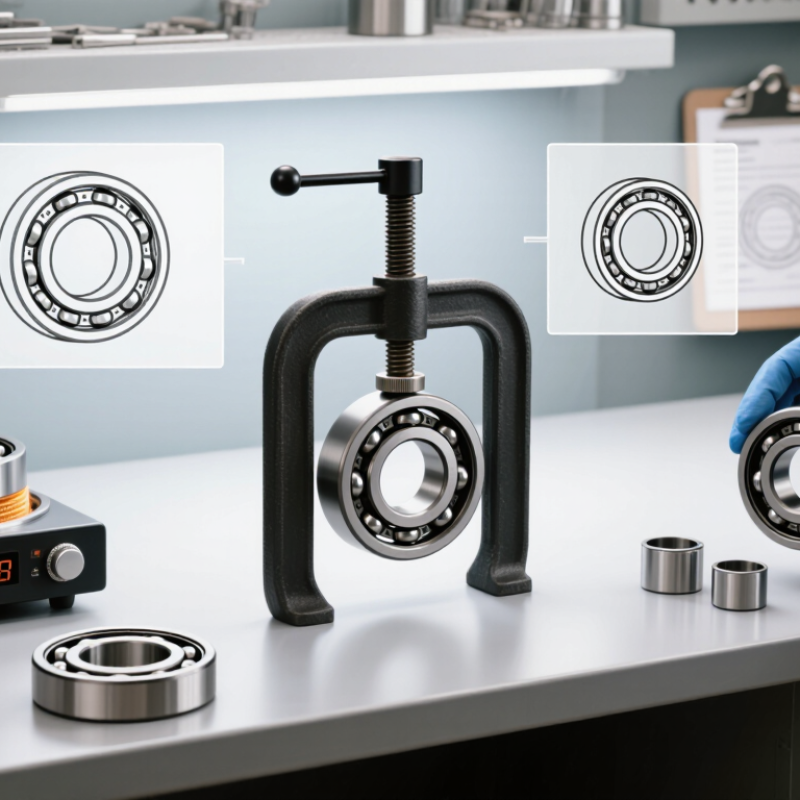
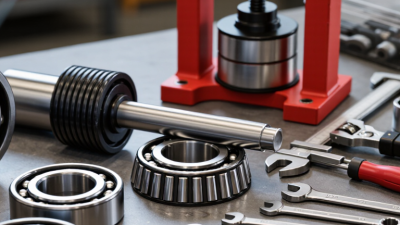
Bearing tools are purpose-designed devices that help fit or remove bearings without damaging nearby parts. Common examples include pullers, bearing separators, pressing sleeves, and supports for controlled heating. Each tool manages force, grip, or temperature in a particular way. The right choice depends on the bearing’s size, fit, access, and the shaft or housing around it. Small details matter.

During installation, a sleeve that contacts the correct bearing ring helps transfer pressure evenly. If a bearing is being fitted onto a shaft, force should generally act on the inner ring; for a housing fit, it should act on the outer ring. This reduces the chance of damage to rolling elements and raceways. Keep it square. A press can provide steady force, while suitable heating equipment may help expand a bearing for a tight fit. Follow the bearing maker’s temperature limits and use appropriate protective equipment.

For removal, a separator or puller can grip behind the bearing and draw it off with controlled force. Check that the tool has enough clearance and is seated securely before applying pressure. Never use the rolling elements as a force path. It is tempting to improvise with a hammer, but impacts can mark precision surfaces or distort components. Even the right tool cannot correct poor alignment, and I’d recheck the fit rather than assume a smooth installation means everything is sound.

How to Choose the Right Bearing Tools in 2026 - What Bearing Tools Are and How They Support Installation and Removal

Compare common bearing tools by task, fit, and safe-use requirements. Always follow the bearing and equipment manufacturer’s instructions.
Tool Type Main Use Best-Suited Applications How It Works Key Selection Factors Important Precautions
Mechanical puller Removing bearings from a shaft or housing Accessible bearings where the puller jaws can grip behind the bearing or an appropriate shoulder A screw or drive mechanism applies controlled pulling force through the bearing’s inner ring or a suitable adapter. Available clearance, jaw reach, opening capacity, puller capacity, and a secure point for the center screw Keep the puller aligned. Apply removal force to the ring with the interference fit; avoid loading rolling elements unnecessarily.
Bearing separator and puller set Removing bearings with little space behind them Bearings close to a shaft shoulder, where ordinary puller jaws cannot engage securely A thin separator is positioned behind the bearing and connected to a puller to distribute the pulling load. Separator opening, blade thickness, available access, and compatibility with the puller Seat the separator evenly and securely. Do not use it where the shaft or adjacent components could be damaged by the load.
Arbor or hydraulic press with mounting sleeves Installing or removing bearings with a straight, supported load Small and medium bearings or assemblies that can be positioned safely in a press A press moves the bearing or component along the shaft or into the housing; a sleeve transfers force to the correct ring. Press capacity, alignment, workpiece support, sleeve dimensions, and available stroke For a shaft fit, press on the inner ring; for a housing fit, press on the outer ring. Never transmit mounting force through the rolling elements.
Mounting sleeve and hand tool kit Installing smaller bearings by controlled impact Applications where the bearing can be mounted with light, even blows and the correct-size sleeve A sleeve contacts the ring being fitted so force is applied evenly around its circumference. Sleeve face diameter, bearing ring contact area, access, and the amount of force the fit requires Use a non-marring striking tool where appropriate. Do not strike the bearing directly or let the sleeve contact seals or cages.
Induction heater Heating a bearing inner ring to ease mounting on a shaft Bearings with an interference fit that are suitable for controlled heating Electromagnetic induction heats the bearing, causing thermal expansion so it can be placed on the shaft more easily. Bearing dimensions and mass, heater capacity, temperature control, demagnetization function, and handling equipment Use the bearing maker’s permitted temperature and heating procedure. Avoid open flames; handle hot bearings with suitable protection.
Hydraulic mounting equipment Mounting or dismantling larger bearings and assemblies Large bearings, heavy components, and approved applications using hydraulic methods A hydraulic pump, nut, or oil-injection arrangement generates controlled force or reduces friction at a designated fit surface. Required force, connection type, shaft or nut compatibility, pressure rating, and the equipment procedure Use only approved connections and rated components. Relieve pressure safely, and never loosen a pressurized fitting.
Locknut and hook spanner Adjusting or securing bearings mounted with a locknut Tapered-bore bearings and shaft arrangements designed for locknut mounting The spanner engages the locknut to turn it during mounting or adjustment. Nut profile and size, access, required adjustment method, and the specified locking arrangement Follow the specified clearance or adjustment procedure. Do not estimate tightening by feel when a defined method is required.
Bearing fitting tool set Mounting bearings onto shafts or into housings General workshop fitting tasks requiring interchangeable impact rings and sleeves Matched rings and sleeves transfer force to the correct bearing ring while helping keep the bearing aligned. Range of ring sizes, contact-face fit, handle design, and compatibility with the bearing dimensions Choose an adapter that contacts only the ring being fitted. Check alignment before applying force.
Measuring tools: micrometer, bore gauge, and feeler gauge Checking fits, clearances, and component condition Inspection before installation and verification during maintenance Measurements are compared with the equipment or bearing specifications to identify fit and clearance conditions. Measurement range, resolution, calibration status, access, and the specified measurement locations Clean measuring surfaces and use calibrated instruments. Do not substitute a general measurement for a specified inspection method.
Selection checkpoint Choosing the right tool for the job All bearing installation and removal work Match the tool to the fit, bearing geometry, access, load path, and manufacturer-approved procedure. Identify which ring has the interference fit; check bearing dimensions, shaft or housing access, required force, and available support. Stop if the bearing is misaligned, the tool slips, or the required force exceeds the tool’s rating. Protect the shaft, housing, seals, and nearby components.

How to Identify the Bearing Type, Size, and Application

Choosing the right bearing tool begins with identifying what the machine actually uses. A deep-groove ball bearing, tapered roller bearing, and needle bearing handle loads differently. Check the bearing code, seal arrangement, and housing before selecting a puller or fitting tool. If the marking is worn, record the shaft and housing dimensions with a micrometer. I still verify twice. A small measurement error can turn a clean installation into a damaged fit.

Size is more than bore diameter. Measure the outside diameter and width, then compare all three dimensions with the equipment manual or ISO 15 boundary-dimension tables. Also note shaft tolerance, clearance, and whether the bearing is mounted on a sleeve. For removal, choose a puller that grips the correct ring; pulling through the rolling elements can leave subtle damage. It happens.

Application determines the final choice. Radial load, thrust, speed, temperature, contamination, and available lubrication all matter. The U.S. Department of Energy’s 2014 U.S. Industrial Electric Motor Systems Market Assessment estimates that motor-driven systems account for about 69% of U.S. manufacturing electricity use. That scale makes correct maintenance consequential, but the figure is not a bearing-failure rate. Use ISO 281 rating-life methods alongside manufacturer-neutral equipment records, and inspect the seat for scoring before installation. A shiny surface can still be out of tolerance.

Which Bearing Tool Categories Match Each Task

How to Choose the Right Bearing Tools in 2026

Which Bearing Tool Categories Match Each Task

Match the tool to the fitting task, not just the bearing size. For removal, use a mechanical or hydraulic puller that grips the inner ring, rather than levering against the shaft. Tight spaces may call for a separator puller. For mounting, a bearing fitting kit or controlled press applies force evenly through the ring being fitted. Never send installation force through the rolling elements. When a bearing has an interference fit, an induction heater can warm it evenly; check the manufacturer’s temperature limits before heating. Small details matter.

For diagnosis, vibration analyzers and temperature instruments can flag changing operating conditions, while alignment tools help correct shaft or housing misalignment. The U.S. Department of Energy’s Operations & Maintenance Best Practices Guide (2010) reports potential predictive-maintenance savings of 8–12% over preventive maintenance and 30–40% over reactive maintenance. Those figures describe maintenance programs, not a guaranteed result from buying a tool. Start with the failure history, fit, access, and required measurement accuracy. A clean workbench, calibrated measuring tools, and a correctly sized puller often matter more than a large kit. Tool choice is not always neat; a task may need both removal and measurement equipment, and technicians should record why.

How to Compare Tool Materials, Features, and Compatibility

Choosing a bearing tool in 2026 starts with the job, not the catalogue photo. A puller must reach behind the bearing without bending a thin housing; a press needs level, stable support. Small details matter. Compare materials by contact and load: hardened steel resists deformation under heavy use, while corrosion-resistant finishes help in damp workshops. Neither choice excuses poor alignment.

Check the working range against the bearing’s inner and outer diameters, shaft size, and available clearance. A jaw that nearly fits can slip, mark a race, or load the wrong surface. Fit comes first. For induction heaters, review temperature controls and the bearing manufacturer’s limits; excessive heat can damage seals or lubricant. For presses, confirm the force rating and included adapters before purchase.

Look for replaceable contact pieces, clear instructions, and parts that are easy to inspect. These features often matter more than extra accessories. One adaptable kit may save storage space, but its adapters can be easy to misplace and slower to set up. Check compatibility with your bearing type and maintenance procedure, then measure the actual workspace—not just the component on a bench. That last check is easy to skip.

How to Check Safety, Maintenance, and 2026 Industry Standards

How to Choose the Right Bearing Tools in 2026

Safety starts with the work area, not the tool catalog. Before removing a bearing, isolate the machine and confirm it cannot restart. Check puller arms for cracks, slipping tips, and uneven wear. For installation, use a correctly sized sleeve that contacts the ring being fitted, not the rolling elements. Keep hands clear of pinch points, and wear eye protection when parts may release suddenly. Small details matter. The U.S. Bureau of Labor Statistics recorded 2.6 million nonfatal workplace injuries and illnesses in private industry in 2023. That broad figure is a reminder that routine maintenance still deserves a real risk check.

Maintenance and standards help make tool choices verifiable. Inspect hydraulic pullers for leaks and damaged hoses; check torque tools and temperature sensors against their calibration schedule. An induction heater should have working temperature controls and clear instructions for handling hot components. ISO 12100:2010 provides a framework for machinery risk assessment, while ISO 15243:2017 classifies bearing damage and failure modes. These standards do not certify every tool. In 2026, confirm the applicable edition and any local workplace requirements before purchase. I would also compare the tool’s rated capacity with the bearing and shaft dimensions, then record inspections. Records can feel tedious, but missing one may be the weak link.