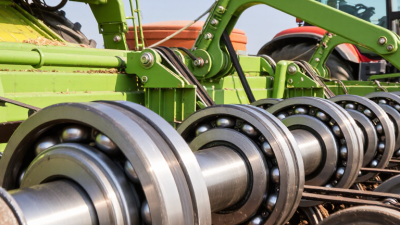
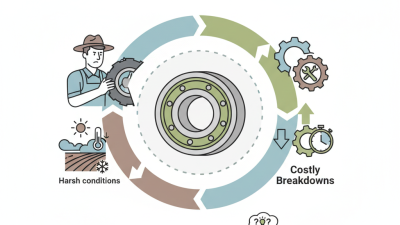
Agricultural Bearings rarely attract attention until a machine stops in the field. Yet a sealed bearing turning beneath a dusty harvester, or carrying shock loads in a tractor hub, can affect uptime, maintenance costs, and harvest timing. These components face vibration, moisture, soil, changing temperatures, and uneven loads. Product choice therefore depends on more than brand recognition. Design, sealing, lubrication, service access, and verified operating limits all matter.
The scale of agriculture makes this comparison relevant. The FAO report The Future of Food and Agriculture: Trends and Challenges projected that global food demand could require about 50% more production by 2050 than in 2012. The OECD-FAO Agricultural Outlook 2024–2033 also examines agricultural production, trade, and productivity across global markets. Neither report measures bearing demand directly. They do, however, show why dependable machinery remains important as farming systems evolve. Small parts carry real consequences.
This guide compares ten worldwide manufacturers through their agricultural product ranges, engineering strengths, support networks, and suitability for demanding field conditions. It does not treat company size as proof of product performance. A limitation is worth stating: no verifiable, attributable expert quotation was provided for this topic, so none is invented here. Instead, the comparison should be checked against manufacturer specifications and qualified maintenance advice. In agriculture, the right bearing is not always the most expensive one. It is the one that fits the machine, load, environment, and service plan.
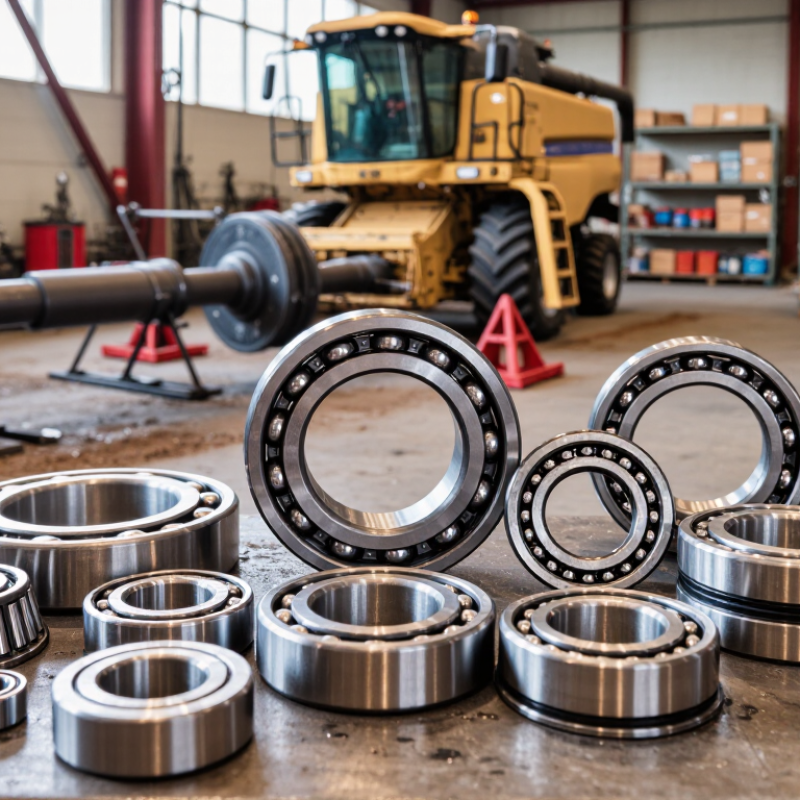
Agricultural bearings support rotating shafts in tractors, planters, harvesters, and irrigation equipment. Deep-groove ball bearings handle many moderate radial loads and can tolerate some axial load. Tapered roller bearings suit combined loads, such as those around wheel hubs. Spherical roller bearings accommodate heavier loads and limited misalignment. Needle bearings fit compact spaces, but their installation and lubrication need care. The right type depends on shaft speed, load direction, available space, and the machine’s service demands.
Conditions are harsh. Dust can work past a damaged seal, while water and fertilizer residue may encourage corrosion. Field equipment also faces vibration, sudden impacts, and long periods of operation. These stresses can break down lubricant or raise bearing temperature. Seals help exclude contaminants, but no seal makes a bearing invulnerable. Grease choice and relubrication intervals should follow the equipment and bearing specifications; too much grease can also create heat.
Small checks matter. During maintenance, look for unusual noise, rough rotation, visible leakage, or a hub that runs hotter than usual. Check fit and alignment too, since an uneven mounting surface can shorten service life even when the bearing itself is sound. It is tempting to blame every failure on dirt. Sometimes poor installation or an unsuitable load rating is the less obvious cause.
A cultivator bearing faces shock loads when its tines strike compacted soil. A combine bearing may run for hours amid chaff, vibration, and heat. These loads change with implement width, travel speed, soil conditions, and operator habits. Dust gets everywhere. Fine particles can pass damaged seals and mix with grease, turning lubricant into an abrasive paste. Moisture adds another risk: condensation or washdown can promote corrosion and shorten lubricant life.
ISO 281:2007 sets basic rating life at 90% reliability; its life equation uses a load exponent of 3 for ball bearings and 10/3 for roller bearings. That makes load selection critical, but the calculation does not capture every field contaminant or impact. ISO 15243:2017 identifies six principal bearing damage mechanisms, including wear, corrosion, and rolling-contact fatigue. Water finds seams. In practice, seals, relubrication intervals, and grease choice must match the actual exposure, not just a catalogue load rating. A labyrinth seal may help with dust, while effective contact sealing can better resist moisture, though added friction deserves consideration. A clean specification sheet is not a field test. Inspection records from planting, harvest, and off-season storage can reveal patterns that design assumptions miss. The imperfect part is often the maintenance interval: real farms rarely expose every bearing to the same conditions.
Selecting an agricultural bearing manufacturer takes more than comparing catalog sizes. Check whether its range covers the shaft dimensions, load conditions, and sealing needs found in your equipment. A bearing used near dusty fields or washdown areas may need different protection from one operating inside a sheltered gearbox. Fit matters. Ask how product specifications are verified, and request clear data on materials, tolerances, and operating limits. A polished catalog is useful, but it cannot replace evidence.
Tips: Compare sample drawings and technical sheets before requesting a quote. Ask about minimum order quantities, lead times, and replacement-part availability. Small details matter.
Global reach can help keep production and maintenance schedules on track, especially when equipment operates across several regions. Still, a broad distribution network does not guarantee quick, dependable support at every location. Ask where technical staff are based, what response times are typical, and whether installation guidance is available in a language your team understands. For critical machinery, clarify how warranty claims and urgent orders are handled. Evaluate these answers alongside product quality; even a capable supplier may have gaps, and it is worth checking those assumptions before committing.
Agricultural bearing manufacturers serve equipment that works through dust, moisture, vibration, and changing loads. A useful comparison of the top 10 worldwide should look beyond production volume. It should examine sealing design, material quality, dimensional consistency, and support for replacement parts. Field conditions vary.
A bearing in a tractor wheel faces different stresses from one inside a combine harvester. Tillage equipment may encounter repeated shocks, while planting machinery needs stable rotation at lower speeds. Manufacturers with agricultural experience should be able to explain how their products handle these demands. Ask for test data, operating limits, and guidance on lubrication intervals rather than relying on broad performance claims.
Service life also depends on installation and maintenance. A well-made bearing can fail early if contamination enters during fitting or grease is unsuitable. Small details matter. Buyers comparing global suppliers can review quality-control procedures, traceability, delivery reliability, and technical assistance. These checks do not guarantee trouble-free operation, and published specifications rarely capture every field condition. That limitation deserves attention. Real-world feedback from equipment operators can help reveal how a bearing performs across seasons, but feedback should be weighed against consistent testing and documented evidence.
Manufacturer-neutral overview of ten bearing designs commonly used in agricultural machinery. Entries describe product types and applications, not a company ranking.
| No. | Bearing Design | Typical Agricultural Applications | Operating Conditions | Relevant Design Characteristics |
|---|---|---|---|---|
| 1 | Deep-groove ball bearing | Electric motors, pumps, fans, and auxiliary equipment | Primarily radial loads, with moderate axial loads depending on the arrangement | Versatile design available in open, shielded, or sealed configurations; lubrication and sealing should suit the operating environment. |
| 2 | Tapered roller bearing | Wheel hubs, gearboxes, and other drivetrain assemblies | Combined radial and axial loads | Conical rolling elements and raceways support combined loads; paired arrangements are commonly used where axial loads act in both directions. |
| 3 | Spherical roller bearing | Heavy-duty transmissions, processing equipment, and rotating shafts | High radial loads, with axial load capacity depending on the bearing arrangement | Self-aligning design accommodates a degree of shaft-to-housing misalignment; correct lubrication and mounting remain important. |
| 4 | Cylindrical roller bearing | Gearboxes, threshing equipment, and high-load shaft positions | High radial loads; axial load capacity varies by bearing design | Line contact between rollers and raceways provides high radial load capacity; some designs allow axial displacement within the bearing. |
| 5 | Needle roller bearing | Compact gear drives, linkages, and space-constrained pivots | Radial loads where available radial space is limited | Long, slender rollers provide high radial load capacity relative to cross-section; shaft and housing surfaces must be suitably designed. |
| 6 | Insert bearing with housing | Conveyors, augers, harvesting machinery, and mounted shaft supports | General-purpose radial loads, often in exposed machinery locations | Combines an insert bearing with a mounted housing; sealed versions and relubrication features are available in many configurations. |
| 7 | Four-point contact ball bearing | Selected gearboxes and compact assemblies requiring axial load support in both directions | Predominantly axial loads, with limited radial load capacity depending on the design | A split inner or outer ring can enable four-point contact; suitability depends on load direction, speed, and mounting arrangement. |
| 8 | Flanged bearing unit | Mounted shafts in balers, conveyors, and other agricultural equipment | Radial loads in applications where the bearing is bolted to a machine structure | The flange simplifies attachment to a frame or wall; sealing, housing material, and mounting pattern vary by unit. |
| 9 | Thrust ball bearing | Vertical shafts, screw mechanisms, and applications with defined axial loading | Axial loads; generally not intended to carry significant radial loads | Designed to support axial load through raceways and balls; operating speed and alignment limits should be checked for the application. |
| 10 | Spherical plain bearing | Steering linkages, suspension joints, and articulated connections | Oscillating or slow movement with combined loads, depending on the bearing specification | Accommodates angular movement between connected parts; maintenance requirements differ between sliding-surface materials and designs. |
For agricultural bearings, ISO 281:2007 offers a common yardstick: L10 is the basic rating life reached by 90% of a sufficiently large group of identical bearings under stated conditions. The standard calculates life in millions of revolutions from the dynamic load rating, C, and equivalent dynamic load, P. Its exponent is 3 for ball bearings and 10/3 for roller bearings.
Comparisons among manufacturers should therefore state the load, speed, bearing type, and assumptions behind each L10 figure. A high rating can look compelling on paper. Yet a wet, dusty harvest day may bring grit past a seal, sudden impacts, and lubricant contamination—conditions a basic rating calculation does not fully capture. ISO 281 also provides reliability adjustment methods, but the 90% baseline is not a guarantee for every machine.
ISO 15243:2017 classifies rolling-bearing damage and failure modes, helping engineers investigate issues such as wear and corrosion alongside calculated life. I would treat rankings cautiously: test rigs and clean inputs rarely recreate every field condition, and published figures may not disclose all assumptions. A practical comparison needs transparent test conditions and operating evidence, not just one L10 number.