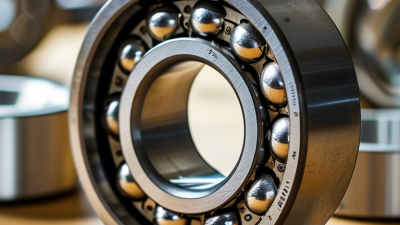
Top 10 Radial Ball Bearings Suppliers Worldwide
Radial Ball Bearings support countless machines, from electric motors and pumps to factory conveyors and aircraft systems. They appear simple, yet their performance depends on load, speed, lubrication, sealing, alignment, and operating temperature. Small differences matter. A noisy bearing can signal contamination, poor installation, or an unsuitable internal clearance.
Fortune Business Insights reported that the global ball bearing market reached approximately USD 7.8 billion in 2023. Its forecast also indicates continued growth through 2032, driven by automation, renewable energy, electric vehicles, and industrial equipment. Grand View Research similarly identifies automotive and industrial machinery as major demand sectors. These figures provide useful direction, but market estimates differ by scope, currency, and product classification. They should not be treated as perfect measurements.
Bearing researcher Tedric A. Harris emphasized a practical principle: “A bearing does not work alone; it works within a system.” That idea guides this review of the Top 10 Radial Ball Bearings Suppliers Worldwide. Supplier scale is important, but it is not everything. Manufacturing consistency, ISO 281 life calculations, material quality, technical support, delivery reliability, and application expertise deserve equal attention. Some suppliers excel in high-speed precision. Others perform better in heavy industrial environments or customized applications. This list is therefore a research-based comparison, not an absolute ranking. Real-world results may change with installation quality, maintenance habits, and regional service capability. The best choice is rarely the cheapest one. Sometimes, it is the supplier that prevents one costly failure.
Definition and Role of Radial Ball Bearings
Definition and Role of Radial Ball Bearings
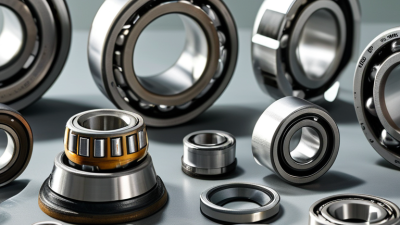
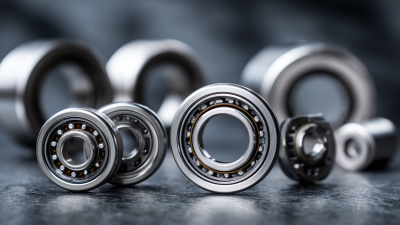
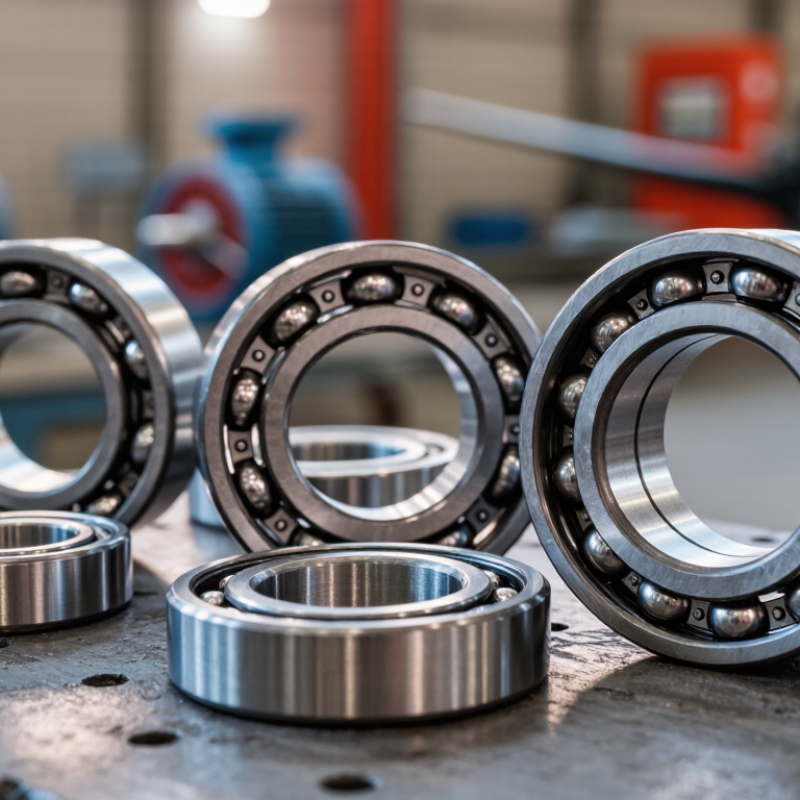
Radial ball bearings are rolling-element components designed mainly to support loads perpendicular to a shaft. Their inner ring follows the rotating shaft, while balls transfer force through carefully finished raceways. A cage separates the balls and helps control friction, heat, and noise. The design looks simple. Its job is not.
The ISO 281 standard defines basic rating life as the number of revolutions reached by 90% of identical bearings under stated conditions. This L10 value supports supplier comparisons, but it is not a guarantee for every machine.
Lubrication, contamination, misalignment, and sudden load changes can reduce actual service life. Field experience often proves this gap. A clean calculation can still fail on a dusty production line.
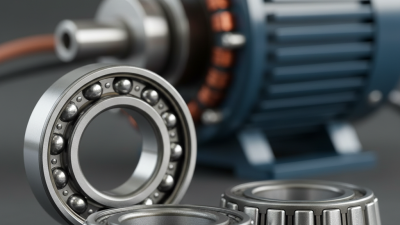
Radial ball bearings support motors, pumps, conveyors, fans, and precision equipment. The U.S. Department of Energy’s Motor Systems Market Assessment indicates that motor-driven systems consume roughly 68% of industrial electricity in the United States. Even small friction losses can therefore affect operating costs across large facilities.
Bearing selection should match load direction, speed, temperature, sealing needs, and maintenance access. The wrong clearance may create vibration or overheating. Too much grease can also raise temperature.
Supplier evaluations increasingly examine dimensional consistency, material traceability, testing procedures, and technical support. Those details matter more than a catalogue claim.
According to market analyses from Grand View Research, demand for industrial bearings is expanding with automation, renewable energy, and equipment modernization. Yet market growth does not remove engineering uncertainty. Performance depends on the complete operating system.
Key Criteria for Evaluating Global Bearing Suppliers
When evaluating radial ball bearing suppliers worldwide, price should not lead the decision. A bearing’s reliability depends on steel cleanliness, heat treatment, dimensional control, and lubrication compatibility. Ask for test records, batch traceability, and results based on ISO 281 life calculations. These documents reveal more than attractive catalog claims.
Field experience matters. Inspectors should review vibration data, seal performance, cage damage, and grease behavior under real loads. A supplier serving dusty factories may need stronger sealing than one serving clean automation lines. The U.S. Department of Energy reports that motor systems consume about 69% of industrial electricity in the United States. Small bearing losses can therefore become significant operating costs. They are not always visible.
Quality systems deserve careful testing. ISO 9001 certification supports process control, but it does not guarantee perfect bearings. Request failure-analysis procedures, corrective-action records, and sample inspection plans. Check whether production sites can maintain consistency across regions, not only during audits. Logistics also matter: emergency stock, packaging, customs capability, and replacement lead times can protect production continuity. Sustainability data should include recycled content, energy use, and responsible material sourcing. No scorecard is perfect. I would still leave room for site visits, because polished paperwork can hide practical weaknesses.
Top 10 Radial Ball Bearings Suppliers Worldwide — Key Criteria for Evaluating Global Bearing Suppliers
A non-brand evaluation framework for comparing radial ball bearing suppliers across quality, engineering capability, supply reliability, and total cost.
The percentages represent an illustrative buyer-defined weighting model rather than company rankings or market-share data. Technical evaluation can reference ISO 492 for bearing tolerances, ISO 281 for dynamic load rating and rating life, and ISO 76 for static load rating.
Top 10 Radial Ball Bearings Suppliers Worldwide
Top 10 Radial Ball Bearings Suppliers Worldwide
Choosing the top 10 radial ball bearings suppliers worldwide requires more than comparing catalog size. Buyers should examine manufacturing experience, material control, testing methods, and delivery consistency. A dependable supplier can explain load ratings, speed limits, clearance classes, sealing options, and lubrication requirements without vague promises.
In practical sourcing work, small details often expose quality. Ask for dimensional inspection records, material certificates, batch traceability, and fatigue-test data. Check whether production lines use calibrated gauges and documented process controls. Suppliers serving demanding industries should also understand temperature changes, vibration, contamination, and installation errors. Technical support matters when a bearing runs hot after only a few weeks.
Global suppliers differ in regional coverage, engineering depth, and response speed. Some offer broad standard ranges but limited customization. Others handle special tolerances well but require longer lead times. No ranking stays perfect for every application. That is worth remembering. A supplier may perform strongly in industrial motors yet struggle with high-speed equipment. Buyers should review independent test evidence, warranty terms, export documentation, and replacement support before approving a source. Price deserves attention, but an inexpensive bearing can create costly downtime when inspection is weak or lubrication is misunderstood. Look beyond the brochure.
Product Ranges, Technologies, and Industry Applications
Choosing among ten worldwide suppliers requires more than comparing catalog size. Their radial ball bearing ranges often include deep-groove, miniature, flanged, stainless-steel, and thin-section designs. Sealed and shielded versions protect raceways from dust and moisture. Open bearings support applications needing frequent relubrication. Ceramic-hybrid options can reduce electrical damage and heat at high speed. Small details matter.
Manufacturing technology separates a capable supplier from a convenient one. Look for controlled grinding, automated inspection, measured vibration, and traceable heat treatment. Precision classes help match bearing runout with spindle or motor requirements. Advanced cages, optimized raceway geometry, and low-friction seals improve efficiency. Some suppliers offer sensor-ready units for condition monitoring. Lubricant selection remains critical. A premium seal can still fail when grease, temperature, and speed are mismatched. I would not treat every published life rating as directly comparable; load assumptions often differ.
Industry fit should guide the shortlist.
Electric motors need quiet running and reliable insulation protection. Pumps and fans demand strong sealing against contamination. Robotics often require low torque and repeatable positioning. Food processing may need corrosion-resistant materials and cleanable designs. Medical equipment favors low noise and stable precision. Aerospace and transport systems add strict documentation and temperature demands. Supplier support matters too, including application engineering, sampling, failure analysis, and dependable delivery.
Ten suppliers may look similar on paper. Field validation can expose the difference.
How to Select the Right Radial Ball Bearings Supplier
Selecting a radial ball bearing supplier requires more than comparing unit prices. Fortune Business Insights’ 2024 Ball Bearing Market report estimates the global market at over USD 20 billion, with continued growth through 2032. That scale attracts capable manufacturers, but also makes supplier quality harder to judge. Ask for traceable material certificates, dimensional inspection records, and fatigue-life calculations based on ISO 281. Request samples from the same production line used for volume orders. A polished sample proves little.
Check how the supplier handles heat treatment, lubrication, sealing, and contamination control. These details affect noise, friction, and service life inside a motor or conveyor. The U.S. Department of Energy reports that motor-driven systems can represent a major share of industrial electricity use, so bearing friction deserves practical attention. Confirm load ratings, operating temperature, speed limits, and delivery capacity in writing. Also review the supplier’s quality system, corrective-action history, and testing equipment. ISO 9001 certification helps, but it does not replace process evidence.
Ask difficult questions early.
Can the supplier maintain tolerance during peak demand? Can it identify a defective batch within hours? A low quote may hide inconsistent steel, weak seals, or unstable lead times. I have seen procurement teams overvalue price and undervalue replacement labor. That mistake is expensive. Supplier selection should balance engineering data, field experience, independent test results, and realistic after-sales support.