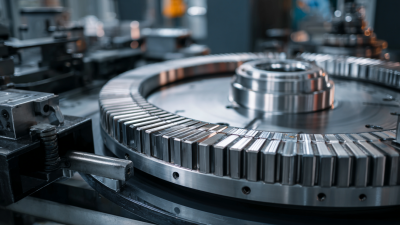
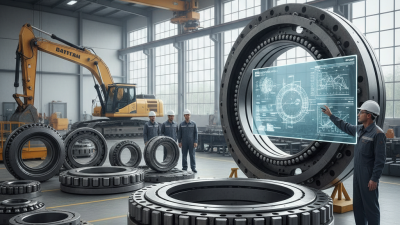
Choosing among China’s top Industrial Turntable Bearing suppliers requires more than comparing catalogue prices. These bearings support slewing platforms, welding positioners, indexing tables, and heavy automation equipment. A small error in runout can become visible as vibration, uneven rotation, or premature gear wear. This guide introduces ten notable Chinese suppliers through practical purchasing criteria. The evaluation considers manufacturing experience, load capacity, rotational accuracy, sealing design, heat treatment, inspection systems, and delivery reliability.
Real equipment experience matters. A supplier should explain how its bearing performs under combined radial, axial, and overturning loads. It should also provide drawings, tolerance data, material details, and inspection records. Factory visits, sample testing, and reference projects can reveal more than polished websites. Some manufacturers serve standard applications, while others produce customized sizes, internal gears, mounting holes, or special coatings. Communication quality matters too, especially when installation space is limited.
No supplier list is perfect. Rankings can change with production capacity, export performance, technology investment, and customer feedback. One overlooked issue is after-sales support. Replacement seals, fitting guidance, and failure analysis may save substantial downtime. Buyers should verify certifications and technical claims independently. They should also compare total ownership cost, not only the purchase price. The following overview aims to provide a reliable starting point for engineers, distributors, and procurement teams seeking durable Chinese bearing partners. Verify every critical detail before placing an order.
What Is an Industrial Turntable Bearing?
An industrial turntable bearing is a large rotational support component. It connects a fixed structure with a rotating platform. Unlike a standard radial bearing, it handles combined loads. These may include axial force, radial force, and overturning moments.
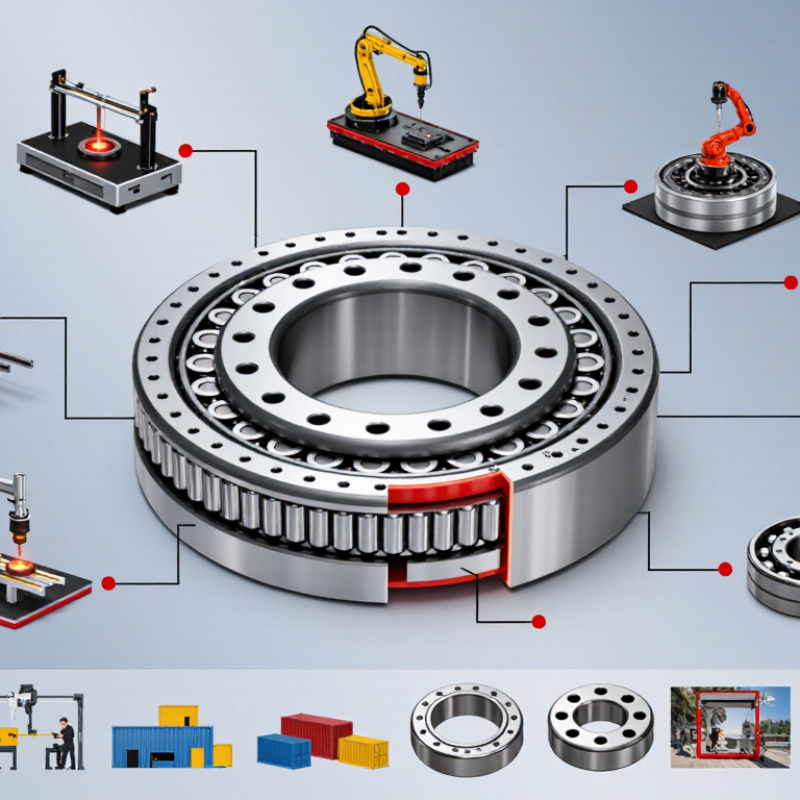
Its main parts include inner and outer rings, raceways, rolling elements, seals, and sometimes an integrated gear. The bearing allows controlled rotation while maintaining alignment. Common applications include indexing tables, lifting equipment, construction machinery, robotic positioning systems, and material-handling platforms. Some models use balls, while others use rollers for higher load capacity.
In practical equipment design, correct sizing matters more than appearance. Engineers should check static load, dynamic load, rotation speed, operating temperature, mounting flatness, and required accuracy. Lubrication also deserves attention. Poor grease distribution can create heat, noise, and uneven wear.
I have seen installations fail because the mounting surface was slightly distorted. That small error increased raceway stress. It was not the bearing’s fault alone. Supplier evaluation should include dimensional inspection, material records, load testing, sealing quality, and technical support. Clear drawings help, too. A low price can become expensive after repeated alignment problems. However, even careful calculations cannot predict every site condition. Field inspection remains necessary.
| No. | Anonymous Supplier Profile | Typical Bearing Configuration | Common Application | Typical Gear Option | Main Load Capability | Customization Capability | Recommended Verification Data |
|---|---|---|---|---|---|---|---|
| 1 | Large-diameter slewing bearing specialist | Single-row four-point contact ball bearing | Robotic positioners, welding tables, access platforms | External or internal gear | Axial, radial and overturning moment loads | High | Load ratings, gear accuracy, runout, mounting dimensions |
| 2 | Cross-roller turntable bearing producer | Crossed cylindrical roller bearing | Precision indexing stages and inspection equipment | Usually gearless | High moment stiffness and radial accuracy | High | Radial runout, axial runout, starting torque and stiffness |
| 3 | Three-row roller bearing manufacturer | Three-row cylindrical roller slewing bearing | Heavy-duty handling systems and construction machinery | External or internal gear | Very high axial and radial loads | Medium to high | Static and dynamic load ratings, raceway hardness and clearance |
| 4 | Thin-section bearing supplier | Lightweight four-point or ball slewing bearing | Packaging machines, medical equipment and automation | Gearless or fine external gear | Moderate loads with low cross-section | High | Section height, mass, clearance, sealing and torque data |
| 5 | Flanged turntable bearing producer | Flanged slewing ring with integrated mounting surfaces | Compact rotary tables and automated fixtures | Optional gear | Axial and radial loads in limited installation space | High | Flange geometry, bolt pattern, face runout and load ratings |
| 6 | Corrosion-resistant bearing supplier | Sealed slewing bearing with protective surface treatment | Food-processing machinery, marine equipment and outdoor systems | Gearless or coated gear | Application-dependent axial and radial loads | Medium to high | Material certificates, coating thickness, salt-spray results and seal design |
| 7 | High-speed rotary table bearing producer | Preloaded precision ball or roller turntable bearing | Machine tools, indexing tables and high-speed automation | Usually gearless | High rotational accuracy at moderate loads | High | Maximum speed, preload, thermal behavior, vibration and runout |
| 8 | Large welded-structure bearing supplier | Large-diameter forged or machined slewing ring | Cranes, material handling equipment and rotating platforms | External gear | High overturning moments and shock loads | Medium to high | Material traceability, heat treatment, gear inspection and fatigue calculations |
| 9 | Customized drive-integrated bearing supplier | Slewing bearing combined with pinion, motor or drive interface | Solar tracking, positioning equipment and automated production lines | Integrated gear and pinion | Controlled rotation under axial and moment loads | Very high | Backlash, transmission ratio, efficiency, torque and duty cycle |
| 10 | Replacement and maintenance-oriented supplier | Standard replacement slewing ring with matching dimensions | Repair projects, retrofit equipment and spare-parts programs | According to original design | Equivalent to the specified equipment duty | Medium | Original dimensions, bolt pattern, gear data, clearance and inspection report |
Industrial turntable bearings support controlled rotation under radial, axial, and overturning loads. They appear in excavators, mobile cranes, aerial platforms, and bulk-handling machines. In an excavator, the bearing sits between the undercarriage and upper structure. It carries the boom’s changing moment while the operator swings a loaded bucket. Field inspections often reveal contamination, uneven bolt preload, or poor grease distribution. Small installation errors become obvious under shock loads.
Renewable energy is another important application. The Global Wind Energy Council reported over 1,020 gigawatts of cumulative global wind capacity by the end of 2023. Large yaw systems use slewing bearings to turn nacelles toward changing winds. Pitch systems use smaller precision bearings. Similar designs serve solar trackers, port cranes, and shipboard handling equipment. These applications require reliable sealing, low friction, and predictable maintenance intervals. High static capacity alone is not enough.
Automation creates different demands. The International Federation of Robotics reported 541,302 industrial robots installed worldwide in 2023. Rotary tables, welding positioners, packaging machines, and inspection equipment need repeatable angular movement. Medical imaging tables and radar platforms also require quiet rotation. Yet public reports rarely isolate turntable bearings from the wider bearing market. This makes supplier comparisons less precise. A bearing may meet its catalog rating and still fail early because of poor alignment, lubrication, or mounting stiffness. Sometimes, simpler wins.
China’s turntable bearing sector deserves careful supplier evaluation, not simple ranking. For context, Fortune Business Insights valued the global bearings market at USD 132.68 billion in 2023. It projects USD 185.65 billion by 2032. That growth increases supplier choice, but also increases quality differences.
Request dimensional reports before discussing price. Check raceway hardness, gear accuracy, axial runout, radial clearance, and static load capacity. A reliable factory should provide material certificates, heat-treatment records, and batch traceability. Ask for the inspection method, not only the final tolerance. A dial indicator on a clean assembly table reveals more than polished marketing language. Factory experience matters.
Audit production controls through a video call or independent inspection. Review CNC maintenance, grinding records, grease selection, sealing design, and storage humidity. ISO 9001 certification helps, but it does not prove bearing performance. TÜV Rheinland’s 2024 industrial quality research emphasizes documented process control and traceable inspections as major risk reducers. Still, certificates can become outdated. I have seen suppliers pass document checks while missing packaging details. Request a sample, installation instructions, load calculations, and a test report under realistic operating conditions. Compare at least three offers using total cost, lead time, warranty handling, and failure-response speed—not unit price alone.
China’s top ten industrial turntable bearing suppliers are best compared through evidence, not promotional claims. Suppliers serving excavators, cranes, indexing tables, and wind equipment need different design strengths. A suitable supplier should explain raceway geometry, gear accuracy, load ratings, and sealing methods clearly. Technical drawings should match the final installation space.
In practical sourcing, I would request material certificates, heat-treatment records, dimensional inspection reports, and fatigue-test data. Ask whether production includes ultrasonic inspection and controlled assembly procedures. Sample bearings should be checked for rotation torque, backlash, noise, and surface damage. These details often reveal more than a polished catalogue. Lead time also matters when equipment downtime costs money. Some suppliers offer flexible customization, including mounting holes, internal gears, external gears, and corrosion-resistant coatings.
The strongest candidates usually provide engineering support before the order. They can calculate axial load, radial load, overturning moment, and operating speed together. However, no ranking is perfect. Public supplier data may be incomplete, and factory capacity can change quickly. I would verify current certifications, export experience, warranty terms, and after-sales response. A low price may look attractive, yet poor sealing or unstable heat treatment can create expensive failures later. Careful comparison remains necessary.
China Top 10 Industrial Turntable Bearing Suppliers: How to Choose the Right Supplier for Your Application
A top-ten list can narrow your search, but it cannot choose your bearing. Start with the machine’s real working conditions. Record axial load, radial load, overturning moment, rotation speed, and operating temperature. A bearing for a robotic arm differs greatly from one used in a mining conveyor. Check mounting space, gear requirements, sealing needs, and expected service life. These details often matter more than a supplier’s ranking.
Ask each supplier for load calculations, material specifications, heat-treatment records, and dimensional inspection reports. An experienced manufacturer should explain clearance, raceway hardness, bolt patterns, lubrication intervals, and allowable tilting. Request application references from similar industries, not only polished catalog images. Confirm production capacity, quality-control procedures, packaging, and replacement-part support. I have found that unclear technical replies usually signal future delays. Still, no supplier is perfect; even strong factories may need design feedback when loads change.
Tips: Send a complete drawing and duty cycle. Include shock loads, idle periods, and installation limits. Compare test data, not promises. Ask for a sample inspection before bulk production. Check communication speed and technical accuracy. A low quotation deserves careful review. It may reflect reduced testing, weaker seals, or limited after-sales support. Also examine export experience, documentation quality, and traceability. Small omissions can become expensive during installation.