Leave Your Message

What Are the Top Automotive Bearings Manufacturers in China?

China has become a major force in the global Automotive Bearings supply chain. Its manufacturers serve passenger cars, commercial vehicles, electric vehicles, and industrial mobility systems. Yet factory size alone does not prove engineering reliability. Buyers must examine load ratings, steel quality, sealing design, noise control, testing capacity, and after-sales support.

This guide introduces leading Chinese Automotive Bearings manufacturers through a practical, evidence-based lens. It considers production experience, certification records, research investment, export capability, and real-world application performance. Bearing-industry executive Tom Johnstone once said, “We are not selling bearings; we are selling uptime.” That idea remains highly relevant. A bearing hidden inside a wheel hub may look simple, but its failure can create vibration, heat, downtime, and costly repairs.

The ranking is not flawless. Public information varies between manufacturers, and some companies report impressive capabilities without offering enough independent test data. That deserves caution. Company websites, factory audits, technical datasheets, customer feedback, and third-party certifications should be compared carefully. Small details matter, such as whether a supplier tests grease life at realistic temperatures or only reports laboratory results.

This overview focuses on manufacturers that demonstrate measurable competence, not merely attractive marketing. It also recognizes that the best supplier depends on the application. An electric vehicle may require low-friction bearings and strict acoustic control. A heavy truck may prioritize impact resistance and extended service life. The following sections examine China’s strongest candidates and explain where each manufacturer may fit best.

What Are the Top Automotive Bearings Manufacturers in China?

What Are Automotive Bearings and Why Are They Important?

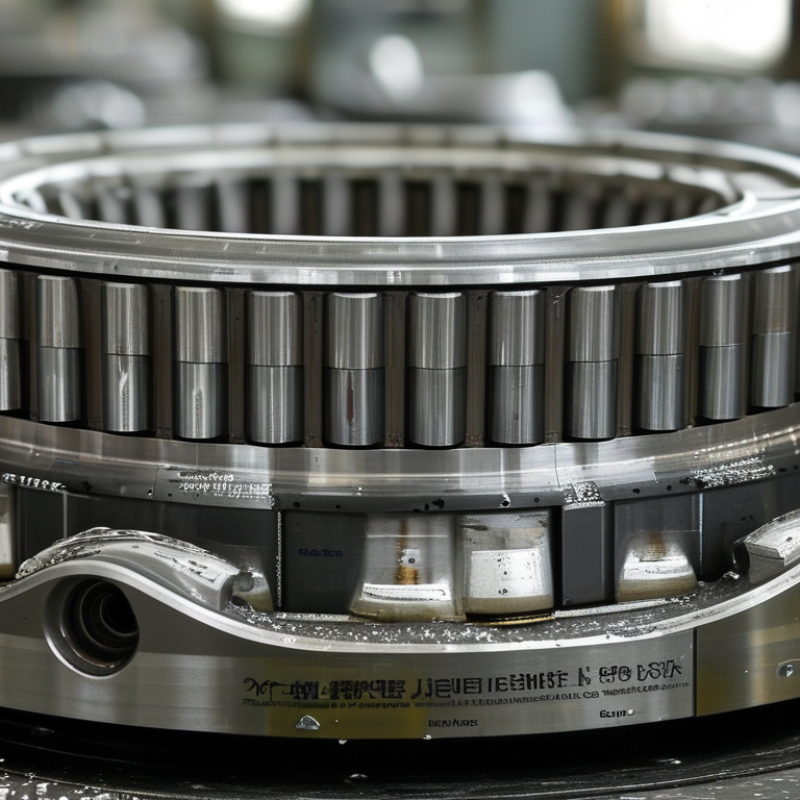
Automotive bearings are precision components that support rotating parts while reducing friction. They sit inside wheel hubs, transmissions, engines, and electric drive units. A bearing usually contains rolling elements, raceways, a cage, and seals. Together, these parts manage radial and axial loads during acceleration, braking, and cornering.

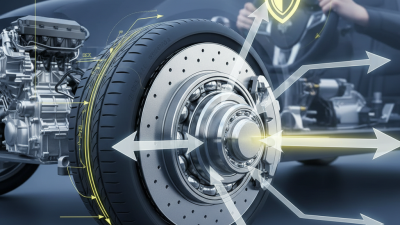
Their importance becomes clear under real driving conditions. A wheel bearing may endure heat, water, road dust, and repeated impact from potholes. Proper lubrication creates a thin protective film between metal surfaces. Seals help keep contaminants outside. If either function fails, the bearing can develop pitting, noise, or excessive play. A low humming sound that rises with vehicle speed deserves attention. Ignoring it may affect wheel alignment, tire wear, and driving stability.

Reliable manufacturers control steel cleanliness, heat treatment, grinding accuracy, and sealing performance. They also test bearings under vibration, temperature, and load cycles. Buyers should check traceable test data, dimensional consistency, and application-specific ratings. In practical inspections, technicians should measure clearance rather than judge condition by appearance alone. A bearing can look clean and still be damaged. This is easy to miss. No selection is perfect, because road conditions and maintenance habits vary. Engineers should review failure evidence, installation torque, lubricant type, and operating temperature before approving a bearing for production or repair.

Automotive Bearings: Why Seal Material Matters

Automotive bearings reduce friction, support rotating loads, and help systems such as wheels, transmissions, alternators, and electric motors operate reliably. The chart shows typical continuous temperature ranges for common bearing seal materials.

Temperature ranges are representative engineering values. Actual limits depend on lubricant, speed, load, sealing design, and the specific bearing construction.

How to Evaluate Automotive Bearing Manufacturers in China

Choosing an automotive bearing manufacturer in China requires more than comparing prices. Start by checking factory experience, production scale, and technical expertise. Ask how long the company has supplied automotive applications. Request evidence from comparable projects, not polished claims. A reliable manufacturer should explain steel grades, heat treatment, sealing design, and lubrication choices in clear language.

Quality systems deserve close attention. Review certifications, inspection procedures, and batch traceability records. Check whether each bearing receives dimensional, noise, vibration, and endurance testing. A factory visit can reveal practical details: clean assembly areas, calibrated gauges, controlled storage, and properly labeled materials. Ask to see sample test reports and failure-analysis records. Numbers matter.

Communication also shows manufacturing maturity. Technical staff should respond with drawings, tolerances, and corrective actions, rather than vague promises. Evaluate prototype support, delivery consistency, packaging, and after-sales investigation. A capable supplier should accept an independent audit and provide production samples for verification. Avoid choosing from catalog data alone; actual performance may change with speed, temperature, load, and installation conditions.

No supplier is flawless. Even strong factories may show occasional process gaps. That is where honest disclosure matters. Ask how problems are recorded, contained, and prevented from recurring. A small trial order can expose weaknesses before large-scale purchasing. My evaluation would also include customer references, but references can be incomplete. Combine them with factory evidence, laboratory results, and your own application testing.

Leading Chinese Manufacturers of Automotive Bearings

China has become a major source of automotive bearings for passenger cars, commercial vehicles, and electric vehicles.

Leading Chinese manufacturers often operate near industrial hubs such as Zhejiang, Jiangsu, and Henan. These regions provide strong machining, heat-treatment, and supply-chain capabilities.

Experienced manufacturers usually control several stages internally. These include forging, grinding, assembly, sealing, and final inspection.

Their products may support wheel hubs, transmissions, steering systems, electric motors, and suspension components. Reliable suppliers normally provide material certificates, dimensional reports, and fatigue-test data. Many also follow IATF 16949 and ISO 9001 quality systems. Still, certification alone is not enough. Production records and traceability deserve careful review.

Tips: Ask for measured noise levels, clearance ranges, grease specifications, and service-life testing. Check whether samples match mass production. A factory visit can reveal clean assembly areas, calibrated instruments, and disciplined storage.

Do not judge quality from packaging alone. Some suppliers communicate quickly but explain technical details poorly. That is a warning sign. A stronger partner will discuss load ratings, operating temperature, contamination risks, and failure analysis openly.

My practical view is simple: compare process control before comparing price. Lower costs can hide unstable heat treatment or inconsistent steel quality. Even careful buyers can miss small differences during sample approval, so repeated testing is wise.

Key Products and Technologies Offered by Top Manufacturers

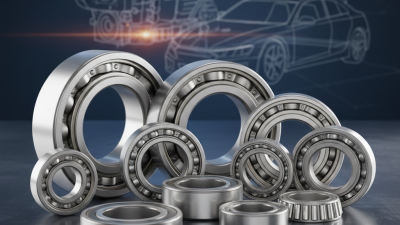
Chinese automotive bearing manufacturers increasingly compete through product engineering, not only production volume. Fortune Business Insights estimated the global automotive bearing market at over USD 40 billion in 2023, with demand supported by electric vehicles and stricter efficiency targets. China’s major suppliers produce wheel-hub units, tapered roller bearings, deep-groove bearings, needle bearings, and clutch-release bearings. These products serve passenger cars, commercial vehicles, transmissions, and electric drive systems.

The key technology is friction control. Manufacturers use carburized steel, precision grinding, advanced heat treatment, and optimized raceway geometry. Many factories also develop low-friction seals and high-temperature grease for compact electric motors. Sensor-integrated hub units can monitor wheel speed and support braking systems. China Bearing Industry Association reports show China remains one of the world’s largest bearing production bases, while industry surveys highlight rapid investment in automated inspection and intelligent assembly lines.

Quality evidence matters. Automotive suppliers commonly apply ISO 9001 and IATF 16949 systems, alongside endurance, noise, vibration, and contamination testing. Some plants use laser measurement and machine-vision inspection at multiple production stages. The numbers vary between reports. That deserves caution. Market forecasts often use different product definitions and exchange rates. Real performance still depends on mounting accuracy, lubricant selection, sealing design, and field validation. A bearing may pass a laboratory test, yet perform poorly after dust, water, or installation errors.

What Are the Top Automotive Bearings Manufacturers in China? - Key Products and Technologies Offered by Top Manufacturers
Manufacturer Category Primary Automotive Applications Key Bearing Products Core Technologies Offered Typical Material and Heat-Treatment Capabilities Quality and Validation Focus New-Energy Vehicle Relevance
Large integrated bearing producer Passenger vehicles, commercial vehicles, chassis systems and powertrain assemblies
  • Deep-groove ball bearings
  • Tapered roller bearings
  • Cylindrical roller bearings
  • Wheel-end bearing units
Automated grinding Superfinishing High-speed balancing Low-noise design Bearing-grade chromium steel, carburized steel for selected applications, controlled-atmosphere heat treatment and induction hardening Dimensional inspection, roundness measurement, vibration and noise testing, endurance testing, traceability and process capability control Suitable for electric drive units, e-axles, reduction gears and auxiliary electric motors when speed, sealing and electrical performance are properly specified
Wheel-hub bearing specialist Front and rear wheel hubs, steering knuckles, braking systems and integrated chassis modules
  • First-generation wheel bearings
  • Second-generation hub bearings
  • Third-generation integrated hub units
  • Flanged double-row angular-contact assemblies
Integrated flange design Preload control Multi-lip sealing ABS sensor integration High-carbon bearing steel, corrosion-resistant surface treatments, optimized raceway geometry and controlled induction hardening Radial and axial load testing, seal durability, water and mud ingress testing, rotational torque measurement and sensor signal validation Designed for the higher mass, regenerative braking loads and packaging requirements of battery-electric and hybrid vehicles
Powertrain bearing specialist Engines, transmissions, transfer cases, differentials and driveline systems
  • Needle roller bearings
  • Tapered roller bearings
  • Angular-contact ball bearings
  • Clutch release and pilot bearings
High-load raceway design Compact packaging Low-friction optimization Advanced sealing Carburized alloy steel, through-hardened bearing steel, precision-formed cages and application-specific surface finishing Gear-mesh noise evaluation, thermal durability, contamination resistance, torque-loss measurement and fatigue-life verification Applicable to hybrid transmissions, electric reduction gearboxes and range-extender drivetrains, with emphasis on high rotational speed and low friction
Precision bearing manufacturer High-speed rotating assemblies, steering systems, fuel systems, pumps and vehicle auxiliaries
  • Miniature and small ball bearings
  • Angular-contact bearings
  • Thin-section bearings
  • Special-purpose instrument bearings
Micron-level process control Low-vibration production High-speed operation Clean assembly High-purity bearing steel, stainless steel for selected environments, precision-ground raceways and controlled cage geometry Noise classification, torque consistency, dimensional accuracy, cleanliness analysis and high-speed durability testing Used in electric pumps, thermal-management systems, electric compressors, actuator systems and other compact vehicle subsystems
Commercial-vehicle bearing supplier Trucks, buses, trailers, agricultural vehicles, construction equipment and heavy-duty axles
  • Heavy-duty tapered roller bearings
  • Wheel-end bearing sets
  • Spherical roller bearings
  • Kingpin and suspension bearings
High-load capacity Impact resistance Robust sealing Extended service intervals Carburized and through-hardened alloy steels, optimized heat-treatment depth and wear-resistant contact surfaces Static and dynamic load testing, shock-load testing, grease compatibility, seal life and contamination endurance evaluation Supports electric buses, electric trucks and heavy-duty e-axles where bearing load capacity, sealing and thermal durability are critical
Automotive bearing unit producer Chassis, suspension, steering, engine accessory drives and compact vehicle modules
  • Preassembled bearing units
  • Flanged bearing assemblies
  • Tensioner and idler pulley bearings
  • Integrated sensor-bearing modules
Modular assembly Preset preload Reduced installation time Sensor-ready packaging Bearing-grade steel, stamped or machined steel cages, polymer seals and application-specific corrosion protection Assembly accuracy, mounting interface verification, rotational torque, seal performance and functional sensor testing Helps simplify e-mobility assemblies by combining bearings, flanges, seals and sensing functions into compact modules
Industrial-to-automotive supplier Vehicle manufacturing equipment, steering systems, motors, pumps, compressors and auxiliary drives
  • Standard ball bearings
  • Self-aligning ball bearings
  • Spherical roller bearings
  • Thrust bearings
Broad size range Interchangeable designs Lubrication engineering Condition monitoring Standard bearing steel, stainless steel options, engineered polymer cages and grease formulations matched to operating conditions Material cleanliness, dimensional conformity, lubrication validation, vibration monitoring and application-life testing Relevant to electric motors, battery cooling systems, charging equipment and factory automation used in vehicle production
Specialized coating and low-friction bearing supplier High-speed motors, electric axles, turbochargers, compressors and demanding transmission applications
  • Hybrid ceramic bearings
  • Insulated motor bearings
  • Low-friction ball bearings
  • High-temperature bearing assemblies
Electrical insulation Ceramic rolling elements Low-friction coatings High-speed optimization Bearing steel rings, ceramic rolling elements, insulating coatings and specialized heat-treatment processes Electrical pitting resistance, high-speed endurance, thermal cycling, grease compatibility and vibration performance Particularly suitable for electric traction motors and e-axles where shaft-current damage, high speed and reduced energy loss must be controlled
Note: The table presents anonymized manufacturer categories and commonly offered automotive bearing technologies in China. Actual product availability, certification scope and performance specifications vary by supplier, application and customer validation requirements.

How to Select the Right Chinese Automotive Bearing Supplier

Selecting a Chinese automotive bearing supplier requires more than comparing unit prices. China produced 31.28 million vehicles in 2024, while sales reached 31.44 million, according to the China Association of Automobile Manufacturers. This scale creates strong manufacturing depth, but it also increases supplier variation.

Request traceable evidence. Review IATF 16949 certification, process audits, heat-treatment records, and lot-level inspection data. Ask for dimensional results, steel certificates, noise measurements, and fatigue-test methods. ISO 16232 is useful when cleanliness affects bearing life. A supplier should explain its sampling plan clearly. Vague answers are warning signs.

Check production reality. Visit the plant, inspect grinding lines, and compare the stated capacity with machine numbers and shift records. Grand View Research’s 2024 automotive bearings report identifies electrification and lightweight design as important market drivers, so test capability matters. Ask whether the supplier validates bearings under higher speeds, temperature cycles, and changing loads.

Do not select on certification alone. A certificate can be current, yet engineering support may remain weak. My practical mistake would be trusting a polished factory tour without reviewing rejected-lot records. Require a controlled sample order, independent dimensional verification, and a written corrective-action process. Delivery performance should be measured over several months, not one successful shipment. Evaluate communication, documentation, and problem ownership before signing a long-term agreement.