Top 10 Steel Bearings Suppliers for Global Buyers?
Steel bearings play a critical role in various industries, ranging from automotive to aerospace. According to a recent market analysis by Grand View Research, the global bearings market is projected to reach $186 billion by 2027, driven largely by the demand for steel bearings. These components offer durability, precision, and low friction, making them essential for machinery and equipment reliability.
However, not all manufacturers deliver the same quality. The choice of supplier can significantly impact operational efficiency and longevity of machinery. The International Organization for Standardization (ISO) emphasizes the importance of choosing suppliers that adhere to stringent quality standards. Inconsistent quality and performance issues remain challenges within the industry.
Navigating the landscape of steel bearings suppliers requires careful consideration. Buyers must evaluate experience, technical expertise, and industry certifications. Understanding supplier capabilities ensures the selection of reliable partners. The increasing segmentation of suppliers necessitates a thorough research approach to avoid pitfalls associated with low-tier options. This article aims to highlight the top suppliers in the steel bearings market, offering insights into their strengths and weaknesses.
Overview of Global Steel Bearings Market
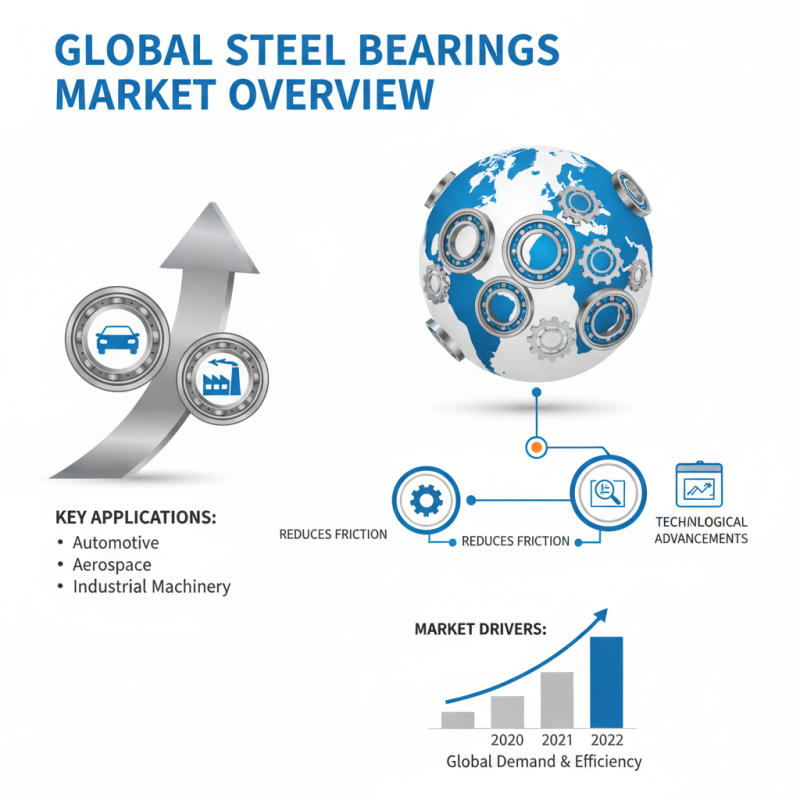
The global steel bearings market plays a vital role in various industries. Steel bearings are crucial for reducing friction in machinery. Their applications span automotive, aerospace, and industrial sectors. This multifunctionality drives demand worldwide. The market is influenced by technological advancements and production efficiency.
In recent years, the market has seen a shift towards high-performance materials. Manufacturers focus on durability and processing techniques. Enhanced steel quality leads to better longevity. However, the increasing complexity in production can challenge some suppliers. Striving for innovation is essential but requires investment and expertise.
**Tips**: Research suppliers thoroughly. Look for those with proven track records. Quality certifications often indicate reliability. Also, consider customer feedback to gauge satisfaction levels. It’s important to remain adaptable in your sourcing strategy. Test new suppliers cautiously and assess their offerings.
Criteria for Selecting Steel Bearing Suppliers
Selecting the right steel bearing supplier is crucial for quality and efficiency. Buyers should consider several key criteria. First, assess their experience in the industry. A supplier with years of expertise is more likely to understand specific needs. This knowledge can lead to better product offerings and advice on suitable bearings for various applications.
Quality control is another vital factor. It is imperative to examine a supplier's manufacturing processes and certifications. Reliable suppliers should provide documented evidence of their quality assurance measures. This includes tests for durability and performance. Customers should not hesitate to seek clarity on these aspects. Transparency around materials used is also important. A supplier who is open about their sourcing practices builds trust.
Lastly, communication and support can influence the selection process. A responsive supplier helps resolve issues quickly. Poor communication can lead to delays. Evaluate a supplier's customer service track record. This can often highlight potential challenges in future transactions. Identifying these factors requires careful consideration. Potential buyers should remain vigilant and reflect on their choices before making a commitment.
Top 10 Steel Bearings Suppliers for Global Buyers
| Supplier Country |
Annual Revenue (USD) |
Years in Business |
Main Product Types |
Certifications |
| Germany |
$500 Million |
50 |
Ball Bearings, Roller Bearings |
ISO 9001 |
| USA |
$750 Million |
75 |
Deep Groove Bearings, Thrust Bearings |
ISO 14001, TS16949 |
| Japan |
$600 Million |
65 |
Angular Contact Bearings, Spherical Bearings |
JIS, ISO 9001 |
| China |
$1 Billion |
30 |
Self-Lubricating Bearings, Pillow Block Bearings |
ISO 9001, CE |
| India |
$300 Million |
40 |
Tapered Roller Bearings, Needle Bearings |
ISO 9001, OHSAS 18001 |
| South Korea |
$400 Million |
45 |
Plain Bearings, Composite Bearings |
ISO 9001, AS9100 |
| Italy |
$700 Million |
70 |
Ceramic Bearings, Linear Bearings |
ISO 14001, ISO 9001 |
| Russia |
$250 Million |
25 |
High Load Bearings, Low Noise Bearings |
ISO 9001 |
| Brazil |
$150 Million |
20 |
Hybrid Bearings, Water Resistant Bearings |
ISO 9001 |
Top 10 Steel Bearings Suppliers Worldwide
When seeking reliable steel bearings suppliers worldwide, various factors come into play. These include product quality, delivery efficiency, and customer service. Industry experts emphasize the importance of selecting manufacturers that adhere to international standards. This ensures that the bearings perform effectively under varying conditions.
Global buyers often find challenges in sourcing the right suppliers. Differences in specifications and quality assurances can be confusing. Notably, understanding the nuances of each supplier's strengths can lead to better decision-making. Some may excel in precision manufacturing, while others focus on cost-effectiveness.
Evaluating feedback from other customers is crucial. This helps gauge a supplier’s reliability and performance. Yet, not all reviews are reliable; some may be biased or outdated. Buyers should be discerning when reviewing such insights. Collaboration with suppliers that offer transparent communication builds trust and fosters long-term partnerships.
Key Features and Innovations in Steel Bearings
When considering steel bearings, key features and innovations play a crucial role. Steel bearings are designed for high performance and durability. Their ability to withstand heavy loads makes them ideal for various applications. However, not all steel bearings deliver the same level of efficiency. Many manufacturers focus on enhancing the hardness and resistance of their bearings. This can lead to longer lifespans and reduced maintenance.
Innovations in steel bearing technology are changing the landscape. Advanced heat treatment processes increase wear resistance. Some suppliers are now incorporating special coatings for added protection. These coatings can improve performance, but their effectiveness may vary extensively across different environments. Engineers often must evaluate these factors carefully.
Sustainability is becoming a significant focus. The shift towards eco-friendly materials in production is gaining momentum. However, the transition is not always smooth. Finding a balance between cost-effectiveness and environmentally friendly methods can be challenging. Buyers must consider the long-term benefits when exploring steel bearing options. Each innovation offers potential, but not all will suit every application.
Top 10 Steel Bearings Suppliers - Market Share Analysis
Future Trends in Steel Bearing Supply Industry
The steel bearing supply industry faces several emerging trends that shape its future. Demand for high-performance bearings is rising, driven by sectors like automotive and robotics. This shift is prompting manufacturers to innovate. They explore new materials and designs to enhance durability and efficiency.
Sustainability stands out as a key focus. Steel bearings are being produced with environmentally friendly processes. This helps in reducing carbon footprints. Companies are investing in technologies that minimize waste and utilize renewable energy sources. However, the adoption of these practices varies widely among suppliers.
Adapting to digital transformation is also crucial. The integration of IoT and AI in manufacturing processes enhances precision and automation. Yet, many suppliers struggle to keep pace with rapid technological advancements. This creates gaps in competitiveness. The industry must embrace these changes to remain relevant in a global marketplace.