2026 Trends in Steel Bearings for Global Buyers?
As the world looks towards 2026, the demand for Steel Bearings is poised to evolve dramatically. This essential component, crucial for various industrial applications, will see trends influenced by technological advancements and sustainability efforts. Buyers must navigate these changes carefully to make informed decisions.
The innovation in Steel Bearings cannot be underestimated. Manufacturers are introducing lighter and more efficient designs to cater to modern machinery. Enhanced durability and reduced maintenance are key selling points. However, with progress comes challenges that the industry must address. Organizations must also consider the environmental impact of production methods.
Reliability remains a critical factor in the decision-making process for global buyers. Steel Bearings must meet rigorous quality standards to ensure performance. Buyers should seek suppliers who provide transparent data on their manufacturing practices. It’s essential to reflect on the evolving needs of the market. Embracing these trends will be vital for success in this competitive landscape.
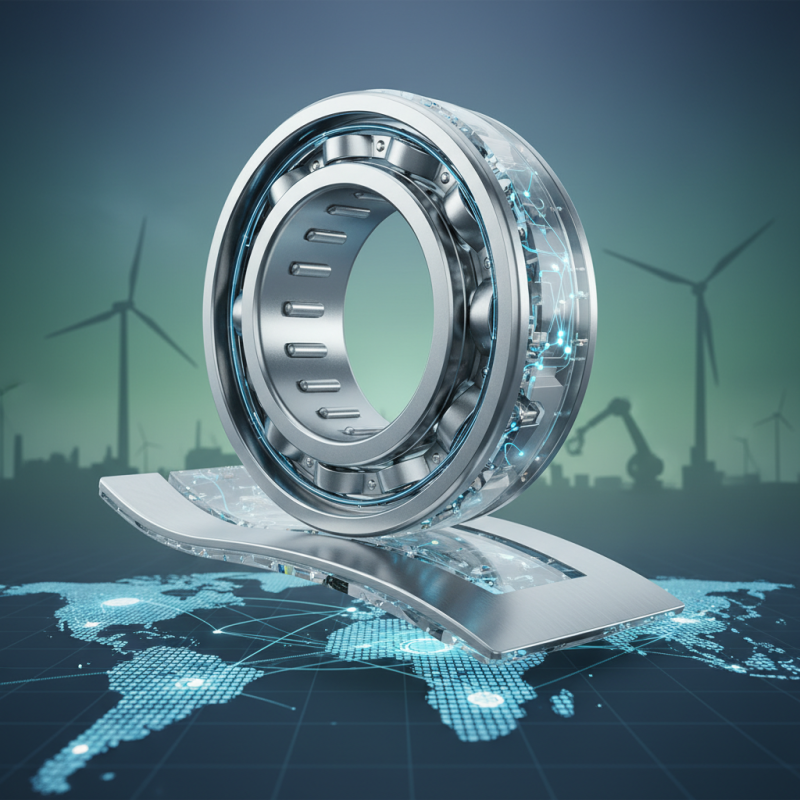
Trends in the Adoption of High-Performance Steel Bearings by 2026
The adoption of high-performance steel bearings is on the rise, driven by various industries seeking enhanced operational efficiency. According to the Global Bearing Market Report, the demand for high-performance bearings is projected to grow at a CAGR of 5.5% from 2022 to 2026. This growth is fueled by advancements in materials and manufacturing processes.
High-performance steel bearings offer superior load capacity and durability. They withstand extreme conditions, making them ideal for heavy machinery and aerospace applications. Data from industry experts shows that these bearings can improve equipment lifespan by up to 30%. However, the initial investment may deter some buyers. An analysis by the Bearing Technology Association highlights a knowledge gap regarding long-term cost benefits.
As manufacturers invest more in R&D, the market dynamics are shifting. Companies are focused on developing innovative solutions that meet sustainability goals. By 2026, it's expected that green technologies will influence around 40% of bearing product development. Nevertheless, the transition to high-performance steel bearings can be challenging. Organizations must balance performance with cost-effectiveness, making informed decisions critical for success.
Impact of Advanced Manufacturing Techniques on Steel Bearing Production
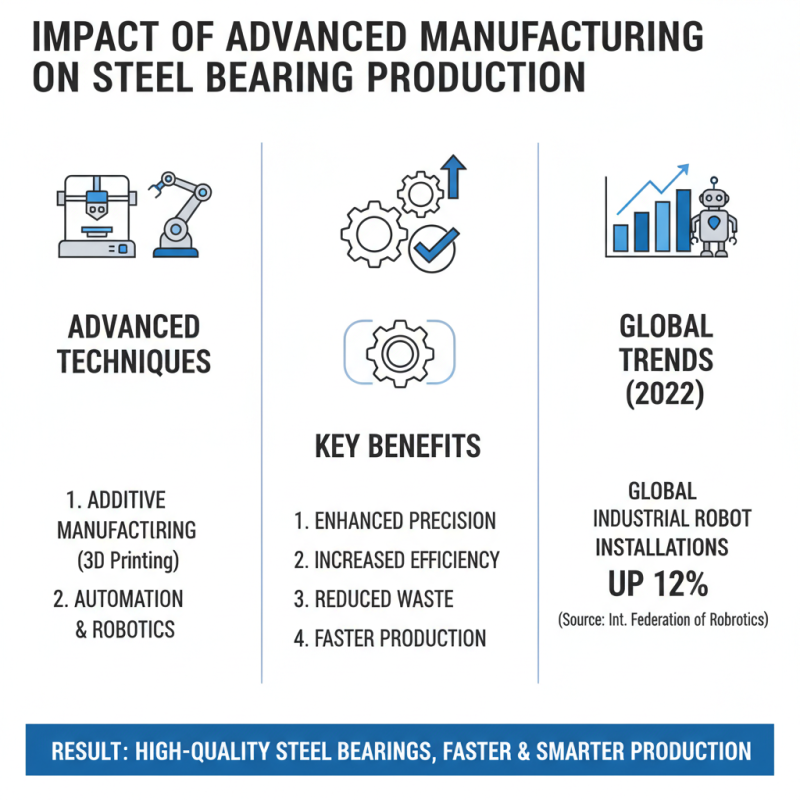
Advanced manufacturing techniques are transforming the production of steel bearings. The adoption of additive manufacturing and automation has led to significant improvements in precision and efficiency. According to a report by the International Federation of Robotics, the global installation of industrial robots grew by 12% in 2022. This trend enhances the ability to produce high-quality steel bearings faster and with less waste.
3D printing, in particular, is gaining traction. This technique allows for custom designs and complex geometries that traditional methods cannot achieve. A study from the World Economic Forum indicates that companies utilizing additive manufacturing can reduce time-to-market by up to 50%. However, the integration of these technologies is not without challenges.
The initial investment for advanced machinery can be high. Many manufacturers struggle with the transition from conventional methods. Furthermore, maintaining quality control is crucial. As production becomes more automated, the need for skilled technicians increases. Reports suggest that approximately 30% of manufacturers cite a skills gap as a significant barrier to adopting new technologies. This demonstrates the ongoing evolution within the steel bearing industry, highlighting areas needing further reflection and development.
Sustainability Initiatives and Their Role in Steel Bearing Trends
Sustainability is driving changes in the steel bearing industry. Global initiatives focus on reducing carbon footprints. According to a recent report by the International Energy Agency, steel production accounts for about 7% of global CO2 emissions. This statistic highlights the urgency for sustainable practices.
Many manufacturers are adopting eco-friendly processes. For instance, the use of electric arc furnaces is rising. These methods can reduce greenhouse gas emissions by more than 30%. Additionally, recycled steel is becoming a vital resource. It not only lessens waste but also lowers energy consumption.
Moreover, buyers are increasingly prioritizing sustainability. A survey conducted by a leading industry organization revealed that 70% of buyers prefer suppliers committed to environmental goals. However, challenges remain. Not all companies can afford the transition to greener technologies. The upfront investment can be significant, creating a gap between intention and action. This disparity raises concerns about the pace of change in the industry.
Market Demand Forecasts for Steel Bearings in Key Industries
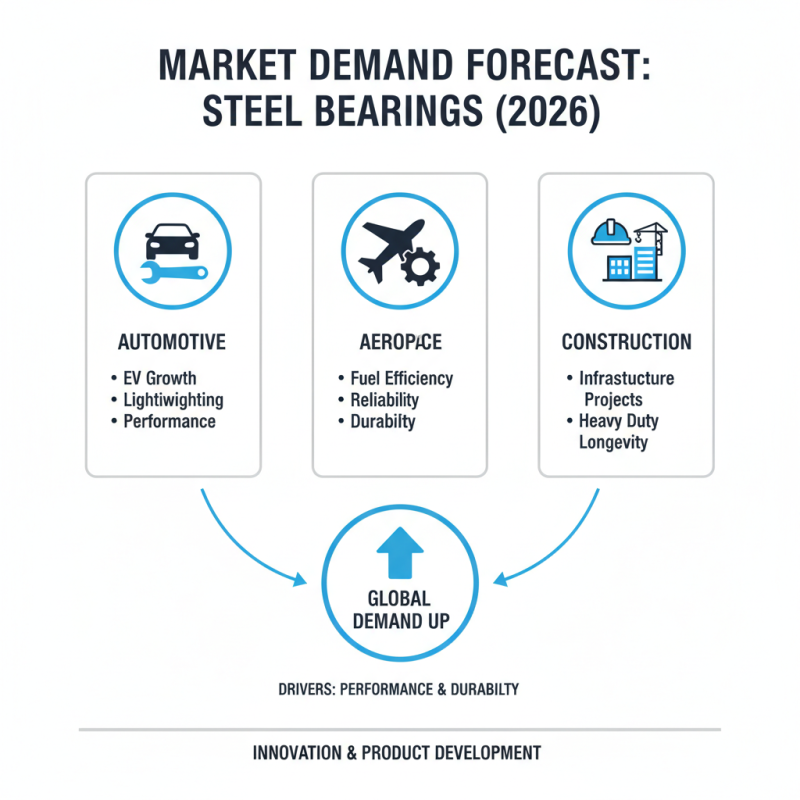
The steel bearings market is poised for significant changes by 2026. Key industries such as automotive, aerospace, and construction will drive demand. Companies are prioritizing performance and durability in their bearings. This focus will shape product development and innovation.
In the automotive sector, electric vehicles will play a crucial role. These vehicles require high-performance steel bearings to support efficiency and sustainability. As manufacturers adapt, we may see shifts in material engineering and design standards. This indicates growing competition within the industry.
Tips: Always stay updated on industry developments. Following trends can guide better purchasing decisions. Building strong supplier relationships is essential for reliability.
In aerospace, the need for lightweight and robust steel bearings is rising. These bearings must withstand extreme conditions. This creates a challenge for producers. They must balance weight and durability while meeting safety regulations.
As market dynamics evolve, businesses must remain flexible. Adapting to trends can drive success. Consider focusing on innovation to stay ahead. Embrace change, as it often leads to new opportunities in the steel bearings landscape.
Technological Innovations Shaping the Future of Steel Bearings
In 2026, the steel bearing industry is undergoing significant transformations driven by technological innovations. Advanced materials, such as high-strength steel alloys, are gaining prominence. These materials enhance durability and resistance to wear, making them ideal for demanding applications. Innovations in manufacturing techniques, like additive manufacturing, allow for more complex designs. This can lead to improved performance and reduced waste in production.
Another trend is the rise of smart bearings. Integrating sensors into steel bearings can provide real-time data on performance. This helps in predictive maintenance, minimizing downtime. However, these technologies come with challenges. Not all manufacturers are equipped to implement these advanced systems. There is also a learning curve for users unfamiliar with data analytics. Addressing these obstacles will be crucial for the widespread adoption of smart bearings.
Sustainability is becoming a vital focus. Companies are seeking eco-friendly materials and manufacturing processes. The move towards a circular economy influences material choice. Steel bearing manufacturers are exploring recycling options. However, the transition is not without hurdles. Balancing cost and sustainability remains a complex issue. These technological advancements reflect a shift towards more efficient and environmentally friendly solutions in the steel bearing market.
2026 Trends in Steel Bearings for Global Buyers