Why Is a Bearing Lock Important?
Why Is a Bearing Lock Important? The answer begins with a small detail: the fit between a bearing and its shaft. Under load, vibration, or repeated starts, an unsecured bearing can creep along the shaft or rotate in its housing. That movement can score metal surfaces, loosen the fit, and turn a quiet assembly into a costly repair. A Bearing Lock helps resist this movement and maintain the bearing’s intended position.
The risk is not theoretical. SKF’s technical guide, Bearing Damage and Failure Analysis, describes incorrect mounting and inadequate fits among conditions associated with bearing damage. ISO 15243:2017 also classifies rolling-bearing damage modes, helping maintenance teams identify and investigate failures. These references do not provide one universal failure rate; actual risk depends on design, load, speed, and installation. Details matter.
Bearing analyst Tedric A. Harris, author of Rolling Bearing Analysis, emphasizes through his technical work that bearing performance depends on the interaction of design, fit, and operating conditions. Put simply: secure the fit. A lock is not a substitute for correct shaft tolerances, installation, or inspection. It is one part of a dependable assembly. Even a properly selected lock can underperform if it is installed poorly. This guide explains what a Bearing Lock does, when it matters, and which practical checks help prevent avoidable movement.
Bearing Lock Basics: How It Secures a Bearing on a Shaft
Why Is a Bearing Lock Important?
Bearing Lock Basics: How It Secures a Bearing on a Shaft
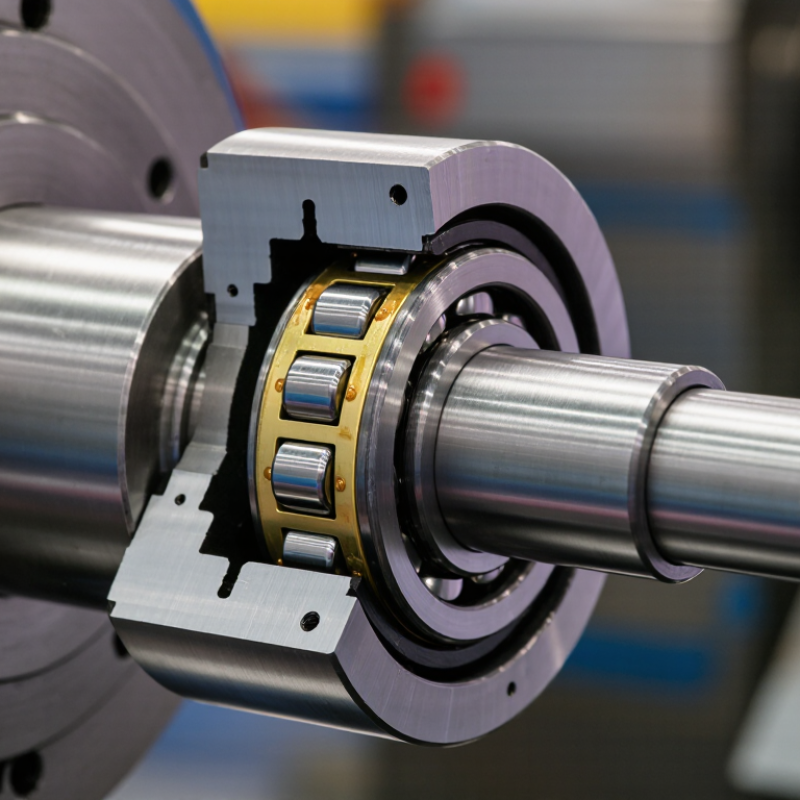
A bearing lock connects the bearing’s inner ring to its shaft, helping prevent rotation between the two surfaces. Common methods include set screws, eccentric collars, and adapter sleeves. Each creates retention differently, so the correct choice depends on shaft size, load direction, vibration, and maintenance needs. When a ring creeps, it can polish the shaft, generate heat, and loosen the fit. Small movement can become costly.
The lock must hold securely without distorting the bearing. Tighten fasteners evenly and follow the specified torque; excessive force can change internal clearance. A lock cannot compensate for a damaged shaft or poor alignment. That matters. ISO 281:2007 defines basic bearing rating life, L10, as the life reached by 90% of a sufficiently large group under stated conditions. Its calculation uses a load exponent of 3 for ball bearings and 10/3 for roller bearings. These figures describe fatigue life, not lock strength, but they reinforce why installation conditions matter. Inspect the shaft fit, seating surfaces, and locking hardware during installation. A skipped check is easy to regret.
Common Locking Methods: Locknuts, Set Screws, and Adapter Sleeves
A bearing lock keeps a bearing from shifting along its shaft or creeping under vibration. That movement can damage a shaft, create heat, and change alignment. Small parts matter. Locknuts, set screws, and adapter sleeves secure bearings in different ways, so the shaft and operating conditions should guide the choice.
A locknut clamps the bearing against a shaft shoulder or spacer. Tighten it evenly with the right hook spanner, then secure its locking feature. Too much force can distort the bearing; too little may let it move. Set screws press directly against the shaft, making installation quick. But a screw can mark a smooth shaft, and uneven tightening may tilt the bearing. It is simple. Check the screws again after initial operation, especially where vibration is present.
An adapter sleeve fits between a tapered bore and a straight shaft. Tightening the sleeve reduces clearance and holds the bearing in place without requiring a threaded shaft. Measure the initial and final clearance with a feeler gauge; guessing by feel is unreliable. A common maintenance mistake is to overlook sleeve position while tightening. That can loosen. There is no single best method, and even a well-chosen lock can fail if the shaft surface, fit, or installation sequence is wrong.
Why Fit Matters: Preventing Inner-Ring Creep and Fretting
Why Is a Bearing Lock Important?
A bearing lock helps hold the inner ring in position, but the shaft fit does much of the real work. If the fit is too loose, the ring can creep against the shaft under load. Even tiny movements can polish the contact surfaces, create reddish-brown fretting debris, and gradually wear the shaft seat. Small movement matters. ISO 15243:2017 classifies fretting corrosion and wear as recognized bearing damage modes. A lock cannot reliably compensate for an incorrect fit.
Fit selection should reflect load direction, magnitude, speed, and temperature. A rotating load relative to the ring often calls for an interference fit; the required tightness depends on the bearing and shaft dimensions. Too little interference invites creep. Too much can reduce internal clearance and raise operating temperature. That trade-off is easy to overlook. Check the manufacturer’s fit tables and measure the shaft seat, rather than relying on feel or a tight-looking assembly.
A practical warning sign is a bright, polished band or fine oxide dust beneath the inner ring. Inspect the shaft for scoring before installing a replacement; otherwise, the new fit may be loose again. ISO 281:2007 defines basic rating life at 90% reliability, but that rating does not excuse poor mounting or fit. Real service conditions are messier than a formula.
Failure and Bearing Life: ISO 281 Uses p = 3 for Balls, 10/3 for Rollers
A bearing lock keeps the inner ring secured to its shaft, reducing creep when vibration or changing loads disturb the fit. It does not increase the bearing’s dynamic load rating. But a loose ring can fret the shaft, generate heat, and disrupt the conditions assumed in life calculations. Small movement matters.
ISO 281:2007 defines basic rating life, L10, in millions of revolutions: (C/P)^p. The exponent p is 3 for ball bearings and 10/3 for roller bearings. L10 represents the life that 90% of a sufficiently large group of identical bearings are expected to reach or exceed under specified conditions. For a load ratio C/P of 5, the formula gives about 125 million revolutions for balls and 214 million for rollers. That is a calculated comparison, not a service-life guarantee.
The distinction is useful, but easy to misuse. Lubrication, contamination, misalignment, and shock loads can shorten real operating life; ISO 281 also provides modified-life methods for relevant factors. A lock cannot compensate for poor installation. Check the shaft and housing fits, then verify the locking method and tightening procedure against the bearing arrangement. I have seen a tidy calculation outlast its assumptions. That deserves a second look.
Why Is a Bearing Lock Important? - Failure and Bearing Life: ISO 281 Uses p = 3 for Balls, 10/3 for Rollers
| Dimension |
Fact or Practical Guidance |
Why It Matters |
| Purpose of a bearing lock |
A locking arrangement helps secure a bearing ring in its intended position on a shaft or in a housing, according to the bearing and mounting design. |
It helps prevent unwanted movement that can disrupt positioning, alignment, or operation. |
| Possible consequences of ring movement |
Relative movement between a ring and its mating surface may contribute to fretting, surface wear, heat, or a loosened fit. |
These conditions can impair the mounting and may contribute to premature bearing problems. |
| ISO 281 basic rating life |
The basic rating life is commonly expressed as L10 = (C/P)p million revolutions, where C is basic dynamic load rating and P is equivalent dynamic bearing load. |
The relationship shows how the load ratio and bearing type affect the calculated basic rating life. |
| Ball-bearing life exponent |
For ball bearings, p = 3. |
At a C/P ratio of 5, the formula gives 53 = 125 million revolutions. |
| Roller-bearing life exponent |
For roller bearings, p = 10/3. |
At a C/P ratio of 5, the formula gives 510/3, approximately 214 million revolutions. |
| Interpreting L10 |
The basic rating life is a statistical estimate associated with 90% reliability for a group of apparently identical bearings under specified conditions. |
It is not a guarantee that an individual bearing will reach that life. |
| What the life formula does not assess |
The basic formula does not, by itself, establish that the lock, fit, lubrication, alignment, sealing, or installation is correct. |
A sound life calculation cannot compensate for an unsuitable mounting or operating condition. |
| Good practice |
Select the locking method and fits for the bearing arrangement, loads, speed, and operating conditions; follow the applicable mounting instructions and check that the assembly remains correctly positioned. |
Correct installation supports stable operation, but does not eliminate normal fatigue or other failure risks. |
Choosing and Inspecting a Lock: Match the Method to Load and Service Conditions
A bearing lock prevents unwanted movement between the bearing and shaft, helping preserve alignment under operating loads. The right method depends on load direction, vibration, shaft size, speed, and how often the assembly needs removal. Set screws can suit some light-duty arrangements, while adapter sleeves or locknuts may provide more secure retention in other designs. No method fits every machine. Check the bearing and equipment specifications before choosing.
Inspection matters just as much as selection. Look for a shifted collar, polished marks on the shaft, fretting dust, damaged threads, or a loose locknut. These clues can point to movement, poor fit, or incorrect installation. Also consider service conditions: dust can collect around exposed parts, and repeated dismantling can wear contact surfaces. Small details matter. Use the specified tightening procedure and tools; excessive force can damage components. After installation, verify alignment and clearance, then recheck after initial operation. That extra check is easy to skip, and sometimes it should not be.
Tips: Clean the shaft and locking surfaces before assembly. Confirm the shaft diameter and load direction. Record any movement or wear during inspections, so small changes are easier to spot.