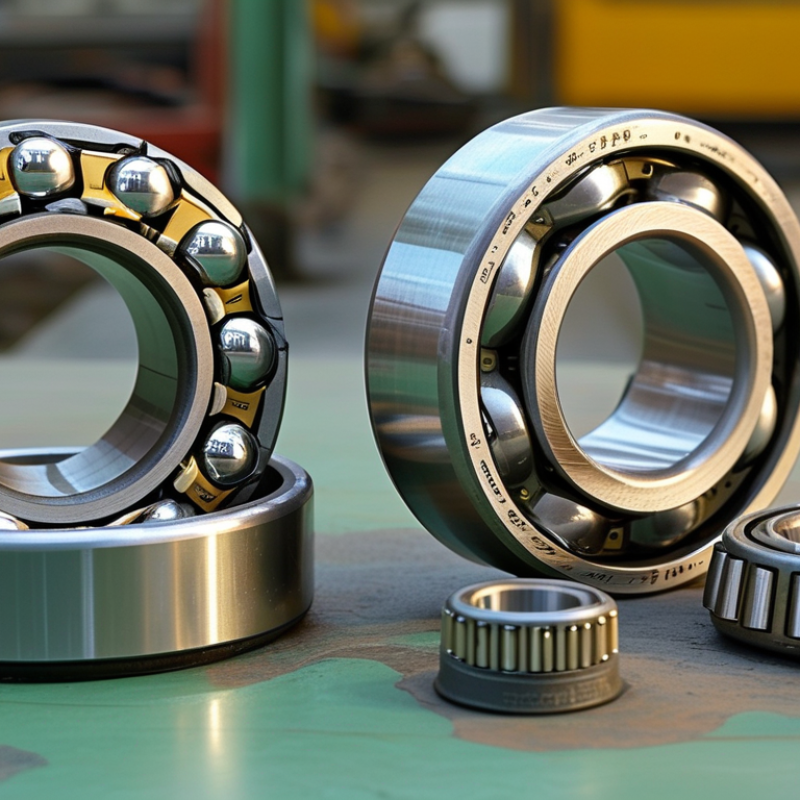
Global buyers entering 2026 face a practical question: which Bearing Design fits the machine, environment, and maintenance plan?
The answer is rarely the most expensive option. It depends on radial load, axial load, speed, temperature, contamination, and available installation space. A deep-groove ball bearing suits many electric motors and conveyors. Tapered roller bearings handle combined loads in vehicles and gearboxes. Spherical roller bearings remain valuable where shaft misalignment is unavoidable. Cylindrical roller bearings support high radial loads, but they need careful axial guidance.
Industry data supports this equipment-specific approach. SKF’s 2024 Annual Report highlights reliability, energy efficiency, and condition monitoring as major priorities for industrial customers. Timken’s 2024 Annual Report similarly emphasizes engineered bearings, predictive maintenance, and application performance. Market forecasts from Grand View Research and Fortune Business Insights also indicate continued bearing-market growth through the decade, driven by automation, renewable energy, transportation, and industrial machinery. Their market values differ because research methods and product definitions differ. That matters.
One overlooked detail is contamination. A dusty cement plant can damage an otherwise correctly rated bearing within months. A sealed bearing may reduce maintenance, yet sealing can increase friction at high speeds. ISO 281 supports life calculations, while ISO 15243 helps classify damage patterns. These standards improve decisions, but they do not replace field inspection. No ranking is universal. Even experienced buyers can over-specify components. This guide compares leading bearing designs for 2026, using load behavior, service conditions, lifecycle cost, and supplier reliability as practical selection criteria.
Bearing design starts with the load path, not the catalog number. Radial loads act across the shaft, while axial loads move along it. Combined loads require careful attention to contact angle and internal geometry. Deep-groove designs suit many radial applications, while tapered rollers handle combined loads. Spherical designs can accommodate limited misalignment. Rotational speed affects heat, lubricant life, and cage stability. A bearing that fits mechanically may still fail thermally. Small details matter.
Global buyers should define operating loads, duty cycles, shaft size, housing limits, and expected service hours. Check static safety under shock or installation loads, not only calculated dynamic life. For contaminated areas, sealing, relubrication access, and surface protection deserve equal attention. Temperature changes can alter clearance and preload. ISO dimensional tolerances support consistent installation, but they do not replace application testing. Use traceable test data and clear inspection records.
In practical selection work, I compare bearing life calculations with actual maintenance conditions. A clean laboratory estimate can mislead when dust, washdown, vibration, or poor alignment enters the system. I have seen buyers over-specify capacity while ignoring lubrication intervals. That choice looks safe, but it may increase cost without improving reliability. My first estimate is rarely perfect. Test the assumption. Examine noise, temperature, mounting force, and shaft runout before approving production quantities. Pay attention to installation errors; even a well-designed bearing can be damaged during fitting.
Bearing choice starts with load direction, not catalog popularity. Deep-groove ball bearings use simple raceways and handle radial loads with moderate axial loads. Angular-contact ball bearings shift the contact angle, improving axial capacity and stiffness. Cylindrical roller bearings use line contact, so they tolerate heavier radial loads than most ball designs. Tapered roller bearings support combined loads through matched cone geometry. Spherical roller bearings can compensate for shaft misalignment, but they usually create more friction and space demands. Thrust bearings focus on axial loads and perform poorly under unintended radial forces.
Fortune Business Insights’ 2024 bearing market report estimated the global market at about USD 124 billion in 2023. It projects roughly USD 185 billion by 2032, with a 4.6% compound annual growth rate. This growth does not make every design suitable. In practical selection, speed, contamination, lubrication, temperature, and installation accuracy matter more than market size. ISO 281 rating-life calculations help, but real sealing conditions can reduce actual service life. The calculation is useful, not perfect.
Match the bearing’s contact geometry to the dominant load. Check shaft deflection before choosing a rigid design. For dusty environments, prioritize sealing and maintenance access. A lower-friction option may still fail early when alignment is poor. Recheck the choice after testing, because field conditions often expose assumptions.
2026 Best Bearing Design Types for Global Buyers?
How Load, Speed, and Environment Shape Bearing Selection
Bearing selection should begin with the real load, not a catalog image. Deep-groove ball bearings suit moderate radial loads and many general applications. Angular-contact designs handle combined radial and axial loads more effectively. Spherical roller bearings tolerate heavier loads and limited shaft misalignment.
Speed changes the decision quickly. Smaller rolling elements usually support higher rotational speed. However, high speed increases heat, lubricant stress, and cage instability. Calculate the required speed rating under actual operating conditions. A clean laboratory rating may not match a dusty production line.
Load direction matters.
I have seen buyers choose by shaft diameter alone. That shortcut often creates noise, heat, or early fatigue. Estimate static load, dynamic load, shock levels, and duty cycles. A bearing exposed to frequent starts may need more capacity than its average load suggests.
Environment can overturn an otherwise correct choice. Water, chemicals, abrasive dust, and outdoor temperature require suitable seals, clearances, materials, and lubrication. In humid areas, corrosion-resistant surfaces may protect reliability. In high-temperature equipment, standard grease can fail before the bearing does. Verify temperature limits with measured data, not assumptions.
Small details matter. Shaft fit, housing alignment, installation force, and maintenance access influence service life. Ask suppliers for load calculations, tolerance data, test conditions, and traceable inspection records. Some recommendations still need field validation. Real machines are less predictable than spreadsheets.
Practical comparison of common bearing designs. Performance ranges are indicative engineering values and depend on bearing size, internal clearance, load, lubrication, mounting accuracy, and operating conditions.
| Bearing Design Type | Primary Load Capability | Typical Speed Capability | Misalignment Tolerance | Temperature Considerations | Environmental Suitability | Lubrication Preference | Typical Applications | Selection Guidance |
|---|---|---|---|---|---|---|---|---|
| Deep-Groove Ball Bearing | Radial: High Axial: Moderate, both directions |
High Commonly suitable for approximately 3,000–20,000 rpm, depending on size and lubrication. |
Low to moderate; shaft and housing alignment should be carefully controlled. | Standard designs are commonly used around −30°C to +120°C. Special seals, clearance, or materials may be required outside this range. | Suitable for clean, enclosed machinery. Sealed versions provide better protection against dust and light moisture. | Grease for many general applications; oil for higher speeds or heat dissipation. | Electric motors, pumps, fans, gearboxes, conveyors, household equipment, and general industrial machinery. | Best general-purpose choice when moderate radial and axial loads combine with high rotational speed and compact size. |
| Angular-Contact Ball Bearing | Radial: High Axial: High, mainly one direction per bearing |
High Often selected for approximately 2,000–15,000 rpm, depending on contact angle, preload, and arrangement. |
Low; sensitive to shaft deflection, mounting errors, and excessive preload. | Commonly used around −30°C to +120°C in standard configurations; preload and lubricant choice strongly affect heat generation. | Best for clean and accurately assembled equipment. Effective sealing is important in contaminated areas. | Grease for moderate speeds; oil-air or oil circulation for high-speed precision systems. | Machine-tool spindles, precision pumps, compressors, robotics, screw drives, and high-speed rotating assemblies. | Choose when combined radial and axial loads, axial stiffness, or precision positioning are important. |
| Cylindrical Roller Bearing | Radial: Very high Axial: Limited or none, depending on flange design |
High Common operating ranges are approximately 1,500–10,000 rpm, depending on load, cage, and lubrication. |
Low to moderate; certain internal designs accommodate axial displacement but not major angular misalignment. | Standard versions are commonly used around −30°C to +120°C. Thermal expansion and internal clearance require evaluation. | Suitable for industrial environments when protected from abrasive contamination and inadequate lubrication. | Grease for moderate duty; oil circulation for high load, high speed, or heat removal. | Electric motors, generators, gearboxes, steel-processing equipment, traction systems, and heavy industrial drives. | Preferred for high radial loads and high stiffness where axial displacement or locating/non-locating arrangements must be managed. |
| Spherical Roller Bearing | Radial: Very high Axial: High, both directions |
Moderate Frequently applied at approximately 300–3,000 rpm, depending on size, load, and lubrication. |
High; self-aligning design can accommodate housing deflection and shaft misalignment within specified limits. | Standard designs are generally used around −30°C to +120°C; heavy loads and poor cooling can increase operating temperature. | Suitable for vibration, shock, dust, and heavy industrial service when properly sealed or lubricated. | Grease for most applications; oil bath or oil circulation for high loads and continuous duty. | Mining conveyors, crushers, fans, paper machinery, material-handling systems, and large gearboxes. | Choose for heavy combined loads, shock loading, housing deformation, or shaft misalignment. |
| Tapered Roller Bearing | Radial: Very high Axial: High, one direction per bearing |
Low to moderate Typical applications operate around 300–3,000 rpm, depending on size, preload, and lubrication. |
Low; accurate alignment and correct setting of internal clearance or preload are important. | Commonly used around −30°C to +120°C in standard configurations. Thermal expansion can alter preload and operating clearance. | Suitable for shock loads and demanding industrial service when contamination is controlled. | Grease for moderate speeds; oil lubrication for higher speed, heavy load, or continuous heat removal. | Wheel hubs, transmissions, reducers, industrial gearboxes, rolling mills, and heavy-duty axles. | Best when high combined radial and axial loads require high stiffness and controlled axial positioning. |
| Needle Roller Bearing | Radial: High for its cross-section Axial: Normally limited |
Moderate to high Typical ranges are approximately 1,000–8,000 rpm, depending on design, cage, and lubrication. |
Very low; raceway alignment and shaft hardness or surface quality are critical for full performance. | Commonly used around −30°C to +120°C in standard designs; thin sections can be sensitive to lubricant breakdown. | Suitable for compact mechanisms when adequately protected from dirt and impact contamination. | Grease for moderate speed; oil is often preferred for high-speed or oscillating service. | Automotive transmissions, planetary gears, pumps, compressors, universal joints, and compact linkage systems. | Use where radial load capacity must be maximized within a limited radial envelope. |
| Thrust Ball Bearing | Radial: Very limited Axial: Moderate, primarily one direction |
Moderate Often used at approximately 500–5,000 rpm, depending on load and lubrication. |
Very low; requires parallel and rigid mounting surfaces. | Standard versions are commonly used around −30°C to +120°C. Axial load and lubricant type affect heat generation. | Best for clean, protected applications with primarily axial loading. | Grease for light and moderate duty; oil for higher speed or continuous operation. | Turntables, low-speed vertical shafts, screw mechanisms, rotary tables, and light-duty axial supports. | Select only when radial loads are negligible and the primary design requirement is axial load support. |
| Spherical Plain Bearing | Radial: Moderate to high Axial: Depends on contact and housing design |
Low Generally suited to oscillating or slow movement, commonly below approximately 500 rpm. |
High; accommodates angular movement and oscillation without rolling elements. | Temperature capability varies widely by liner and material. Standard metal-on-metal designs may require regular lubrication at elevated temperature. | Suitable for shock, vibration, oscillation, and outdoor mechanisms when corrosion-resistant materials or protective seals are selected. | Maintenance-free lined types may be used where appropriate; metal-on-metal types generally require grease or oil. | Hydraulic cylinders, suspension systems, construction equipment, linkages, agricultural machinery, and wind-energy mechanisms. | Choose for slow oscillation, angular movement, heavy shock, or applications where alignment changes during operation. |
| Ceramic-Hybrid Ball Bearing | Radial: High Axial: Moderate |
Very high Can support high-speed operation, often approximately 5,000–30,000 rpm, subject to design and lubrication. |
Low; precision alignment remains essential despite reduced rolling-element density and friction. | Low thermal expansion of ceramic rolling elements can benefit high-speed operation, but seals, cage, and lubricant still impose temperature limits. | Useful where electrical insulation, low friction, vacuum compatibility, or reduced lubricant demand is important; material compatibility must be checked. | Often oil-air, oil-mist, or specialized grease for high-speed systems. | High-speed spindles, electrical equipment, laboratory systems, vacuum-related mechanisms, and precision rotating equipment. | Select for very high speed, electrical current isolation, low friction, or demanding precision rather than for lowest initial cost. |
| Full-Complement Roller Bearing | Radial: Very high Axial: Limited, depending on configuration |
Low to moderate Commonly suited to approximately 100–2,000 rpm, with speed limited by sliding and heat generation. |
Low; precise alignment and adequate raceway geometry are required. | Operating temperature is strongly influenced by load, lubrication, and sliding between adjacent rollers. | Suitable for heavy-load, low-speed machinery when contamination and lubrication can be controlled. | Grease or oil; lubrication quantity and replenishment intervals are important because of higher friction. | Hoisting equipment, low-speed gearboxes, heavy-duty shafts, rolling mills, and high-load industrial mechanisms. | Use when maximum static and low-speed radial capacity is more important than high rotational speed. |
Buyer checklist: Confirm basic dynamic load rating, static load rating, required service life, limiting speed, operating temperature, shaft and housing tolerances, clearance or preload, sealing method, lubricant compatibility, corrosion protection, and applicable international dimensional standards before final selection.
2026 Best Bearing Design Types for Global Buyers?
Bearing design starts with the material, not the catalogue number. Through-hardened steel suits heavy radial loads and stable temperatures. Stainless steel handles moisture better, but it may sacrifice some load capacity. Ceramic rolling elements reduce density and electrical conductivity. They also increase purchase cost. A 2024 report from Grand View Research valued the global bearing market at over USD 150 billion, showing how widely these trade-offs matter.
Seals deserve equal attention. Contact seals protect against dust and water, but friction rises at high speed. Non-contact shields reduce drag, yet they offer weaker contamination control. In food, chemical, or coastal environments, buyers should check seal material compatibility with cleaners and operating temperatures. A small mismatch can create swelling, leakage, or early failure. It happens.
Lubrication remains a common weak point. Machinery Lubrication has cited lubrication-related causes in roughly 36% of bearing failures. That figure should encourage better practice, not blind acceptance. Use the manufacturer’s viscosity range, relubrication interval, and grease compatibility data. For precision, ISO 492 tolerance classes help define dimensional accuracy, while ISO 281 supports basic rating-life calculations. However, calculated life can disappoint when misalignment, vibration, or contamination is ignored. I would specify measured shaft runout and housing fit, not only an accuracy code. A clean assembly table, sealed grease container, and simple vibration baseline often reveal more than a polished specification sheet.
By 2026, bearing selection will involve more than load ratings and purchase price. International buyers should match design type, operating temperature, speed, load direction, and maintenance access. Ask for drawings, material specifications, batch records, and a measured inspection report. Keep every revision dated. Small gaps here create expensive delays later. An experienced supplier should explain clearance, lubrication, sealing, and expected service limits in plain language. Vague claims deserve questions.
Before ordering, confirm the supplier’s legal entity, manufacturing location, sales channel, and document control process. Request samples when tolerances matter, then compare them with the approved drawing. Check applicable import rules, product safety requirements, chemical restrictions, labeling duties, and customs documents in each destination market. Requirements differ. Do not treat one certificate as global permission. Verify test methods, issuing bodies, validity dates, and product coverage. For critical claims, consider an independent accredited laboratory. Traceability should reach the production batch and packaging label.
For demanding applications, use incoming inspection with dimensional checks, hardness testing, noise review, and lubricant verification. Agree on acceptance criteria before shipment. Include warranty boundaries, nonconformance handling, replacement timing, and responsibility for freight or reinspection. Audit plans can be useful. Still, a remote audit may miss a rushed final inspection. That limitation deserves honest discussion. Build contingency stock only after studying storage life, corrosion protection, and demand volatility. Reliable sourcing is disciplined, documented, and willing to challenge its own assumptions.