Who Are the China Top 10 Radial Ball Bearing Suppliers?
Choosing among China’s top ten suppliers of Radial Ball Bearings takes more than comparing prices. Buyers need evidence of consistent production, suitable materials, dimensional control, and responsive technical support. A polished catalog can look convincing. It is not proof of performance.
Quality-management expert W. Edwards Deming is often associated with the principle, “Quality is everyone’s responsibility.” For bearing buyers, that principle points to practical questions: Does the supplier inspect components throughout production? Can it provide clear specifications and traceable test records? How does it handle samples, custom requirements, and reported defects? These details matter when a bearing must run smoothly under load, fit a specific shaft, and keep noise within acceptable limits. Small differences can matter.
This guide introduces ten Chinese suppliers and the factors buyers can use to assess them, including product range, manufacturing capability, certifications, export experience, and service. Company claims should be checked against current documentation and independent evaluation; supplier capabilities can change. Rankings alone can hide important differences, and no single factory is right for every application. A more useful comparison matches bearing design and quality controls to the machine, operating conditions, and required service life. Some uncertainty remains until samples are tested in the intended assembly. That is worth admitting.
What Are Radial Ball Bearings and Where Are They Used?
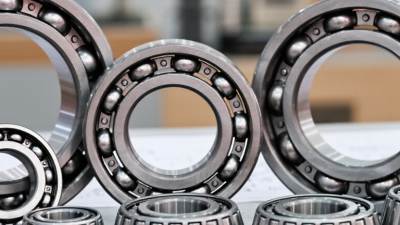
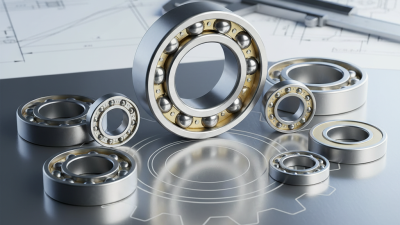
Radial ball bearings use rows of spherical rolling elements between inner and outer rings. Their main job is carrying loads perpendicular to a shaft, while handling limited axial force depending on design. Rolling contact reduces sliding friction, but it does not eliminate heat or wear. Small parts. Big consequences.
You’ll find these bearings in electric motors, pumps, fans, conveyors, and household appliances. A motor shaft may spin thousands of times per minute, so alignment, lubrication, and cleanliness matter. The IEA’s 2011 motor-systems report estimated that motor-driven systems consume about 45% of global electricity. That figure is not bearing-specific, but it shows how widely bearing-supported equipment operates. ISO 281 provides a framework for calculating bearing rating life; real service life can differ when loads, contamination, or lubrication vary.
Tips: Check the bearing’s load direction, speed, and operating environment before selecting it. Keep dust and moisture away during installation. A clean drawing can make selection look simple; actual operating conditions are often messier.
How Is China’s Radial Ball Bearing Supplier Market Organized?
China’s radial ball bearing supplier market is organized around three layers: large integrated manufacturers, specialist factories, and trading or distribution firms. Integrated producers typically control steel sourcing, heat treatment, grinding, assembly, and testing. Specialist factories may focus on a narrower range, such as miniature bearings or high-speed applications. Distributors connect these suppliers with repair shops, equipment makers, and regional buyers. The boundaries can blur; some factories also sell directly.
Demand is not limited to automotive production. Pumps, motors, agricultural equipment, and household appliances also require radial ball bearings. Grand View Research estimated the global bearing market at USD 125.7 billion in 2023, illustrating the scale of demand, though this figure covers bearing types and regions beyond China. It is not a direct measure of China’s radial ball bearing sector. Buyers should compare suppliers by runout, noise, load ratings, traceability, and batch consistency—not price alone. A polished sample can still hide uneven production quality.
Tips: Request inspection records for the actual production batch. Check packaging and seals, too. Small details matter. Ask how the supplier handles rejected units and repeat orders; responses often reveal more than a catalogue.
What Criteria Identify a Leading Radial Ball Bearing Supplier?
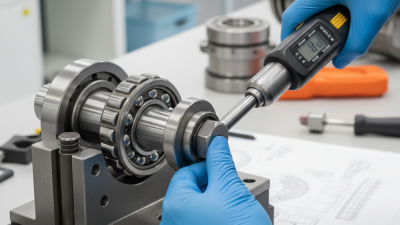
A leading radial ball bearing supplier is defined by more than a low quotation. Buyers should examine dimensional consistency, material traceability, and documented inspection methods. Ask how the supplier checks bore diameter, radial clearance, and running noise. A clear answer matters. So does a sample report tied to the actual production lot. In practice, stable quality across repeat orders is more useful than one excellent sample.
Technical support is another important criterion. A capable supplier can discuss load, speed, lubrication, sealing, and operating temperature without promising that one bearing suits every machine. Check whether drawings, tolerance data, and packaging details are readily available. Reliable lead times and a practical process for handling defects also reduce production risk. No checklist removes uncertainty, and I would still verify claims with a trial order. That step takes time, but skipping it can cost more.
Tips: Send the supplier your shaft and housing dimensions, expected speed, load, and operating environment. Request a sample and inspection records before placing a large order. Compare the evidence, not just the price.
Who Are China’s Top 10 Radial Ball Bearing Suppliers?
China’s top ten radial ball bearing suppliers should be compared by verified production quality, not catalog size alone.
The China Bearing Industry Association’s 2023 industry statistics reported revenue of about
231.5 billion yuan
across China’s bearing sector. This figure covers multiple bearing types, so it cannot establish a radial-ball-bearing ranking by itself.
That distinction matters.
A practical shortlist should examine dimensional consistency, raceway finish, noise, load capacity, and batch traceability. ISO 492 defines tolerance classes for rolling bearings, while ISO 281 provides methods for calculating rating life. Neither standard, on its own, proves that a supplier’s products perform consistently in a buyer’s application.
Ask for inspection records from actual production lots, not only sample certificates. Check delivery stability, technical support, and how the supplier handles failures.
A clean test report is useful. It is not the whole story.
Even experienced buyers can overvalue price or brochure specifications; factory audits and repeat-order results offer a more realistic view.
How Do the Top Suppliers Compare in Products, Quality, and Service?
When comparing China’s leading radial ball-bearing suppliers, examine product depth before price. Strong suppliers offer deep-groove, miniature, and sealed variants, with clear options for clearance, cage material, and lubrication. ISO 281:2007 defines basic rating life, L10, at 90% reliability under specified conditions. That figure is a calculation benchmark, not a promise that every bearing lasts equally long. Ask for load assumptions and test conditions.
Quality claims need measurable evidence. ISO 492:2023 specifies dimensional and running accuracy tolerances for radial bearings; request inspection records tied to the quoted tolerance class. Check batch traceability, steel and heat-treatment documentation, and noise or vibration results. A smooth sample matters. It does not prove consistent production. Compare service, too: response times, engineering support, sample lead times, and how quickly staff resolve a fit or lubrication issue. Ask for a written delivery schedule and corrective-action process, not just a catalogue. One practical check is to compare bearing temperature and sound after installation under the same load. Results can still be affected by mounting and housing accuracy, so supplier comparisons are rarely perfectly clean.
Who Are the China Top 10 Radial Ball Bearing Suppliers?
How Do the Top Suppliers Compare in Products, Quality, and Service?
This chart shows the standardized boundary dimensions of a 6204 deep groove ball bearing: 20 mm bore, 47 mm outside diameter, and 14 mm width. These reference dimensions are defined by ISO 15 and are not supplier-specific. They provide a product-comparison baseline; supplier quality and service require comparable, independently verified data, so no supplier rankings or scores are presented.