Leave Your Message

How to Choose the Right Rotating Bearing for Your Needs?

Choosing the right Rotating Bearing is not a catalog exercise. It is a reliability decision made under real operating conditions. A bearing may look correct on paper, yet fail beside a hot pump, a dusty conveyor, or a misaligned shaft.

The U.S. Department of Energy reports that motor-driven systems can consume 60–70% of industrial electricity. Bearing friction, poor lubrication, and alignment losses can quietly increase that demand. The ISO 281 standard also reminds engineers to assess bearing life through load, speed, and reliability factors. These details matter more than selecting the lowest purchase price.

Tribologist Michael M. Khonsari describes lubrication as “the lifeblood of machinery.” His observation is simple, but often overlooked. Grease type, relubrication intervals, contamination control, and sealing design can decide whether a bearing survives months or years. SKF’s Bearing Damage and Failure Analysis guidance similarly links premature damage with installation errors, contamination, inadequate lubrication, and excessive load.

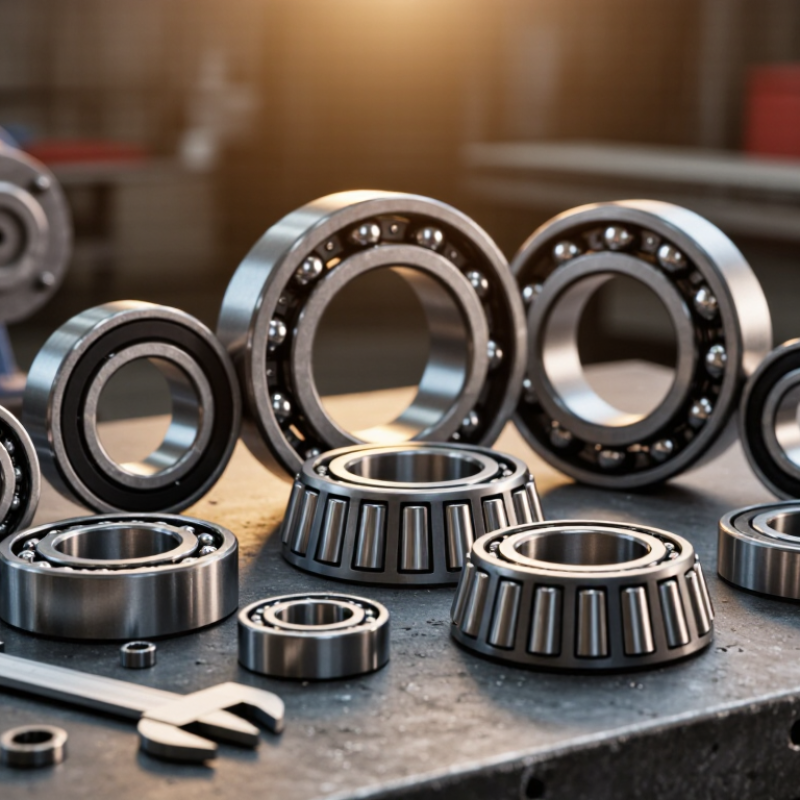
A practical selection process should examine radial and axial forces, shaft speed, temperature, moisture, vibration, available space, and maintenance access. Ceramic, spherical roller, tapered roller, and deep-groove designs each solve different problems. There is no universal winner.

The imperfect part is prediction. Actual loads may change. Lubricant can age faster than expected. Installation may not be ideal. A sound choice therefore combines manufacturer data, ISO-based calculations, field experience, and planned inspection. The best Rotating Bearing is not merely the one with the longest calculated life. It is the one that remains dependable in the environment where it must work.

How to Choose the Right Rotating Bearing for Your Needs?

Define the Operating Conditions and Bearing Requirements

How to Choose the Right Rotating Bearing for Your Needs?

Define the operating conditions before comparing bearing types. Record the shaft speed, radial load, axial load, temperature, and duty cycle. A conveyor running continuously has different needs from a small actuator used twice an hour. Measure the real load if possible. Design estimates can be surprisingly optimistic.

Check the installation environment carefully. Dust, water, vibration, shock, and chemical exposure may influence the seal and lubrication requirements. Also measure the available space, shaft diameter, housing tolerance, and expected misalignment. A bearing with a high load rating may still fail if it is poorly aligned. In field evaluations, premature damage often comes from contamination or incorrect mounting, not insufficient capacity. That detail is easy to miss.

Tips: Create a simple operating profile with minimum, normal, and peak conditions. Select a bearing that handles peak loads without ignoring low-speed behavior. Consider required stiffness, noise, starting torque, service access, and replacement intervals. Choose suitable internal clearance and lubricant for the working temperature. If moisture is present, sealing deserves extra attention. Do not rely only on catalog calculations. Test the assembly under realistic conditions, then inspect heat, noise, vibration, and wear. Some assumptions will be wrong. Revise them before final selection.

How to Choose the Right Rotating Bearing for Your Needs? - Define the Operating Conditions and Bearing Requirements
Operating Condition or Requirement Typical Data to Define Why It Matters Common Bearing Selection Considerations Practical Guidance
Load Direction Radial load, axial load, combined load, or overturning moment The load direction determines how the bearing carries force and which internal geometry is suitable. Deep-groove ball bearings are commonly used for combined moderate loads. Angular-contact ball bearings handle combined loads with a greater axial component. Cylindrical roller bearings are mainly suited to high radial loads. Define the load in newtons (N) or kilonewtons (kN), including both steady and peak values.
Load Magnitude Equivalent dynamic load P, static load P0, and peak or shock load Load magnitude affects fatigue life, permanent deformation risk, shaft deflection, and bearing size. Select a bearing with adequate dynamic load rating C and static load rating C0. Roller bearings generally provide higher radial load capacity for a similar envelope size. Use the highest credible operating load for static checks and the load spectrum for life calculations.
Rotational Speed Continuous speed, maximum speed, acceleration, and direction of rotation Speed influences heat generation, lubrication performance, cage stability, and allowable operating limits. Ball bearings are often suitable for high-speed operation. Larger rolling elements and heavy internal sections generally increase friction and reduce speed capability. Compare the required speed with the bearing's reference or limiting speed after considering lubrication, seals, load, and cooling.
Speed Variation Constant speed, variable speed, frequent starts and stops, or reversing rotation Transient operation can create acceleration loads, skidding, and lubricant starvation. Use suitable preload, internal clearance, cage design, and lubrication for acceleration and reversal conditions. Avoid excessive preload where rapid temperature rise is possible. Include the duty cycle rather than evaluating only the average rotational speed.
Operating Temperature Minimum, normal, and maximum temperature in °C Temperature changes affect viscosity, material strength, dimensional fit, seals, and grease life. Standard bearing materials and lubricants are commonly used near ambient industrial temperatures. High-temperature applications may require special heat treatment, clearance, seals, or lubricant selection. Evaluate the temperature of the bearing ring, not only the surrounding air temperature.
Environment Dust, water, humidity, chemicals, salt spray, washdown, or vacuum Contamination is a major cause of rolling-contact fatigue, wear, corrosion, and lubricant degradation. Choose open, shielded, or contact-sealed configurations according to contamination risk. Corrosive or wet environments may require corrosion-resistant materials or protective coatings. Specify the contaminant type, concentration, exposure frequency, and cleaning method.
Lubrication Grease or oil, viscosity, relubrication interval, quantity, and operating temperature Lubrication separates contacting surfaces, reduces friction, and carries heat away from the rolling contacts. Grease is common for sealed or low-maintenance systems. Oil lubrication is often preferred for high-speed or heat-removal requirements. The selected lubricant must be compatible with seals and operating materials. Do not mix incompatible greases. Define the base oil viscosity and lubricant operating temperature range.
Internal Clearance Required radial internal clearance and thermal expansion conditions Clearance changes during mounting and operation. Insufficient clearance can cause overheating; excessive clearance can increase vibration and reduce load distribution. Normal clearance suits many standard applications. Increased clearance may be needed for higher temperature differences or interference fits. Reduced clearance may be considered where controlled preload is required. Select clearance together with fits, operating temperature, speed, and preload; these factors should not be evaluated separately.
Mounting and Fits Shaft diameter, housing bore, tolerance class, rotating ring, and mounting method Incorrect fits can cause ring creep, excessive internal stress, distortion, or difficult installation. A rotating ring under load commonly requires an appropriate interference fit. A stationary ring may use a looser fit when adjustment or axial movement is needed. Check shaft and housing tolerances, roundness, surface finish, shoulder dimensions, and mounting forces.
Axial Location Fixed-end or floating-end arrangement; thermal expansion distance Thermal growth between the shaft and housing can create unwanted axial load if the bearing arrangement cannot accommodate movement. A locating bearing can control axial position. A non-locating arrangement or suitable bearing design can accommodate axial displacement. Provide an axial expansion path unless the system is specifically designed to carry the resulting thermal load.
Misalignment Shaft deflection, housing distortion, angular misalignment, or installation error Misalignment can concentrate contact stress, increase vibration, and shorten fatigue life. Self-aligning ball or spherical roller bearings can accommodate limited misalignment. Rigid bearing arrangements require accurate shaft and housing alignment. Quantify the expected angular misalignment in milliradians or degrees whenever possible.
Stiffness and Deflection Required radial or axial stiffness, shaft deflection limit, and system natural frequency Bearing deformation affects accuracy, vibration, contact load distribution, and positioning performance. Preloaded angular-contact bearings or tapered roller bearing arrangements can provide high stiffness. Excessive preload increases friction and operating temperature. Consider bearing stiffness together with shaft, housing, mounting, and structural stiffness.
Precision and Runout Required radial runout, axial runout, rotational accuracy, and vibration level Higher precision is necessary for machine tools, measurement equipment, and high-speed rotating assemblies. Select an appropriate dimensional and running-accuracy class. Precision benefits may be lost if the shaft, housing, or mounting surfaces are not sufficiently accurate. Define the total system accuracy requirement, not only the bearing accuracy class.
Service Life Target operating hours, duty cycle, reliability, and maintenance interval Bearing selection must satisfy both rolling-contact fatigue life and application-specific maintenance requirements. For rolling bearings, basic rating life is commonly calculated from dynamic load rating and equivalent dynamic load. Contamination, lubrication, misalignment, and installation quality can reduce actual life. Use a load spectrum for variable-duty applications and verify static safety under maximum load.
Sealing and Friction Required contamination protection, allowable torque, heat generation, and leakage limits Seals improve contamination resistance but may increase friction and temperature compared with open or non-contact shielded designs. Contact seals provide stronger protection against moisture and particles. Shields generally produce lower friction but are less effective against liquid contamination. Balance sealing performance, speed, lubricant retention, and permissible starting torque.
Noise and Vibration Permissible acoustic level, vibration limit, and sensitivity of connected equipment Noise and vibration can indicate waviness, contamination, poor fits, imbalance, or inadequate lubrication. Use suitable precision, cleanliness, preload, cage design, and lubrication. The complete rotating system must also be balanced and aligned. Set acceptance limits in measurable units such as velocity, acceleration, displacement, or sound pressure.
Installation and Maintenance Available tools, mounting force, access, replacement frequency, and inspection method Improper mounting is a common source of early bearing failure. Use the correct mounting method, avoid applying force through the rolling elements, protect the bearing from contamination, and follow the specified lubrication procedure. Plan removal, relubrication, condition monitoring, and replacement before finalizing the bearing arrangement.
Final Selection Check Load, speed, temperature, environment, fits, clearance, lubrication, life, and safety margin A bearing that meets one requirement may fail when all operating conditions interact. Verify dynamic rating, static safety, speed capability, temperature limits, lubrication, sealing, stiffness, and installation constraints as one system. Document the assumptions and confirm the selection with calculations, testing, or application engineering review.

Compare Bearing Types by Load, Speed, and Motion

Choosing a rotating bearing starts with three questions: What load acts on it? How fast will it run? What motion will it follow?

Deep-groove ball bearings suit moderate radial loads and high speeds. Angular-contact bearings handle combined radial and axial loads, especially in precision shafts. Tapered roller bearings carry heavier combined loads, but usually create more friction and heat. For mainly axial force, thrust bearings are more appropriate. If shaft misalignment is expected, spherical roller designs can tolerate it. Oscillating motion needs special attention because small angles may prevent effective lubricant redistribution.

Speed changes the decision. A bearing rated for heavy loads may overheat at high rotational speed. Check the speed limit, lubricant viscosity, seal design, and cooling conditions together. ISO 281:2007 defines L10 life as the operating life reached by 90% of identical bearings. Its calculation uses a load-life exponent of 3 for ball bearings and 10/3 for roller bearings. These figures are useful, but real contamination can shorten life sharply. ISO 15243:2017 identifies contamination, smearing, and insufficient lubrication as common damage mechanisms. The U.S. Department of Energy’s Motor Systems Market Assessment (2021) estimates motor systems consume about 23% of global electricity, so friction losses deserve practical attention.

Tips: Measure radial and axial loads separately. Record peak speed, not only average speed. For oscillation, inspect raceway marks after testing. A spreadsheet may still mislead when misalignment, shock, or poor sealing is ignored. Small field trials often reveal more than clean calculations.

Select Materials, Seals, and Lubrication for the Application

Choosing a rotating bearing begins with its working environment, not just its load rating. A bearing near a washdown station may need corrosion-resistant steel and tightly fitted seals. A dusty conveyor may require contact seals that block fine particles. Check shaft speed, temperature, shock loads, and moisture together. One factor rarely tells the whole story.

Material selection should match both motion and maintenance conditions. Hardened steel suits many general industrial applications. Stainless materials help where humidity or cleaning chemicals are common. However, corrosion resistance does not guarantee long service life. Excessive friction can still create heat. I once saw a sealed bearing fail early because its seal dragged against a misaligned shaft. The material was acceptable. The installation was not.

Lubrication deserves the same attention. Use grease or oil that matches the operating temperature, speed, and load. Grease may work well in a slow, exposed assembly. Oil can remove heat more effectively in high-speed equipment. Do not mix lubricants without checking their thickener and additive compatibility. Keep a simple maintenance record, including relubrication dates, noise, vibration, and operating temperature. Small details matter. Technical datasheets and application testing provide stronger guidance than habit. Even a careful selection may need revision after real measurements from the machine.

Verify Size, Accuracy, Service Life, and Maintenance Needs

How to Choose the Right Rotating Bearing for Your Needs?

Verify the size before comparing performance. Measure shaft diameter, housing fit, available width, load direction, speed, and operating temperature. A bearing that fits loosely may creep, generate heat, and damage the shaft. ISO 492 defines dimensional and running-accuracy tolerances, so accuracy should match the application. High precision is not always better. It can increase cost without improving a slow, lightly loaded machine.

Service life also needs careful checking. ISO 281:2007 uses basic rating life, or L10 life, which means 90% of identical bearings are expected to reach the calculated life under stated conditions. It is not a guarantee. Contamination, misalignment, shock loads, and poor lubrication can shorten life sharply. Maintenance planning matters just as much. The U.S. Department of Energy’s Operations and Maintenance Best Practices Guide cites predictive maintenance returns of up to 10 times investment, while reporting maintenance-cost reductions of 25% to 30% in suitable programs. That figure is encouraging, but real results depend on inspection quality and staff training. Keep it practical. Check temperature, vibration, noise, grease condition, and seal damage at defined intervals. A simple inspection log often reveals a slow change before failure. Still, maintenance intervals should not be copied blindly. Dust, moisture, load variation, and installation errors can make a standard schedule unreliable.

How to Choose the Right Rotating Bearing for Your Needs?

Verify the bearing size, accuracy requirements, service life, and maintenance conditions before selecting a bearing. The chart below uses the ISO 281 basic rating-life equation for a ball bearing: L10 = (C/P)3, where C is the dynamic load rating and P is the equivalent dynamic load.

How to read the chart: L10 represents the basic rating life at which 90% of identical bearings are expected to survive under controlled laboratory conditions. Confirm the bore diameter, outside diameter, and width first; then verify the required ISO accuracy class, load capacity, operating speed, lubrication method, contamination level, and relubrication access.

Evaluate Total Cost and Confirm the Final Bearing Choice

How to Choose the Right Rotating Bearing for Your Needs?

Choosing a rotating bearing should not end with the lowest purchase price. Evaluate its complete cost throughout the working life. Include installation time, seals, lubrication, energy loss, inspections, and replacement labor. A bearing costing 40 dollars may require frequent service on a dusty conveyor. A higher-priced sealed option may reduce maintenance visits. Real savings depend on load, speed, temperature, contamination, and operating hours. Record these conditions from the machine, not memory.

Ask maintenance technicians about actual failure history. Their notes may reveal misalignment, poor lubrication, or unexpected shock loads. Calculate downtime using the real production cost per hour. Include inventory expenses and emergency purchasing risks. Technical documents should confirm load ratings, clearance, speed limits, and material suitability. Independent standards and test reports improve confidence, but paperwork cannot replace a physical fit check. Small details matter.

Compare at least two suitable options in a lifecycle-cost table. Verify dimensions with calibrated instruments. Check the shaft and housing conditions carefully. Confirm lubrication methods, mounting tools, tolerances, and replacement intervals. A trial installation can expose noise or heat that calculations miss. I once treated low vibration as proof of success. Later, rising temperature showed insufficient lubrication. Recheck the bearing under normal load, and have engineering and maintenance staff review the final choice.